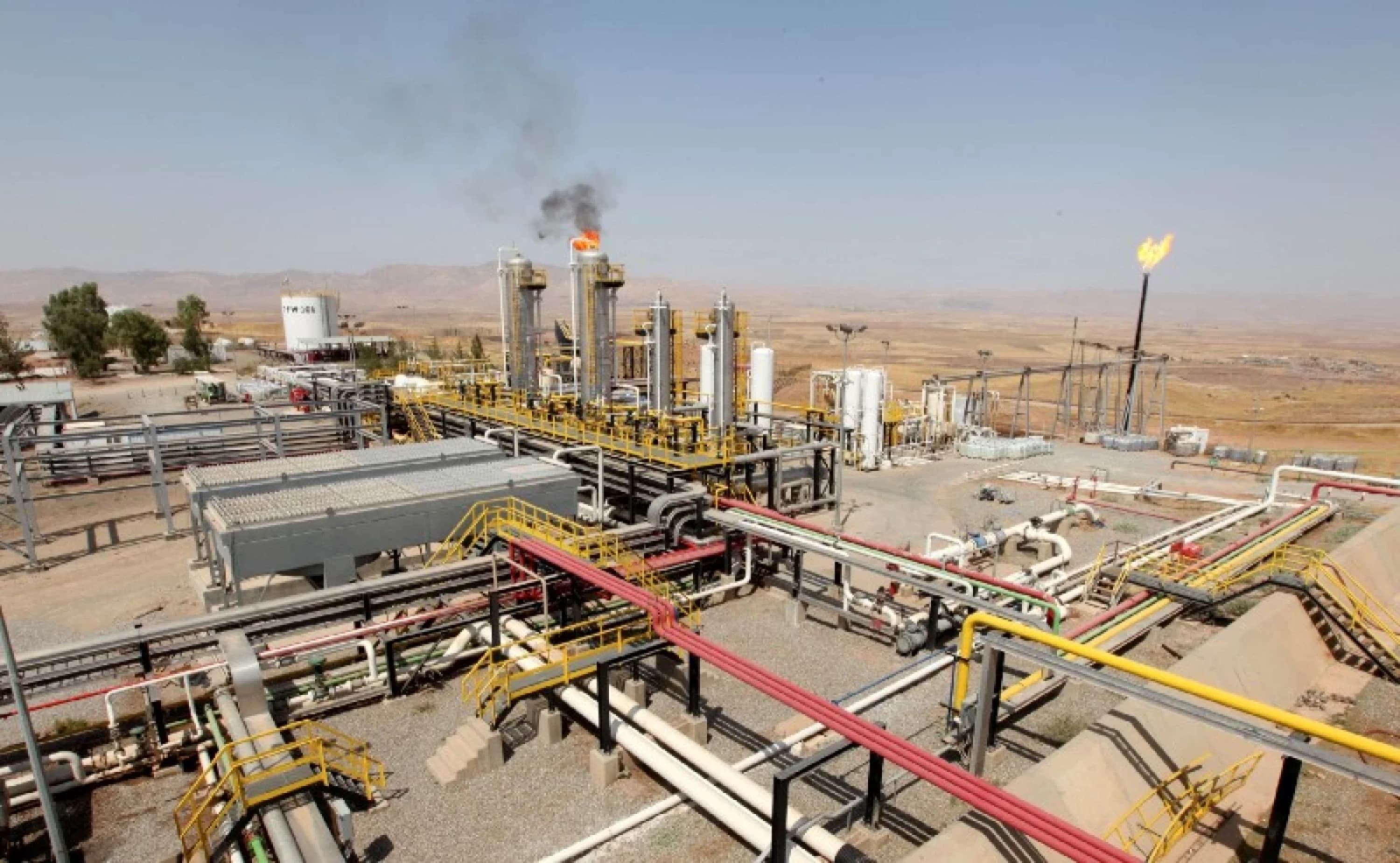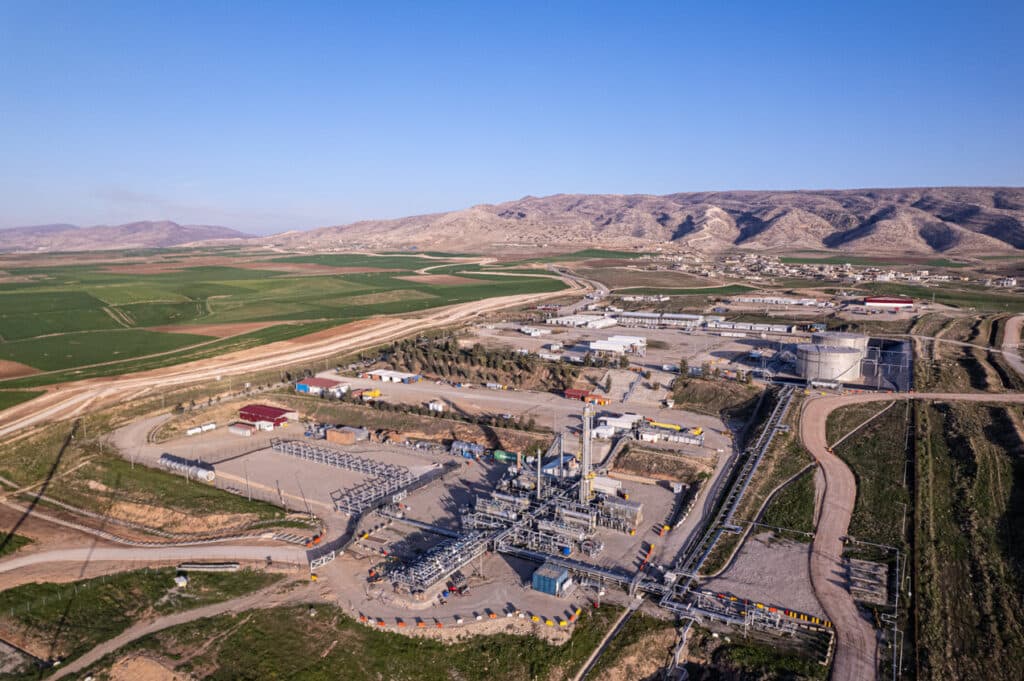
Erbil, Kurdistan Region - The London-listed Gulf Keystone Petroleum (GKP) has reported that, despite the temporary suspension of production at the Sheikhan field north of Erbil and a 50 percent reduction in expenditures, it remains fully prepared for a rapid resumption of oil exports. This comes amid a new diplomatic horizon following the signing of a framework agreement between the US and Iran.
Ahead of its Annual General Meeting (AGM) this year, GKP published its strategic update report outlining a dual strategy focused on cost reduction and preserving its financial liquidity and capital.
Following the outbreak of the US-Iran war on February 28, GKP temporarily suspended oil production at its primary asset, the Sheikhan field - located about 60 kilometers northwest of Erbil - due to regional security concerns, resulting in a sudden halt to the company’s primary revenue stream, which remains suspended to date.
According to the company’s latest management report, infrastructure, operational teams, and necessary financial resources have been maintained in a state of "immediate readiness." This ensures that once the regional situation stabilizes, the production process can resume at full capacity with exports to international markets.
Current operational status at the Sheikan field
Despite the suspension of new well-drilling and oil extraction operations, GKP's technical teams are executing an active preservation plan for the field. This ensures that the oil production process can resume without any technical delays when the opportunity comes.
According to the report, the shutdown at the Sheikhan field was a precautionary measure taken to ensure the safety of the staff and the field. The company's management emphasizes that this suspension is not an inactive or detrimental shutdown, but rather an organized process to preserve the field's capabilities. This guarantees that once the regional geopolitical situation improves, production levels can immediately return to pre-suspension rates.
The company has managed to navigate this unstable period without compromising its core operational values. GKP notes that it has maintained an exemplary safety record, completing three consecutive years without recording any unforeseen workplace accidents, or Lost Time Incidents.
According to the report, the company has not completely reduced its investment and capital expenditures to zero; rather, it has optimized them appropriately. While various projects have been deferred, highly strategic projects related to safety remain ongoing such as a project to install an advanced water treatment system at Production Facility 2 (PF-2) whose goal is to achieve maximum efficiency and safeguard long-term oil production capabilities.
Cutting cash expenditures by 50 percent
To withstand a prolonged period without revenue, Gulf Keystone has implemented financial measures to preserve its capital reserves and has successfully reduced its monthly cash burn by approximately 50 percent.
This reduction was achieved through a comprehensive cost review, which included deferring non-essential projects, reducing field operating costs to a minimum, and slashing headcount costs as well as General and Administrative (G&A) expenses.
The company's financial balance was further supported by the process of recovering financial receivables for oil produced prior to the February 28 suspension. Financial pressure on the company eased due to the transport and sale of crude oil in June, which is expected to result in additional cash receipts to clear outstanding financial entitlements.
Management explained that if security challenges persist and oil production does not resume, they will take further fundamental steps to cut costs even deeper to protect the company’s cash reserves, which currently stand at $66 million.
Path to resuming oil production: Multilateral talks
In its report, the company indicates that the timeline for resuming oil production at the Sheikhan field is tied to diplomatic developments. Management notes that the region's security outlook shows encouraging signs. The primary reason for this is the signing of a diplomatic framework agreement between the United States and Iran - an event expected to ease geopolitical tensions across the Middle East, Iraq, and the Kurdistan Region.
To capitalize on this diplomatic opening, GKP is engaged in multilateral negotiations to determine necessary and safe conditions for a restart. These discussions involve three key parties: The Kurdistan Regional Government (KRG), the federal government of Iraq, and foreign companies as institutional stakeholders.
GKP’s commercial outlook
GKP’s ultimate goal is not merely a simple technical restart; it aims to secure a sustainable export route and obtain a fair international market price for its oil. The company is currently engaged in constructive discussions with relevant parties to extend export agreements.
Furthermore, the company is negotiating a revised Field Development Plan for the Sheikhan field with the KRG Ministry of Natural Resources. The long-term objective of this plan is to align future production with the full settlement of Production Sharing Contract (PSC) entitlements, calculated based on international market prices.
In conclusion, GKP notes that while its outlook for 2026 remains suspended until the level and scale of post-restart production stabilizes, the company’s proactive management of its cost structure and technical assets demonstrates that it is well-positioned for the future.
Mahmood Baban is a research fellow at the Rudaw Research Center.
The views expressed in this article are those of the authors and do not necessarily reflect the position of Rudaw.