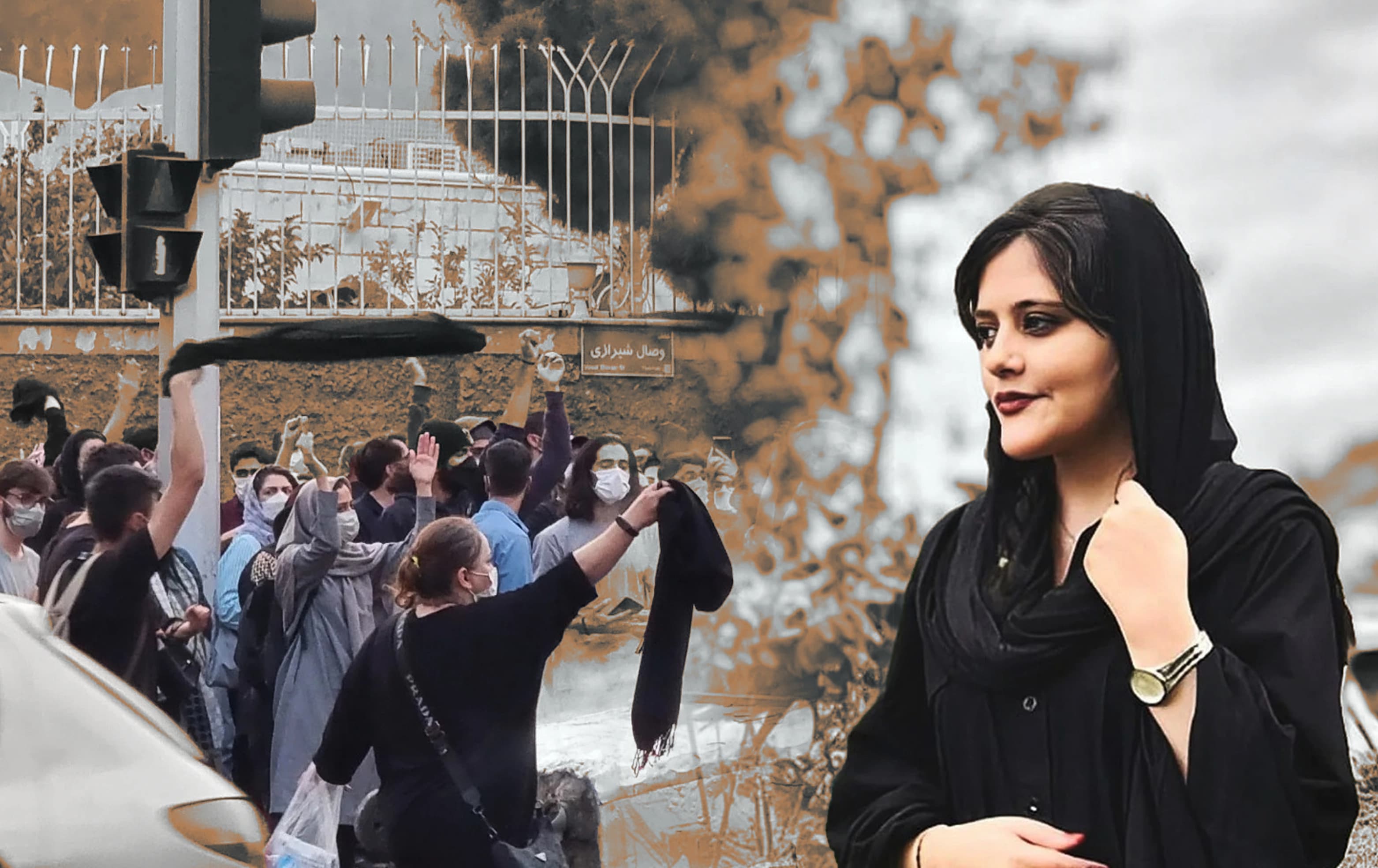
ERBIL, Kurdistan Region - Months of drone strikes on refugee camps surrounding the city of Koya in the Kurdistan Region have pushed hundreds of families into the city center, giving rise to local security concerns even as many residents are stepping in to offer support.
During the wider regional war that ensued following the US-Israeli aerial campaign on military targets across Iran in late February, the Islamic Revolutionary Guard Corps (IRGC) launched widespread drone and missile attacks on US bases in Gulf countries as well as the Kurdistan Region, with some of the fiercest attacks targeting Iranian Kurdish opposition camps and civilian bases.
Drones and ballistic missiles rained down on Koya, Surdash and Degalla in multiple waves of strikes spanning March through August, resulting in subsequent mass-displacements involving hundreds of families.
While US and British bases in Erbil used the C-RAM, Patriot, Coyote and British rapid Sentry defense systems to intercept the incoming drones and missiles, Peshmerga fighters from the Kurdistan Democratic Party of Iran (KDPI) were left with AK-47s to down Hadid and Shahed drones, the latter of which can weigh up to 200 kilograms and measure up to 3.5 meters long.
Eventually, the sheer intensity of the strikes forced the civilians and families of Peshmerga fighters into the neighboring town of Koya.
The sudden evacuation and subsequent displacement of these families initially raised rent by nearly 50 percent as accommodation became scarce, according to locals who told Rudaw that up to two or three families often lived crammed together under a single roof in order to ease financial pressures.
Koya, a center of education
Koya, a city home to an expanse of archaeological sites and a people known for their patriotic spirit, sits at the center of science and education and boasts a strong history of Kurdish nationalism. The late Jalal Talabani, who began his political career at the age of 16 and eventually became the president of Iraq in 2005, originates from the area.
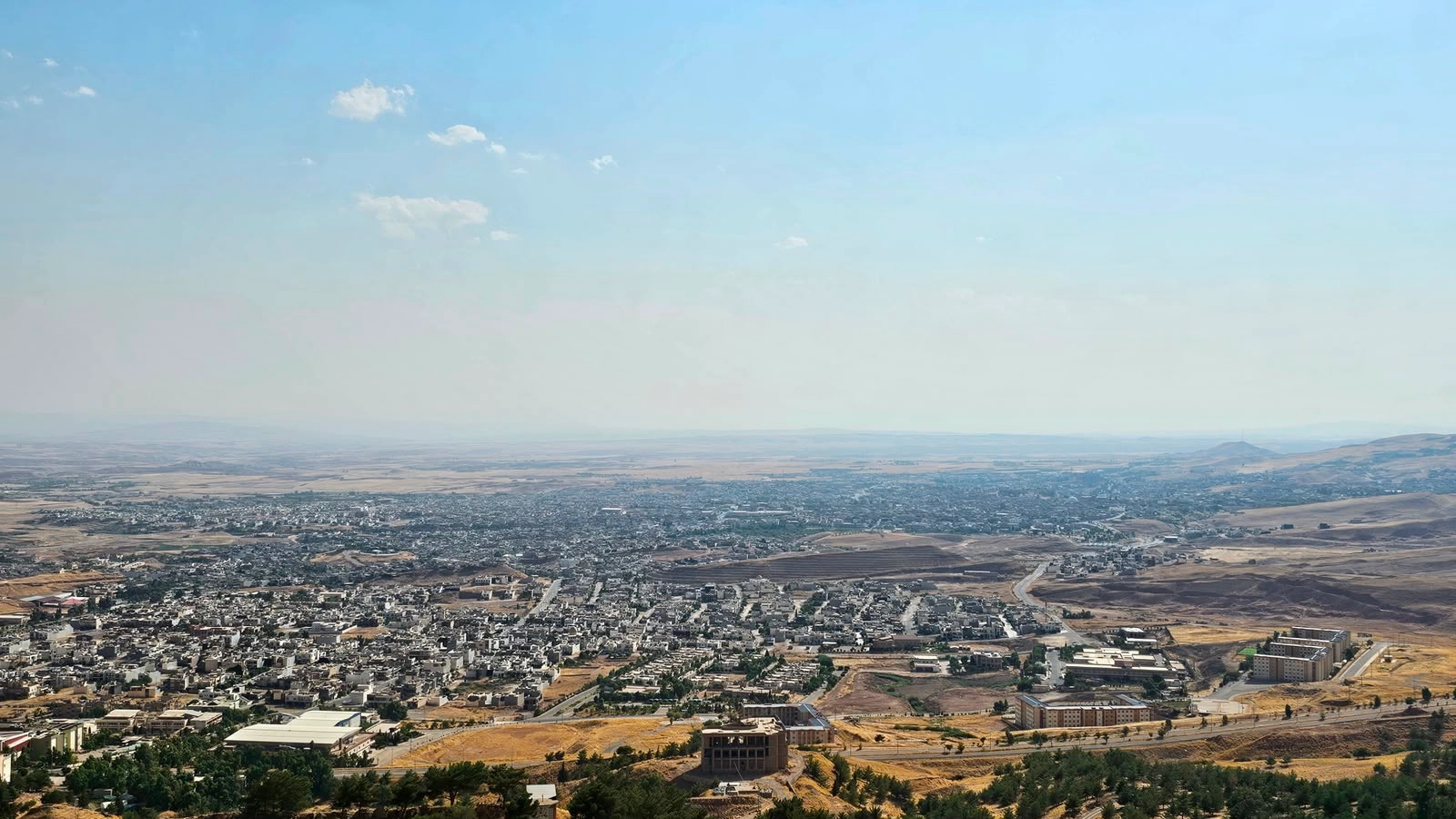 A view of Koya from the outskirts of the city, August 12, 2026. Photo: Hunar Huseini
Koya, located at the foot of the Haybat Sultan range, was a quiet city until the arrival of KDPI fighters and their families in the early 1990s, which would draw the IRGC’s ire.
The IRGC’s onslaught against Kurdish opposition groups traces back to the early 1980s when the Kurds fought a bloody eight-year battle with the Guards in the Kurdish region in western Iran, with intermittent bouts of armed conflict extending well into the second half of the 1990s.
Kurdish opposition groups, and the KDPI in particular, were initially based in western Iran during the eight years of war with the IRGC, who eventually forced them out. Finding themselves in the Kurdistan Region under the Ba’ath regime of Saddam Hussein, the groups initially stationed themselves in the Qandil Mountains in the Kurdistan Region’s northeast, bordering Iran.
The KDPI abandoned its base in Qandil in 1993 and settled its Peshmerga fighters and their families largely in the outskirts of Koya and several other locations. The KDPI continued its attacks on Iranian security forces even after the Kurdistan Region became autonomous in 1991.
In 1996, the IRGC decided to put an end to the threat posed by the KDPI and launched a cross-border incursion deploying several thousand guards with heavy artillery and tactical ballistic missiles into Sulaimani province. The attack was commanded by General Ahmad Kazemi, who served as a mentor to Qasem Soleimani - a man who would later rise within the ranks of the IRGC to wreak havoc in the region.
The IRGC pounded the KDPI camp in Koya in the summer of 1996, three decades ago. KDPI officials had been warned by Patriotic Union of Kurdistan leader Jalal Talabani to abandon the camp shortly before the attack transpired. The IRGC was satisfied with their deterrence and withdrew to Iran.
The attack in 1996 led to an undeclared truce between the KDPI and the IRGC which lasted until 2015.
From 2015 onward, the KDPI sent their forces into western Iran, prompting the IRGC to fire several barrages of missiles and drones at KDPI bases in Koya in 2018 and 2022.
On September 28, 2022, viral images of school children fleeing in terror from 73 ballistic missiles and suicide drones launched by the IRGC sent shockwaves around the world.
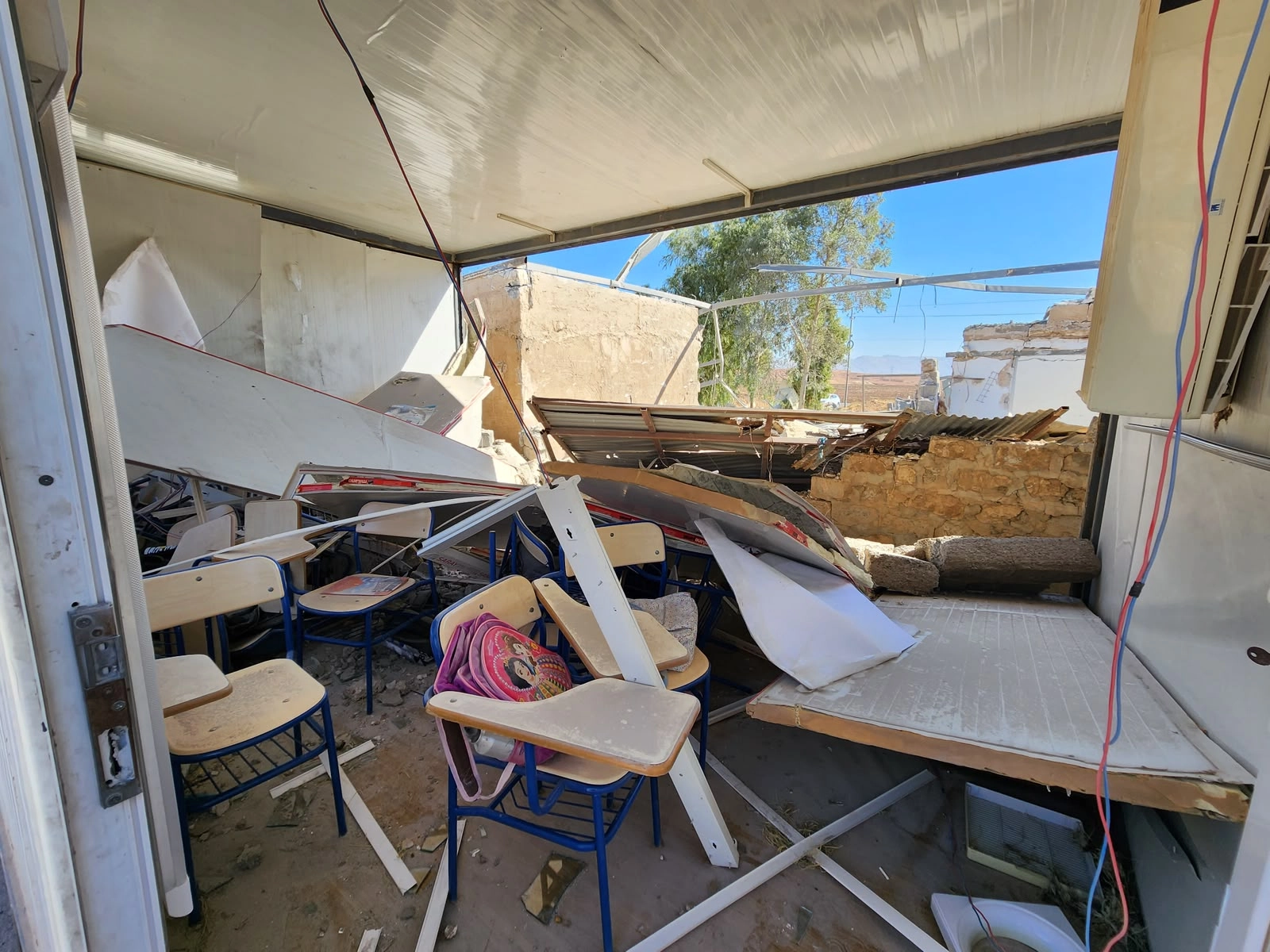 Photo of school hit by missiles on September 28, 2022. Photo: Zhyar Hashmi
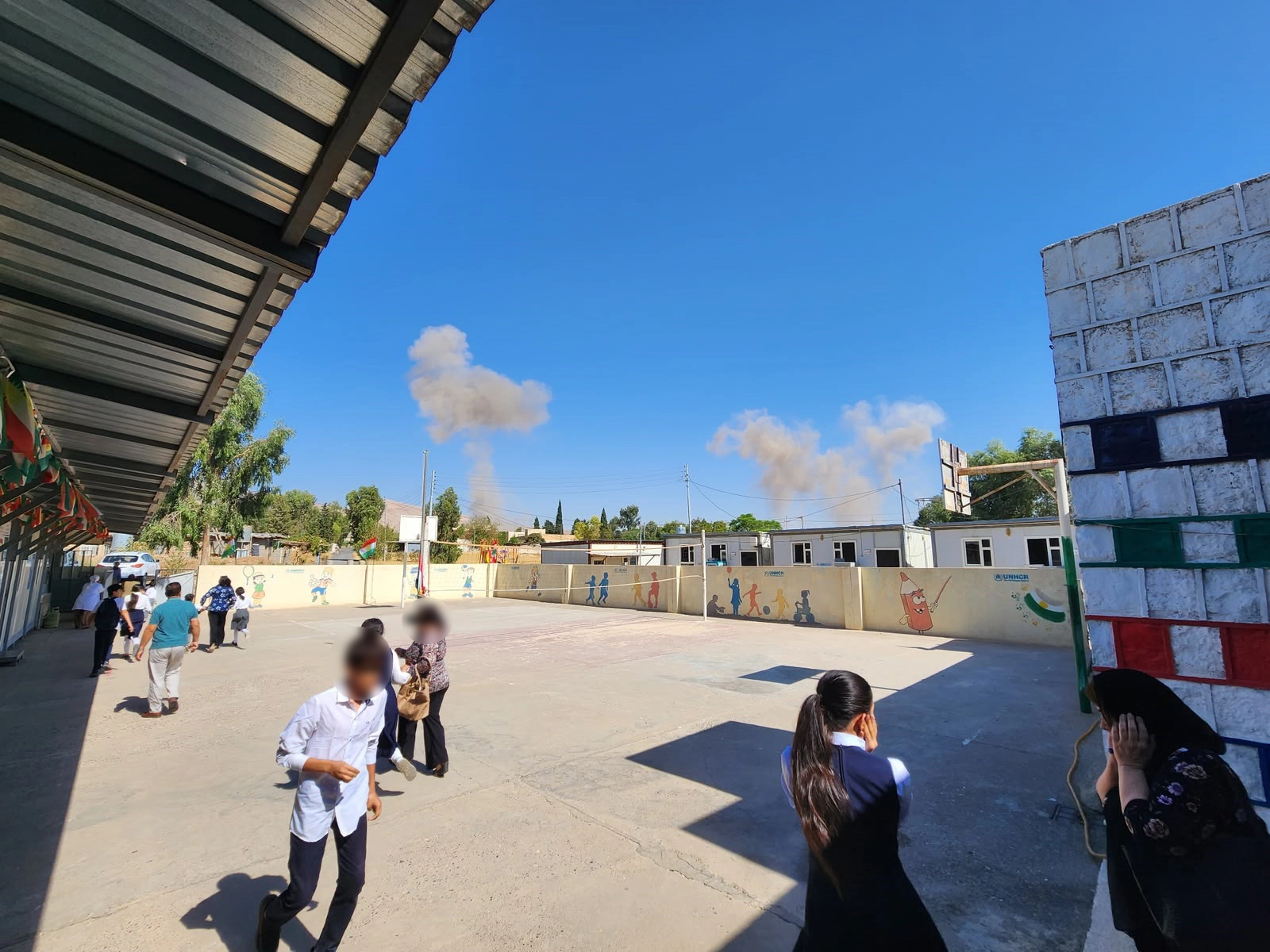 Schoolchildren and staff during the attack on September 28, 2022. Photo: Zhyar Hashmi
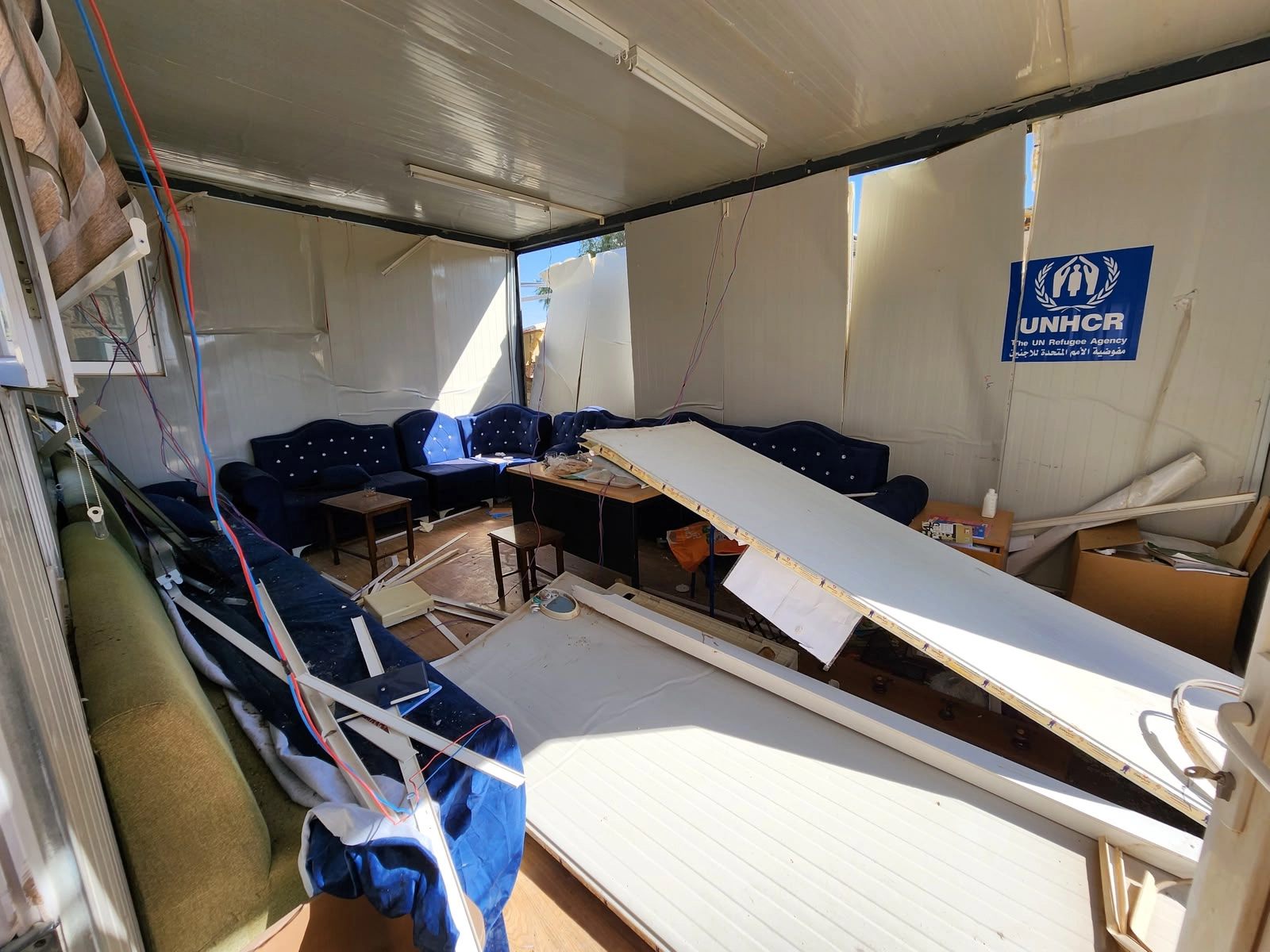 The aftermath in the school, September 28, 2022. Photo: Zhyar Hashmi
Fierce attacks usher in a new reality
From the early 1990s onward, displaced families in Koya built a rich community life centered around an elementary school, two separate small hospitals, bakeries, shops, workshops, and backup power generators, alongside a shared cemetery situated between all three camps.
In recent months, drone strikes have targeted almost every part of that infrastructure, destroying more than 15 homes and leaving at least 60 others uninhabitable, with damage extending to the surrounding wheat fields owned by local residents of Koya.
Since March, camps in Koya have been hit 64 times. The largest camp, Azadi, was hit 40 times, Amria 18 times, and the smallest, Zawyaspi, was hit 6 times. The Haibat Sultan mountains adjacent to Koya were targeted six times, while Bawaji mountain sustained three attacks.
The city center of Koya was hit twice, and neighboring Topzawa was targeted three times. Two old KDPI bases were both hit 14 times, leading to a total of 92 attacks to date, despite the ceasefire reached on April 8.
When camps came under missile fire in March, the safety they had built their lives around collapsed overnight.
For the civilian families of Peshmerga fighters, fleeing their camps amid strikes which continue to persist even during ceasefires has meant losing decades of progress in an instant.
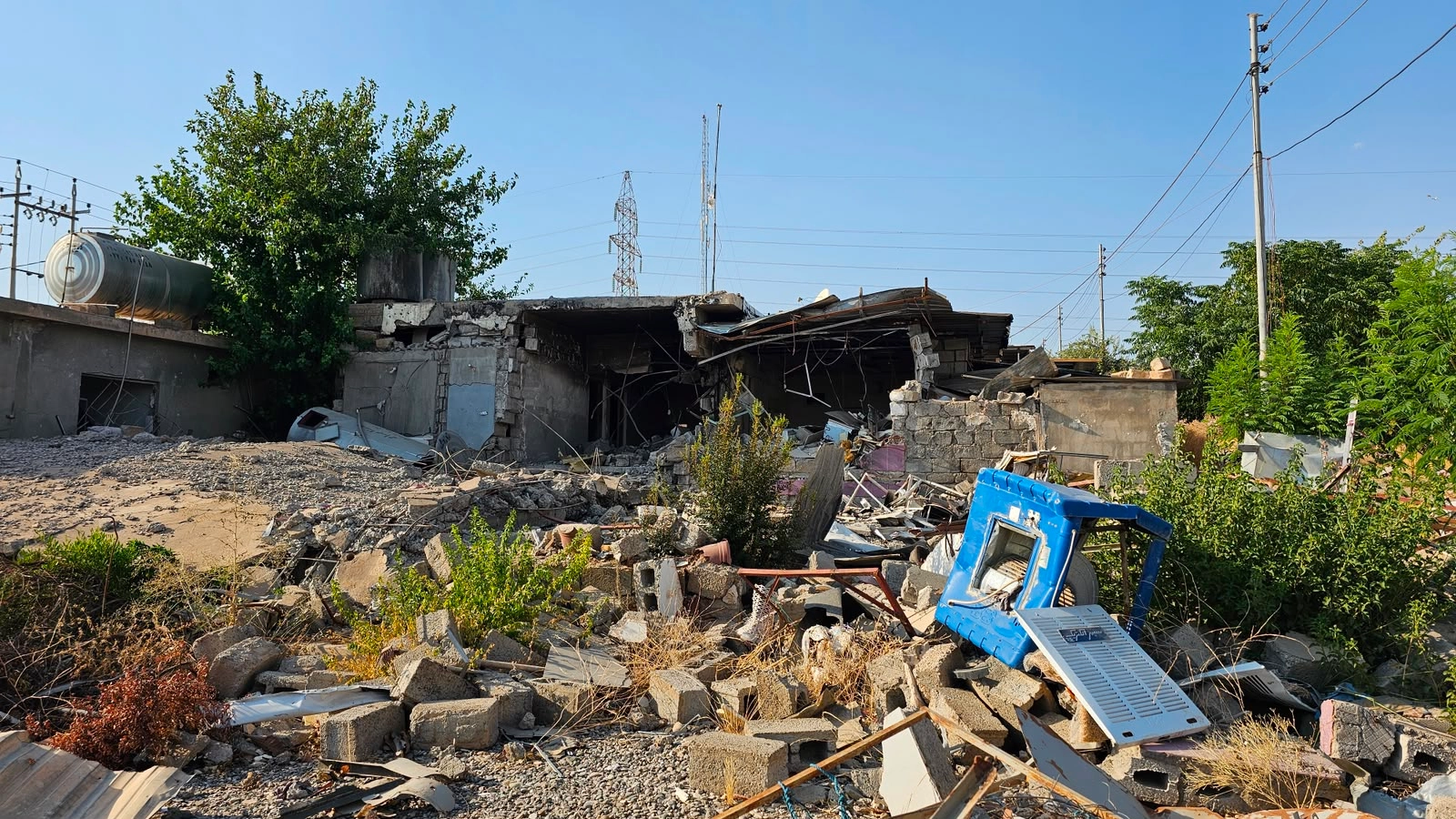 Aftermath of missile attack in Koya, August 12, 2026. Photo: Hunar Huseini
"Our house and everything we put together over the years turned to ash," said a 42-year-old Rojhelati mother whose home was destroyed in one of the strikes.
She and her husband, a 41-year-old Peshmerga fighter, had lived in the camp for 22 years with their 11-year-old daughter and 9-year-old son. The family has resorted to co-renting a house in Koya with two other families to split costs.
Her children are among hundreds whose schooling across all three camps was put on hold at the onset of the war. With Koya's schools lacking the capacity to take them in, students were forced to turn to online options, whereas families who were unable to afford smartphones or fast internet relied on prerecorded classes, whose long term repercussions remain unknown.
Soaring rents and helping hands
The recent influx of new families has brought with it a two-fold reality to Koya. Whereas a typical two bedroom house previously listed for 80,000 Iraqi dinars ($61) rose to 120,000 dinars ($92) in less than two weeks, a pre-dawn strike targeting the town center on March 18 ignited deep panic, causing some landlords to freeze rentals altogether.
While many landlords refuse to rent to fleeing families, the crisis has led other residents to step in.
"We have long been friends with the people in the camps," said a 35-year-old lawyer in Koya whose husband provided housing to a refugee family free of charge.
The lawyer’s family, who resides in a neighborhood on the edge of the city closer to the camps, told Rudaw they could clearly hear the explosions and feel the vibrations of the strikes inside their home from the beginning of the war.
The loud blasts terrified their 11-year-old son and left the parents deeply concerned for the safety of their friends in the camp, prompting her husband to recruit help from family networks to assist other displaced families in finding fair, affordable rental homes.
Another resident, a 30-year-old print station worker at Koya University, was also among those who helped arriving families search for affordable housing options.
"They are not refugees, but Kurds, and this land is theirs as it is ours," he said, despite when, at the start of the war, panic was so high that several local families in Koya temporarily left for other cities to stay with relatives.
The strikes forced Koya University to temporarily close its physical campus in early March for a month and a half, leaving him unemployed with no income during that period. He said that nearby cafeterias, markets, grocery stores and other businesses relying on university students suffered the same loss. Even when classes restarted, many students were terrified to return to the dorms.
For other displaced families, moving into the city has brought heavy financial and emotional stress. Affordable rental homes are hard to find, and a lack of employment leaves parents unable to provide for their families.
A displaced father told Rudaw that these hard conditions endanger his daughter's future.
“She is in the 12th grade, her most important school year, where final grades determine her university major and career path,” he said, telling Rudaw he is deeply worried that living without a proper home and under constant stress has caused her grades to fall at such a critical time.
Families like this are not alone in their predicament. Being far from relatives and friends scattered by the war has likewise wrought mild depression for many who find themselves in the same situation.
Between a rock and a hard place
Refugee camps have periodically faced multiple missile and drone attacks in the past 30 years; in 1996 and 2018, Iran targeted camps claiming KDPI fighters were active along the border and in the Kurdish regions inside Iran, and again in 2022, claiming opposition groups fueled the Zhina Amini protests across Iran.
However, this latest wave of attacks is different as Iran now claims these groups are directly involved and have a hand in the current conflict going on in the region, leaving civilian families to pay the price once again.
The IRGC has stated that the Iraqi and Kurdistan authorities must disarm these groups, including the KDPI, and have issued arrest warrants for dozens of leaders of these groups.
But Koya’s residents have become a pawn in a larger conflict that has little to do with their making. The average resident is torn between offering refuge to the displaced Kurds from Iran and protecting their own lives from the wrath of the IRGC. Just as they did during past attacks in previous years, locals are opening their doors to share their resources, but at a greater collective cost than before.
Caught between support and security, Koya is left waiting for the return to peace in a war with seemingly no end in sight.
The views expressed in this article are those of the author and do not necessarily reflect the position of Rudaw.