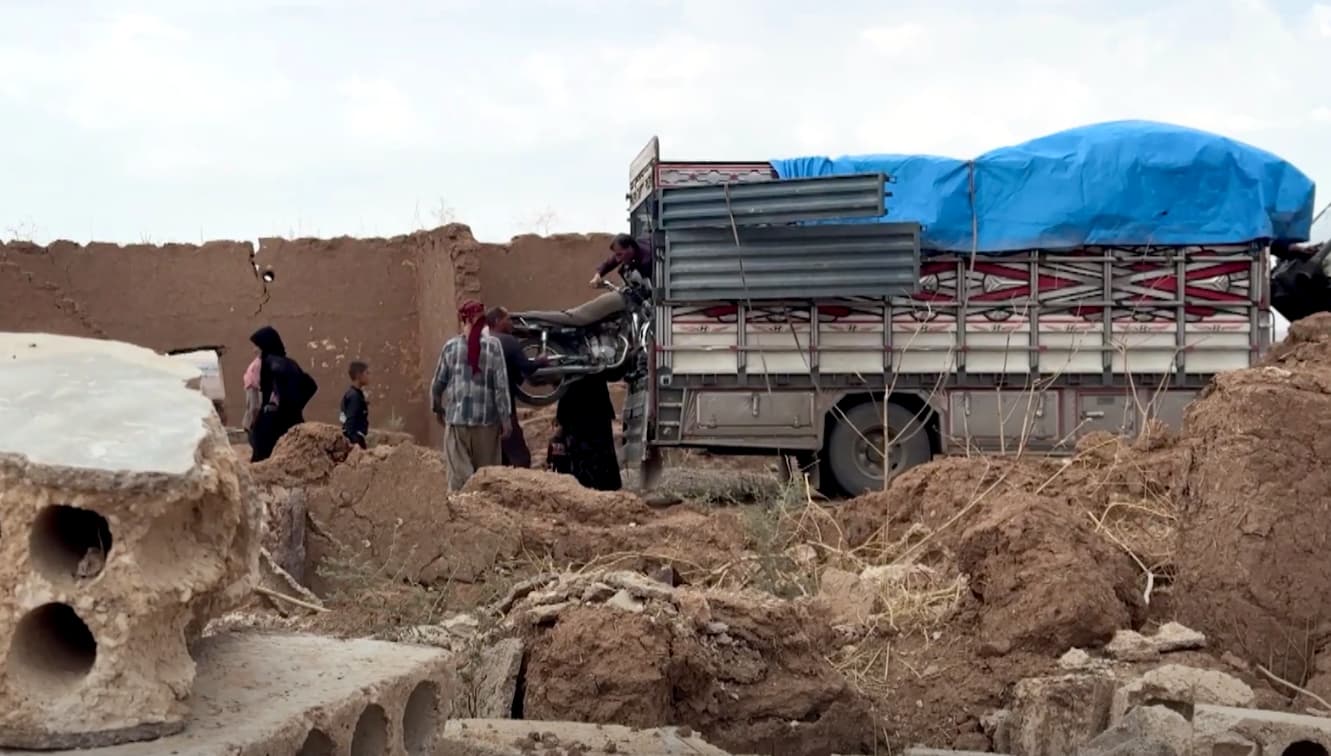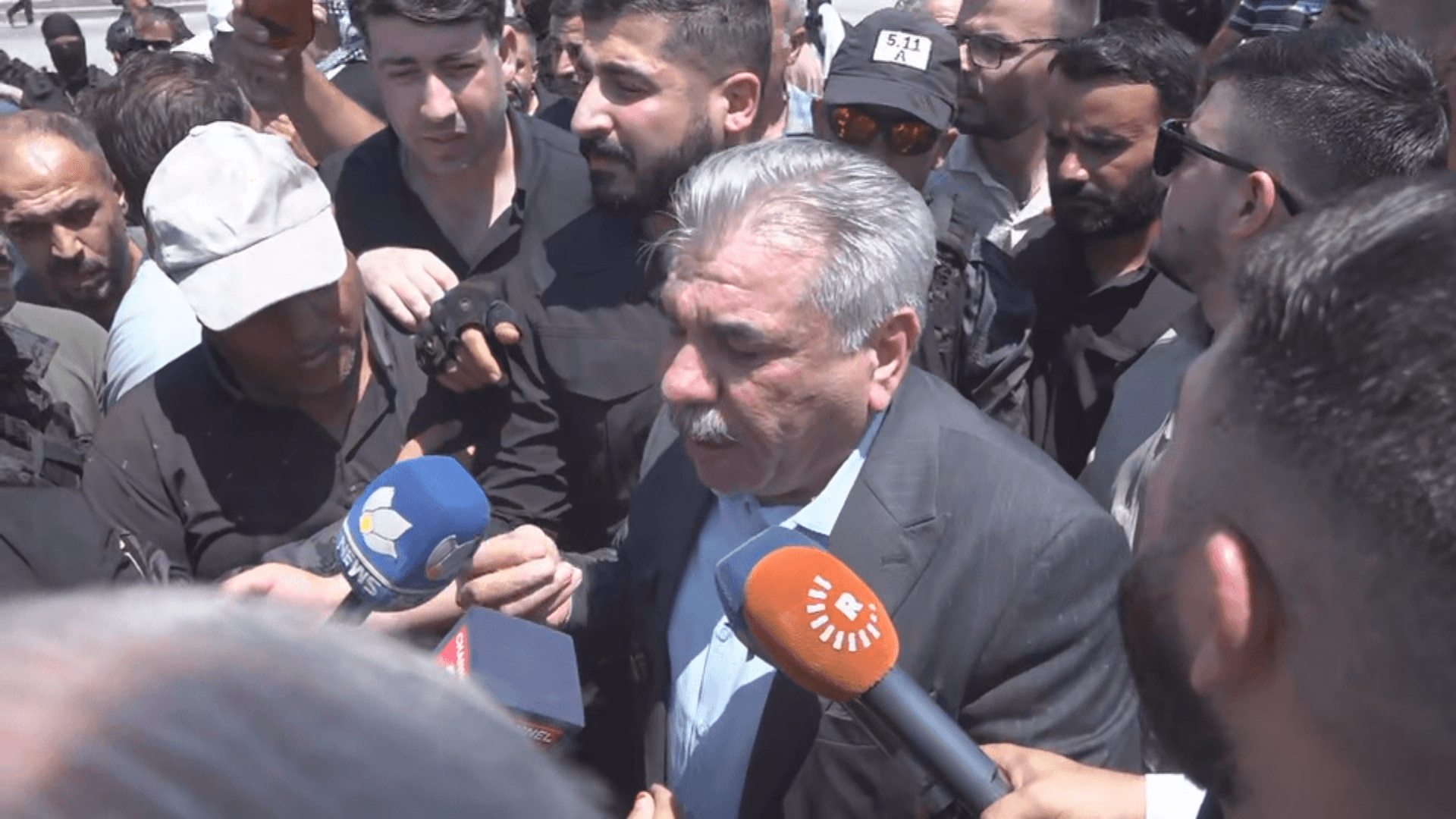

ERBIL, Kurdistan Region - Internally displaced residents (IDPs) from the Kurdish town of Sari Kani (Ras al-Ain) in northeast Syria’s Kurdish region of Rojava, currently residing in refugee camps, staged protests in Hasaka on Sunday urging authorities to accelerate efforts to allow their return home nearly seven years after being displaced by Turkey's 2019 military offensive.
Dozens of displaced residents, activists, elders, and community members gathered near the Hasaka governorate building, raising banners that read, "Every child has the right to live in their home, not in a camp"; "The right of return must not be marginalized"; "Return is a demand and a human right" and "Enough forced displacement."
"We want to return to Hasaka. We've been displaced for seven years. No official visits us in the camps. They don't know the situation of the people,” one displaced resident told Rudaw's Viviyan Fetah. “They are sitting at their offices and know nothing about the situation of the people," the protester stated, referring to the humanitarian situation in the camps overlooked by officials.
The demonstration comes weeks after the final convoy of displaced residents returned to the Kurdish city of Afrin, bringing an end to a years-long displacement crisis affecting around 8,720 families. Their return followed a landmark agreement reached earlier this year between Damascus and the Kurdish-led Syrian Democratic Forces (SDF), paving the way for displaced civilians to return to their homes in Sari Kani.
During Turkey’s Operation Peace Spring in October 2019, Sari Kani and the nearby Kurdish town of Gire Spi came under invasion and seizure by Turkey and its backed Syrian armed groups targeting the SDF.
The offensive displaced hundreds of thousands of residents, many of whom fled to other parts of Rojava and the Kurdistan Region. Ankara has been accused of resettling Arab families in the predominantly Kurdish areas.
The protesters marched and called on authorities to create the conditions necessary for their safe return and end the prolonged displacement of thousands of families living in camps and shelters.
One of the conditions includes the dilemma of Arab settlers squatting in their homes and demanding money to vacate the properties.
"Our house is in Sari Kani. The houses of my brother and our entire family are in Sari Kani. They [settlers] call us and ask each one of us to pay $1,500 to leave our houses," a protester said.
Hasaka Governor Nour al-Din Issa Ahmed met with the demonstrators and said authorities are coordinating with Damascus to facilitate their return. He said the Hasaka governorate is working to speed up the procedures needed to create the conditions for residents to return "as quickly as possible," adding that technical and security preparations are ongoing, including clearing landmines and other remnants of war.
"Our main goal is to return our people [to their hometowns]. Is it acceptable for our people to live in tents on their own land? We don't want to move them from one tent to another," Ahmed told the protesters.
"Through specialized committees, we are studying how to evacuate the villages [of settlers] step by step. Our first priority is security. Once the security concerns are resolved and the houses are evacuated, you will be able to proudly return to your hometowns," he added.