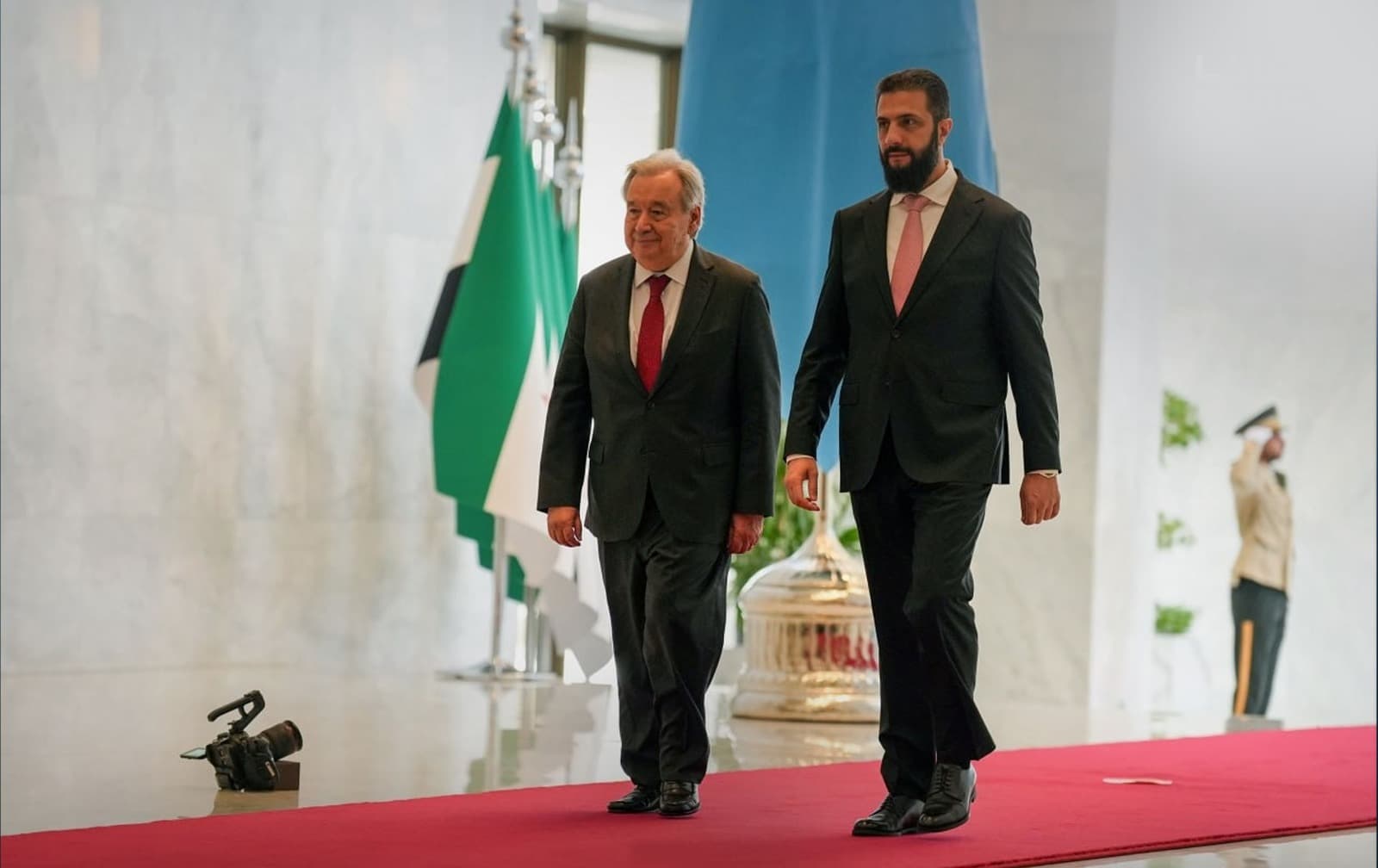
ERBIL, Kurdistan Region - United Nations Secretary-General Antonio Guterres arrived in Damascus on Saturday and is expected to discuss a range of topics with the country's leadership, including minority rights. The visit marks the first trip by a UN chief to the war-torn country in 17 years.
Syrian Foreign Minister Asaad al-Shaibani received Guterres at the airport.
The last visit by a UN chief was in 2009, when Ban Ki-moon met with then-President Bashar al-Assad in Damascus. Assad was ousted in December 2024 following a rebel offensive led by Hayat Tahrir al-Sham (HTS).
Guterres was later received by Syria's interim President Ahmed al-Sharaa, former leader of the now-dissolved HTS, at the presidential palace.
“Syria is not alone in tackling challenges, including the hundreds of thousands who remain missing during past tumultuous decades,” Karla Quintana, the head of the UN Independent Institution on Missing Persons in Syria, was quoted saying on Thursday ahead of Guterres' departure.
Quintana added that supporting the internally displaced persons “is an investment into Syria's social fabric, economic recovery, and long-term peace.”
The UN has estimated that 5.5 million Syrians remain displaced, with 15.6 million people in the country still requiring humanitarian assistance.
Residents in Kurdish areas have experienced multiple waves of displacement, notably in 2018 and 2019, when Turkish forces and allied groups took control of Afrin and Sare Kani, respectively.
The Kurdish-led Syrian Democratic Forces and Damascus signed an agreement in January to expedite the previously stalled integration of the civilian and military institutions of the northeastern administration (Rojava) into state structures.
The return of displaced families is enshrined in the agreement.
About 10,000 families from Afrin have returned to their homes, while the return of nearly 200,000 people to Sare Kani hinges on landmine clearance.
Speaking to Rudaw on Wednesday, Guterres' spokesperson said the secretary-general plans to meet with Sharaa and "representatives of civil society, women's organizations and diverse communities."