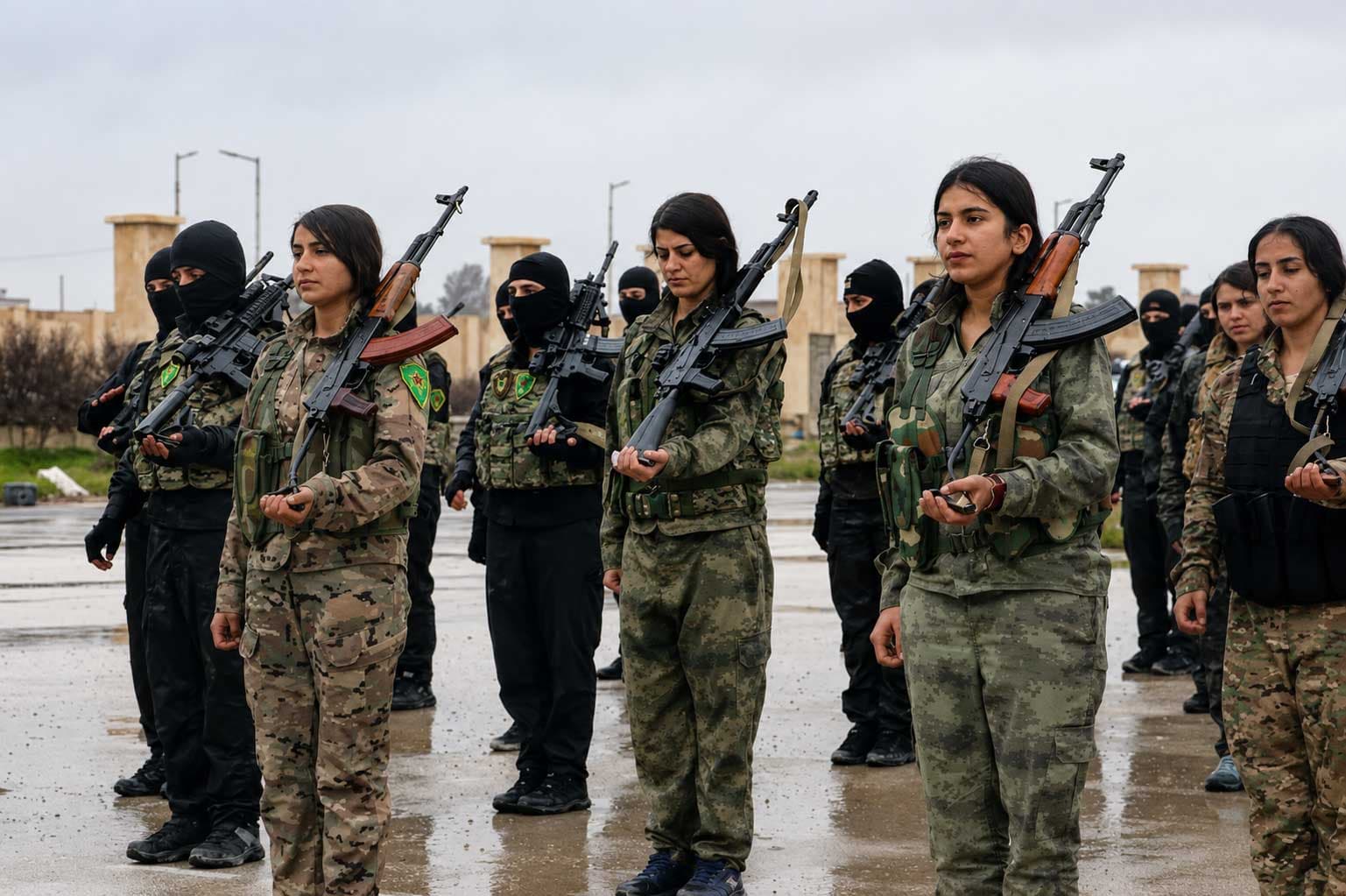

ERBIL, Kurdistan Region - The Women's Protection Units (YPJ) have agreed to join Syria's Ministry of Interior as a counter-terrorism force, a senior representative of northeast Syria's (Rojava) Autonomous Administration said on Monday, describing the move as part of efforts to implement an agreement with Damascus despite remaining political and administrative disputes.
In an interview with Rudaw's Dilbixwin Dara, Abdulkarim Omar, the Autonomous Administration's representative in Damascus, said the YPJ had accepted a Syrian government proposal to integrate into the Interior Ministry after discussions over their future role within state institutions.
"The YPJ has accepted that proposal, but as a unit or group together, joining the Ministry of Interior as an anti-terror force," Omar said.
The YPJ, an all-female brigade affiliated with the People’s Protection Units (YPG), serves as the backbone of the Syrian Democratic Forces (SDF) and is also known for its instrumental role in gaining back control of the city of Kobane from the Islamic State (ISIS) following its 2014 onslaught.
Omar's remarks come as negotiations continue between the Autonomous Administration and the Syrian government over the implementation of the January 29 agreement, which was reached following weeks of intensive fighting. The agreement, mediated by the US, aims to integrate the administration's military, security, and civilian institutions into the Syrian state.
Omar explained that the YPJ had initially sought integration into the Ministry of Defense but that Damascus rejected the proposal, declaring that "there are no women in the ministry."
Mazloum Abdi-Sharaa meeting
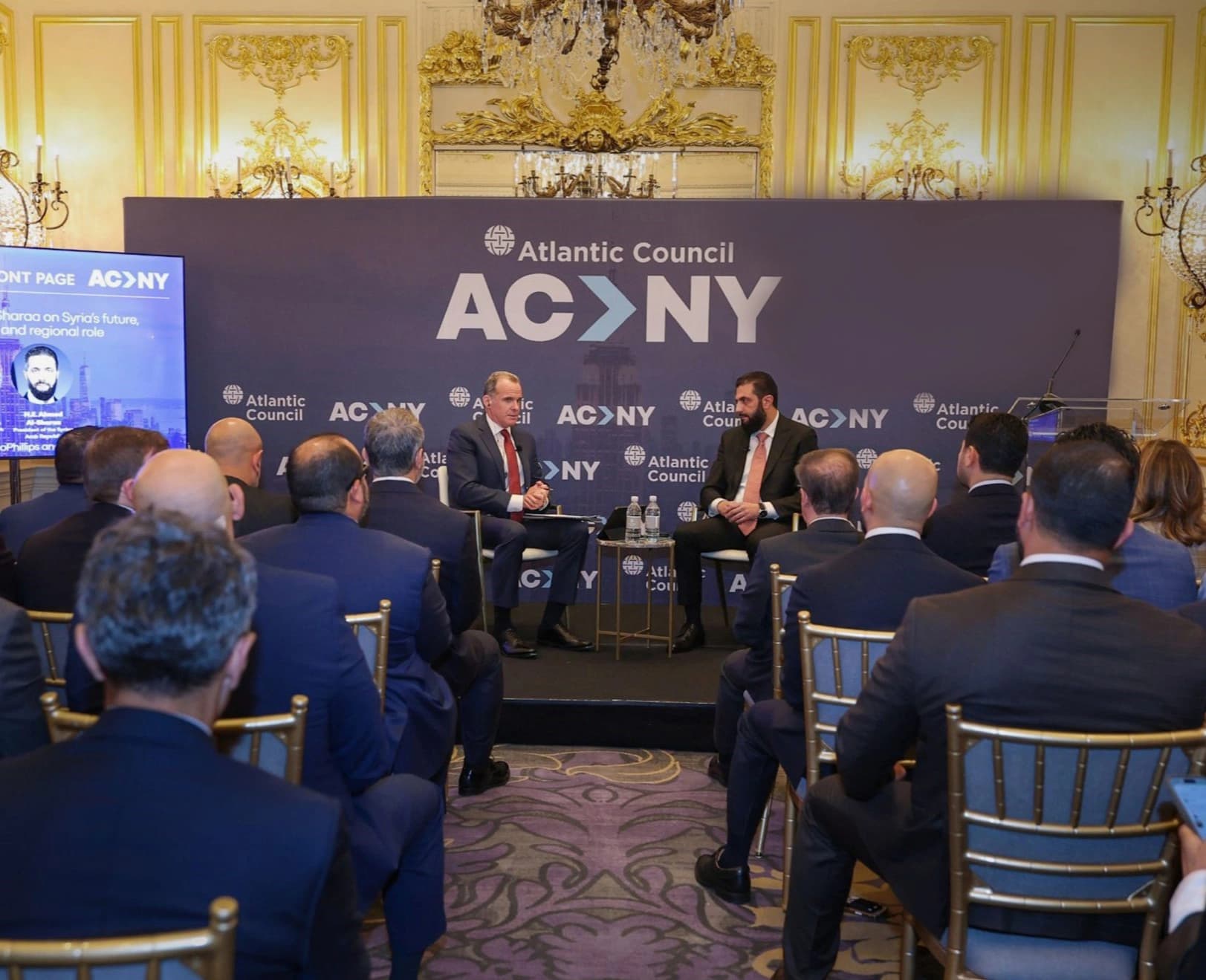
A meeting between SDF Commander Mazloum Abdi and Syrian interim President Ahmed al-Sharaa is expected soon, said Omar, though he declined to specify the exact timing.
"I believe something like that is happening - a meeting, a discussion between General Mazloum Abdi and the president of Syria," he said. "Whether it's tonight or tomorrow morning, I don't want to specify, but I believe such a thing is in the works."
He credited the Kurdistan Region, the United States, and France with helping bridge differences between Damascus and the Autonomous Administration, leading to the January 29 agreement.
While describing progress on integrating security and administrative institutions, Omar said significant challenges remain, including education, Kurdish-language instruction, and the implementation of the broader agreement.
President Barzani can help overcome obstacles
Omar praised Kurdistan Region President Nechirvan Barzani's diplomatic role following his visit to Damascus on Monday, where he met Syrian interim President Ahmed al-Sharaa.
"We want him to play a role in practice so that he can help resolve the obstacles that have appeared on the path of the January 29 agreement," Omar said.
He added that President Barzani could also help strengthen Kurdish unity during what he described as a critical period for Syria. "When a success is achieved diplomatically in any part of Kurdistan, it is a success for all Kurds," he stated.
'The Kurdish issue is political'
Omar stressed that the integration of armed forces alone would not resolve the Kurdish question in Syria, arguing that Kurdish rights must be guaranteed through political agreements and constitutional recognition in the wider integration of Syria’s Kurds within the framework of a unified Syria.
"The Kurdish issue is a political one and must be solved politically" and “agreements must be made,” he said, arguing that electoral representation alone would not secure Kurdish rights.
"A well-known Kurd in Syria... nominated himself for the post of vice president... he only received 10 votes," Omar said, in reference to the recent Syrian parliamentary vote. "We must speak up so that the Kurdish issue isn't just a matter of voting."
Omar also highlighted the April 26 Kurdish Unity Conference, which brought together Kurdish political parties, civil society organizations, youth groups, intellectuals, and women's organizations.
He said participants agreed on a common political document outlining their vision for Syria's future and Kurdish rights.
"If we as Kurds are not together and do not speak with one voice and do not engage in dialogue with Damascus in this way, we will truly lose a lot," Omar warned.
President Nechirvan Barzani’s visit to Damascus on Monday is the first by a Kurdistan Region president since Syria's political transition.
During the visit, he held talks with Sharaa focused on strengthening relations, supporting stability in Syria, and advancing dialogue between Damascus and Rojava as efforts continue to implement the January 29 agreement between the Syrian government and the SDF.