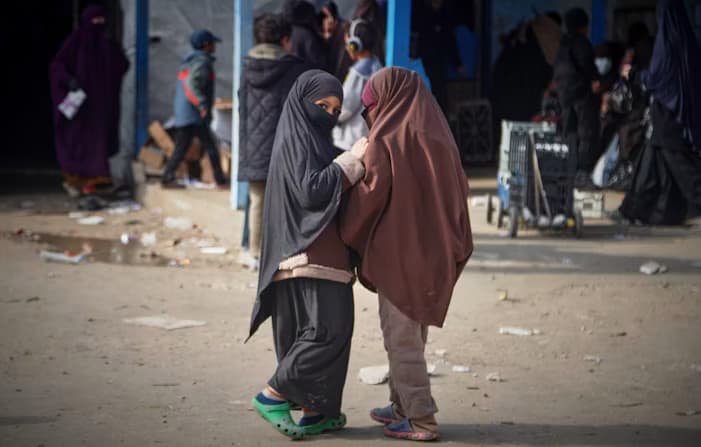

ERBIL, Kurdistan Region - Kurdish authorities in northeast Syria (Rojava) are struggling to maintain healthcare services at Roj camp due to funding shortages, the head of the facility said on Saturday.
Hikmiya Ibrahim, co-chair of the camp, told Rudaw's Noushin Heme that 747 families remain in the camp.
The majority of the camp’s residents are foreigners, with 731 families comprising 2,315 people. In addition, 15 Iraqi families comprising 72 people and one Syrian family of three remain in the camp, she said.
Repatriations have continued this year, with 12 Indonesian families, 11 Australian families and two Tunisian families leaving the camp for their home countries.
Roj camp is located near the town of Derik (al-Malikiyah) in Rojava’s Hasaka province.
Ibrahim said that although humanitarian agencies continue to provide general services under the supervision of the United Nations High Commissioner for Refugees (UNHCR), reduced international funding has severely affected healthcare services.
“Although humanitarian agencies and organizations working under the supervision of UNHCR continue their work and the overall service situation is generally good, the suspension of financial support has had a significant negative impact on the healthcare sector,” Ibrahim said.
The International Rescue Committee (IRC) has stopped operating a mobile clinic in the camp, while a second mobile clinic run by the Mar Afram Board, a UNICEF implementing partner, has also ended its support, according to Ibrahim.
She said reduced funding for the Kurdish Red Crescent has also affected medical services after the organization took responsibility for the camp's field hospital.
The funding shortage comes as Roj remains one of the last camps in northeast Syria holding families linked to ISIS, most of them foreign nationals.
The camp's future remains uncertain as countries have been reluctant to repatriate their nationals because of security, legal and political concerns.
A Rojava official told Rudaw in February that plans were underway to empty the camp.