ERBIL, Kurdistan Region - Displaced Kurdish families who returned to their town of Sari Kani (Ras al-Ain) in northeast Syria (Rojava) on Monday came under attack by "saboteurs," a Syrian defense ministry official - previously a senior commander of the Kurdish-led Syrian Democratic Forces (SDF) - confirmed, as the incident has sparked calls for protests in the Kurdish-majority enclave.
"We condemn and denounce the attacks carried out by a number of saboteurs against families returning to the city of Sari Kani and their attempts to prevent residents from returning to their city," said Sipan Hemo, who was appointed deputy Syrian defense minister for the eastern region in March.
Of note, the eastern region, commonly referred to as Jazira, covers areas east of the Euphrates River, including parts of Deir ez-Zor and Raqqa provinces as well as the predominantly Kurdish Hasaka province in Rojava.
"The state and relevant authorities will pursue those involved and take the necessary legal measures against them," Hemo added, urging "our people to remain calm” and affirming that "no one can prevent the [indigenous] residents from returning to their cities and towns” as their right to return to their homeland is protected."
The senior defense ministry official further vowed that "the return of residents to the city of Sari Kani will continue" once "the necessary security precautions and measures are implemented" and "the necessary protection for them" is provided "to ensure their safety during their return."
Shortly prior, Rudaw received footage from locals in Sari Kani depicting armed men on motorcycles surrounding a vehicle carrying internally displaced Kurds, attacking the car with AK-47 rifle butts, sticks, and stones.
Another video showed a minibus carrying displaced persons with its windows smashed and tires punctured, while a third video showed a man and a woman recording from a distance. The man is heard saying, “Four young men were brutally beaten,” while the woman is heard asking, “Where is the [Syrian] general security, the police, and the state - anybody?”
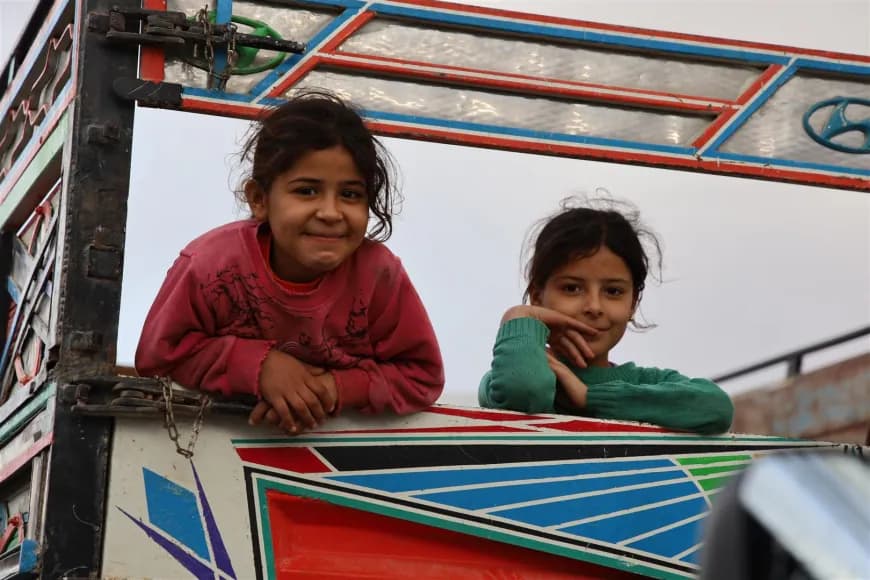
The incident came shortly after the first convoy of Kurdish displaced families left Washokani camp in Hasaka for Sari Kani, marking the start of a process to end seven years of displacement.
The Kurdish-majority city of Sari Kani and its surrounding areas fell under the control of the Turkish army and Syrian armed opposition groups following an October 2019 military offensive that displaced tens of thousands of Kurdish, Arab and other residents into camps like nearby Washokani.
The current return process stems from a January 29 landmark agreement reached between the SDF and the Syrian interim government which followed weeks of intense fighting. The deal established a permanent ceasefire and set out the gradual integration of military, security, and civil administrative institutions in Rojava into the Syrian state.
It also outlined measures to facilitate the safe return of displaced people to their hometowns.
The Monday incident in Sari Kani has sparked calls for protest, with the committee representing the IDPs calling on residents of the Kurdish-majority city of Qamishli in Hasaka to rally at a local square in the afternoon to “express solidarity” and reject “the attacks targeting several returnees in the first convoy that arrived in Sari Kani.”