.webp&w=3840&q=75)

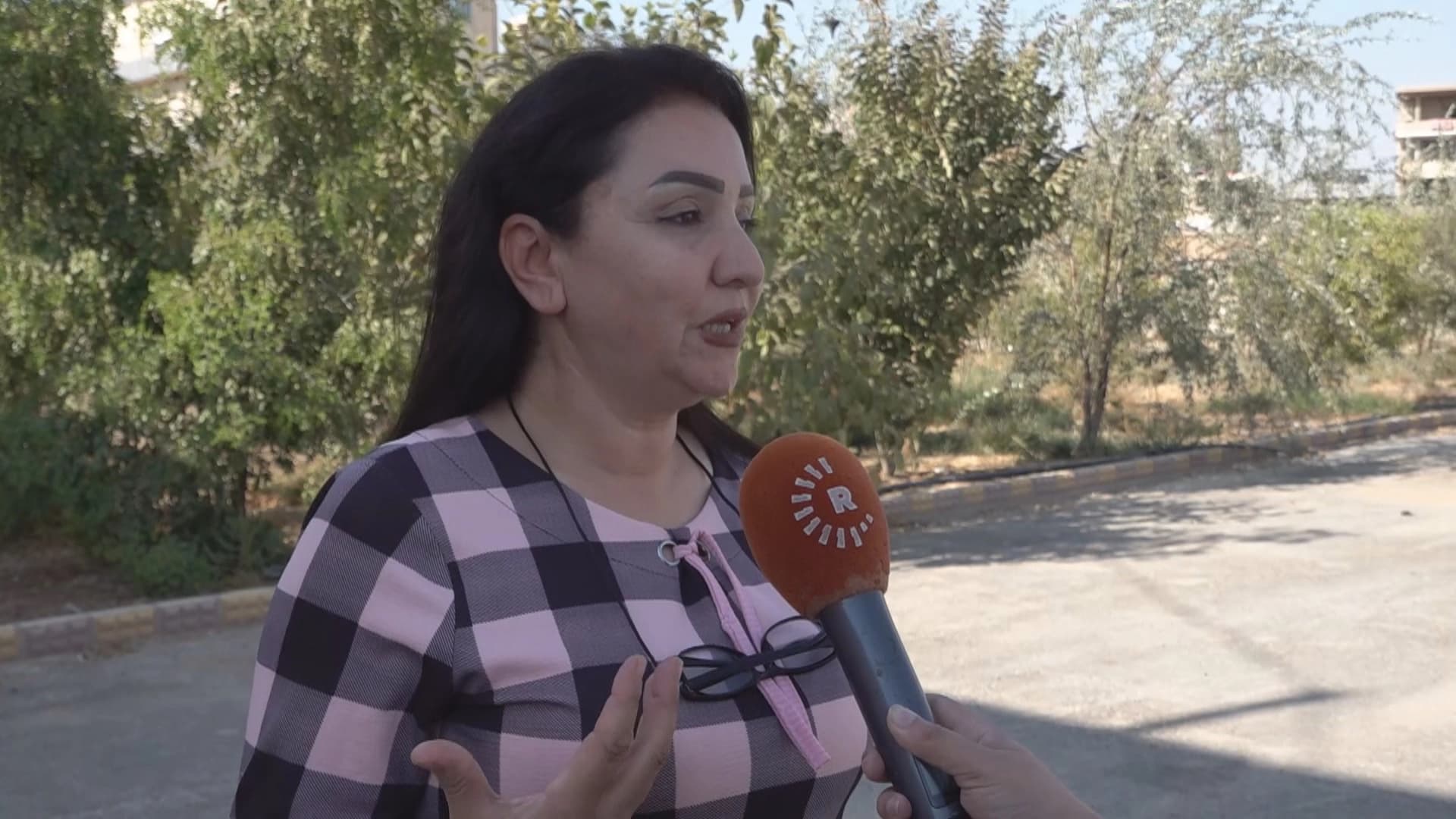
ERBIL, Kurdistan Region - Elham Ahmed, a senior Kurdish politician in northeast Syria (Rojava), said on Saturday that the time has come for political engagement following the dissolution of the Syrian Democratic Forces (SDF) and her appointment to the country's interim parliament.
"We have entered a stage requiring us to do politics and dive deep into the issues. We have to take key decisions together and determine our future. Therefore, we are here to promise martyrs and our mothers,” Ahmed said during a visit to the tomb of a fallen fighter.
Ahmed, who led Rojava’s foreign relations office before being appointed to the interim parliament, was accompanied by Mazloum Abdi, the former commander-in-chief of the SDF.
Abdi was appointed as an advisor to interim Syrian President Ahmed al-Sharaa soon after announcing the dissolution of the Kurdish-led force earlier this month, which was formed in 2015 and became the main ground ally of the US-led global coalition against the Islamic State (ISIS) in Syria.
The developments were part of an agreement between the SDF and Damascus signed in January, after government forces took control of most areas previously held by the SDF during a lightning offensive.
The deal, mediated by the United States and France and endorsed by Ankara and other regional allies of Sharaa, focuses on integrating the civilian, security and military institutions of the Kurdish-held northeast into Syrian state structures.
Abdi announced in mid-August that the integration process was complete, while a presidential envoy later told Rudaw that some former SDF fighters had yet to be integrated into the Syrian army.
Abdi and his team have faced criticism over the dissolution of the SDF and their acceptance of positions in Damascus, with some in Rojava arguing that the new arrangements fall short of the political and cultural rights sought after years of sacrifice.
Ahmed’s remarks on Saturday appeared aimed at reassuring the public that Kurdish leaders would continue pursuing their demands through political channels.
Sharaa’s government has recognized Kurdish as a “national” language and allowed it to be taught for three hours a week in Kurdish-majority areas, while ending 15 years of full Kurdish-language education in the region.
.webp&w=3840&q=75)