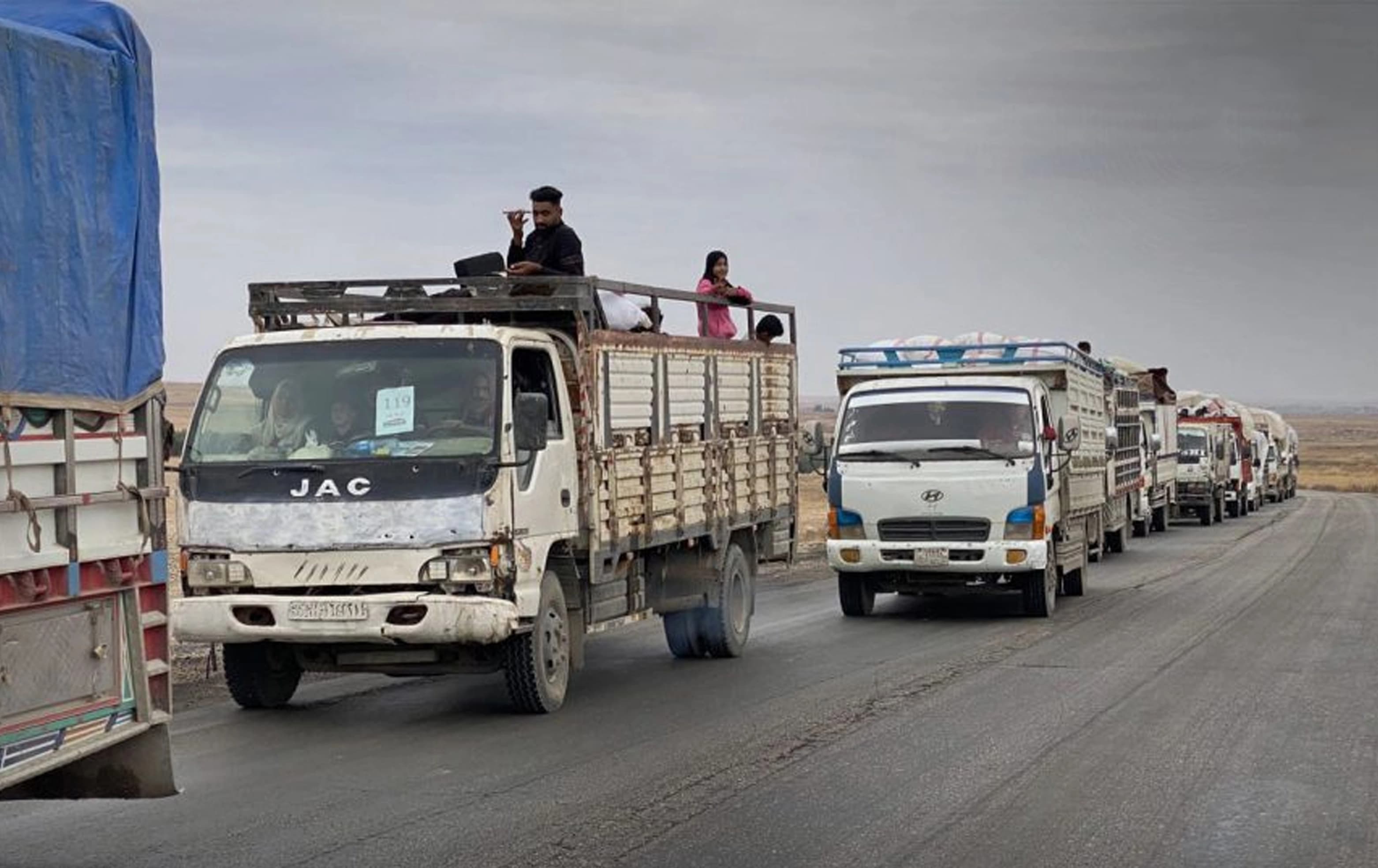
ERBIL, Kurdistan Region - The United Nations Special Rapporteur on the human rights of internally displaced persons (IDPs) stated on Wednesday that Kurds who have returned to the city of Afrin in northern Syria remain in need of essential infrastructure, healthcare, and economic livelihoods despite their elated return.
“They are happy to be back, in terms of feeling that that's home. But physical return, and that's a general principle, is not a solution,” Paula Gaviria Betancur told Rudaw’s Namo Abdulla, adding that “they still feel that they lack livelihoods. They still feel that they need the roads, the health services, to be there."
"I think that the government is trying," Betancur said, noting authorities have a vision for inclusion but must recognize that “return is not only a physical return,” but that cultural and linguistic integration would have to take place, including constitutional rights.
Families from Afrin have endured multiple waves of displacement since first fleeing the city during a Turkish-backed offensive in 2018, with the recent return of nearly 10,000 families by June marking a new chapter following a landmark January agreement between Damascus and Kurdish forces.
Returning Kurds have raised questions about cultural integration, including language rights and school curriculum as Syria navigates its transitional process.
"They want to have a seat in the conversations. They want to be listened to," Betancur said, describing the returnees as “optimistic” despite lingering concerns over basic livelihoods and comprehensive state support.
Kurdish residents initially fled their homes in Afrin when Turkish forces and aligned militias took over the city, leading to the resettlement of predominantly Arab families in their vacant properties.
International human rights monitors have documented numerous human rights violations in the city during this period, including arbitrary killings, kidnappings, the looting of agricultural crops, the cutting down of olive trees, and the imposition of taxes on local farmers.
Displaced families attempting to return to their homes in the city had previously been forced to pay recovery fees ranging from $1,000 to $1,500.
Many residents were displaced again in late 2024 following the collapse of the ousted dictator Bashar al-Assad's regime, and faced further displacement earlier this year due to clashes between interim state forces in Damascus and the Kurdish-led Syrian Democratic Forces (SDF).
The return of displaced residents forms part of the broader implementation of the January 30 landmark agreement between the SDF and the Syrian interim government, which provides for the integration of military and civilian institutions and guarantees the return of displaced people to their areas.