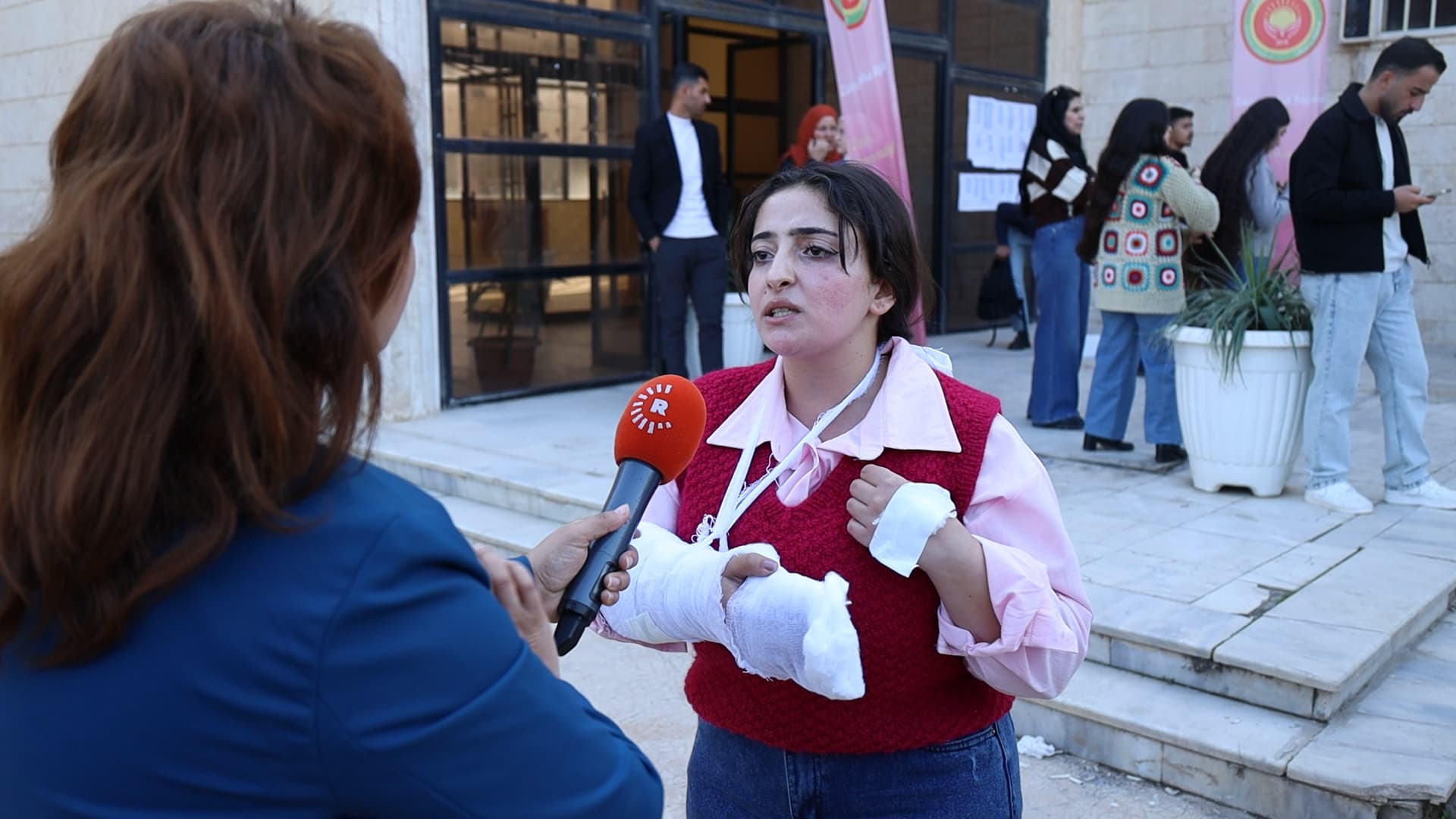
ERBIL, Kurdistan Region - The Syrian interim government will hold indirect parliamentary elections later this week in two cities of the Kurdish region of northeast Syria (Rojava) which are under the control of groups loosely aligned with Damascus, the electoral body announced on Monday.
“Thursday, at 9 am, polling stations will open in the city of Ras al-Ain and the city of Tal Abyad, as well as at the People's Assembly [parliament] headquarters in Damascus, to elect three members to the People's Assembly representing parts of Raqqa and Hasaka provinces,” Nawar Majmeh, spokesperson for the electoral commission, said on X.
Raqqa’s Tal Abyad (Gire Spi) and Hasaka’s Ras al-Ain (Sari Kani) are geographically part of Rojava but have been under the control of militia groups supported by Ankara since 2019.
Seat distribution released in August shows Aleppo province receiving the largest share with 32 seats, followed by Rif Dimashq, Homs, Hama, and Idlib with 12 seats each. Damascus and Deir ez-Zor were allocated ten seats each, while Latakia and Tartus received seven and five, respectively. In the Kurdish-controlled northeast Syria, Hasaka and Raqqa were assigned ten and six seats, and the southern Druze-majority Suwayda province three.
The elections - held on October 5 and the first of their kind since the collapse of Bashar al-Assad’s regime in December - took place in most parts of the country. The process is viewed as part of the transitional government’s efforts to gain international legitimacy following recent massacres carried out by groups affiliated with, or close to, Damascus against Alawite communities in the west and Druze populations in the south.
Of 210 seats, 140 are selected through indirect voting by around 6,000 representatives from regional subcommittees, while 70 will be appointed by interim President Ahmed al-Sharaa under the constitutional declaration he approved in March.
Majmeh noted that the remaining 13 seats of Raqqa and Hasaka and those of Suwayda will remain vacant “until suitable security and political conditions are available."
The Democratic Autonomous Administration of North and East Syria (DAANES), which governs Rojava, has slammed the vote as “exclusionary and undemocratic.”