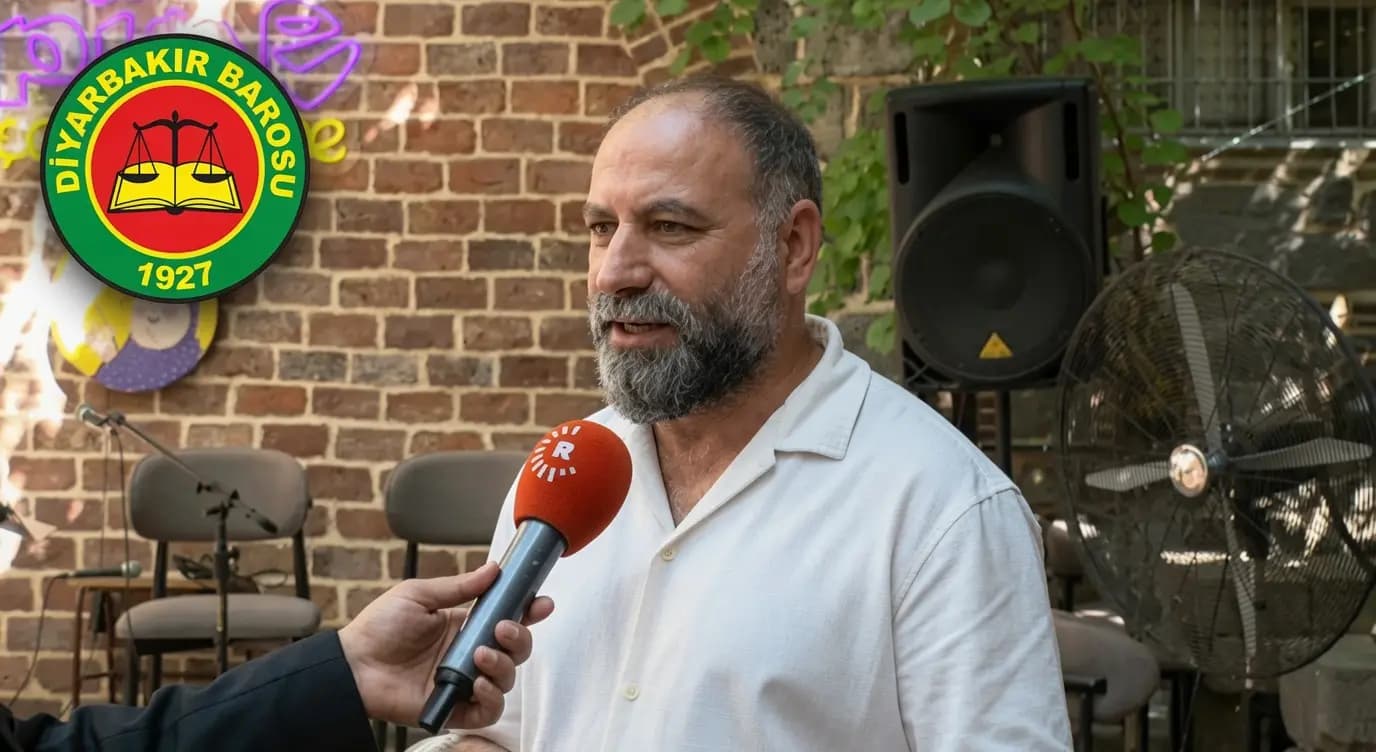
ERBIL, Kurdistan Region - A bar association on Friday condemned a Turkish court's decision to sentence a Kurdish cafe owner to over a year in prison after he decided to provide services solely in his mother tongue.
A court in Turkey's Kurdish city of Diyarbakir (Amed) sentenced Ramazan Simsek, owner of Pine Cafe, to 15 months in jail on Thursday, concluding a case that had run for over two years. Simsek was detained on May 29, 2024, after announcing on Kurdish Language Day two weeks earlier that he would provide services only in Kurdish at the cafe.
“Workplaces that provide service in Kurdish are not merely commercial spaces - they are also cultural spaces that contribute to the visibility of the Kurdish language in public life. Punitive rulings targeting such places create a chilling effect not only on the business owner but on the use of Kurdish in public life more broadly,” the Diyarbakir Bar Association said in a statement in Kurdish on Friday.
“Under Article 10 of the European Convention on Human Rights, freedom of expression is protected. This right encompasses not only speech, but also the dissemination, protection, and communication of ideas and cultural works,” it added.
Simsek told Rudaw's Mashallah Dakak that he was kept under house arrest for six months after his detention, adding that the court had accused him of propagating for a “terrorist organization” - a charge directed at thousands of Kurds in the country over their alleged affiliation with the Kurdistan Workers' Party (PKK).
Simsek said he plans to appeal the ruling in higher courts, noting that he refused to speak Turkish during all five hearings of his trial, instead speaking Kurdish through a translator.
It remains unclear whether Simsek will serve jail time if the ruling is upheld by the higher courts.
Simsek said he will not give up his fight for the Kurdish language, even if he faces further sentences.
The ruling comes despite ongoing peace talks between the PKK and the Turkish state, a process aimed at resolving the Kurdish issue in the country after decades of a conflict which has killed at least 40,000 people.
Ankara, which the PKK has criticized for failing to take concrete steps toward peace despite the group's decision to dissolve itself and lay down arms, is working to give the process a legal framework by passing a law in parliament that would allow PKK fighters to return to the country after surrendering their weapons.
The Peoples' Equality and Democracy Party (DEM Party), Turkey's main pro-Kurdish political party, has called for the recognition of the Kurdish language in the country.
“Kurds have opened their doors to you, fought alongside you. Now accept Kurdish identity, Kurdish language, and stop fighting against it,” Tuncer Bakirhan, DEM Party co-chair, said last year.
The DEM Party is the main mediator of the latest peace talks.
Since the establishment of modern Turkey in the early 1920s, the public use of Kurdish - including speaking, publishing, or singing - has at times been banned. The current constitution, ratified after a military coup in 1980 and most recently amended in 2017, identifies Turkish as the country's official language. Restrictions have eased over time, including during an earlier peace process with the PKK a decade ago, but public use of the language remains stigmatized.
Kurds remain hopeful that change may come as part of the latest peace efforts.