ERBIL, Kurdistan Region - An international literary conference in Diyarbakir (Amed) on Friday called for Kurdish-language education and official recognition of Kurdish identity in Turkey.
“Kurdish must become a language of education, and Kurdish identity must be officially recognized,” Burhan Sonmez, president of PEN International, a global association of writers that promotes literature and freedom of expression, said at the conference, adding that “policies of assimilation must end, and the right to a fair life must be constitutionally guaranteed.”
The conference, titled “Literature and Peace”, was organized by London-based PEN International and its Kurdish branch and five local Turkish municipalities. The gathering brought together Kurdish writers from outside Turkey, including writers from the Kurdistan Region and the diaspora, as well as guests from the Basque Country and Catalonia.
The right for Kurds to speak their own language is a particularly thorny issue in Turkey, as they continue to struggle to speak their language and have it taught in the classroom amid wider struggles for peace with Ankara.
Kurdish remains elective up until university where courses in Kurdology are available. Nonetheless the frequency of Kurdish courses depends on enough demand as well as the number of teachers who are often non-existent in anywhere other than major Kurdish cities.
In the 20th century, Kemalist-era linguicide attempted not merely assimilation but eradication of the Kurdish language, instating Turkish as the sole official language and going as far as to spell Kurdish surnames with Turkish endings. While many of these surnames have been reversed, Ankara maintains an official nation-wide mono-lingual policy.
At Friday’s conference, Carles Torner, PEN International’s vice president, emphasised the necessity for the status of Kurdish to be enshrined in law as well as its repeated in everyday usage.
“Being the official law of the territory where the language is spoken is one of the most evident ways of solving the issue,” he explained. “Because then automatically it will be the language of education in all public spheres of life. This is why the status of the language is essential."
Politicians and local mayors also attended Friday’s conference, addressing how Kurdish identity is vital in the ongoing peace process between Ankara and the Kurdistan Workers’ Party (PKK). Co-Mayor of Amed Serra Bucak recalled the linguistic oppression Kurdish writers and speakers have historically felt in Turkey. She drew on the ineffable parallel between free linguistic expression and liberty itself, saying that “free words create free peoples.”
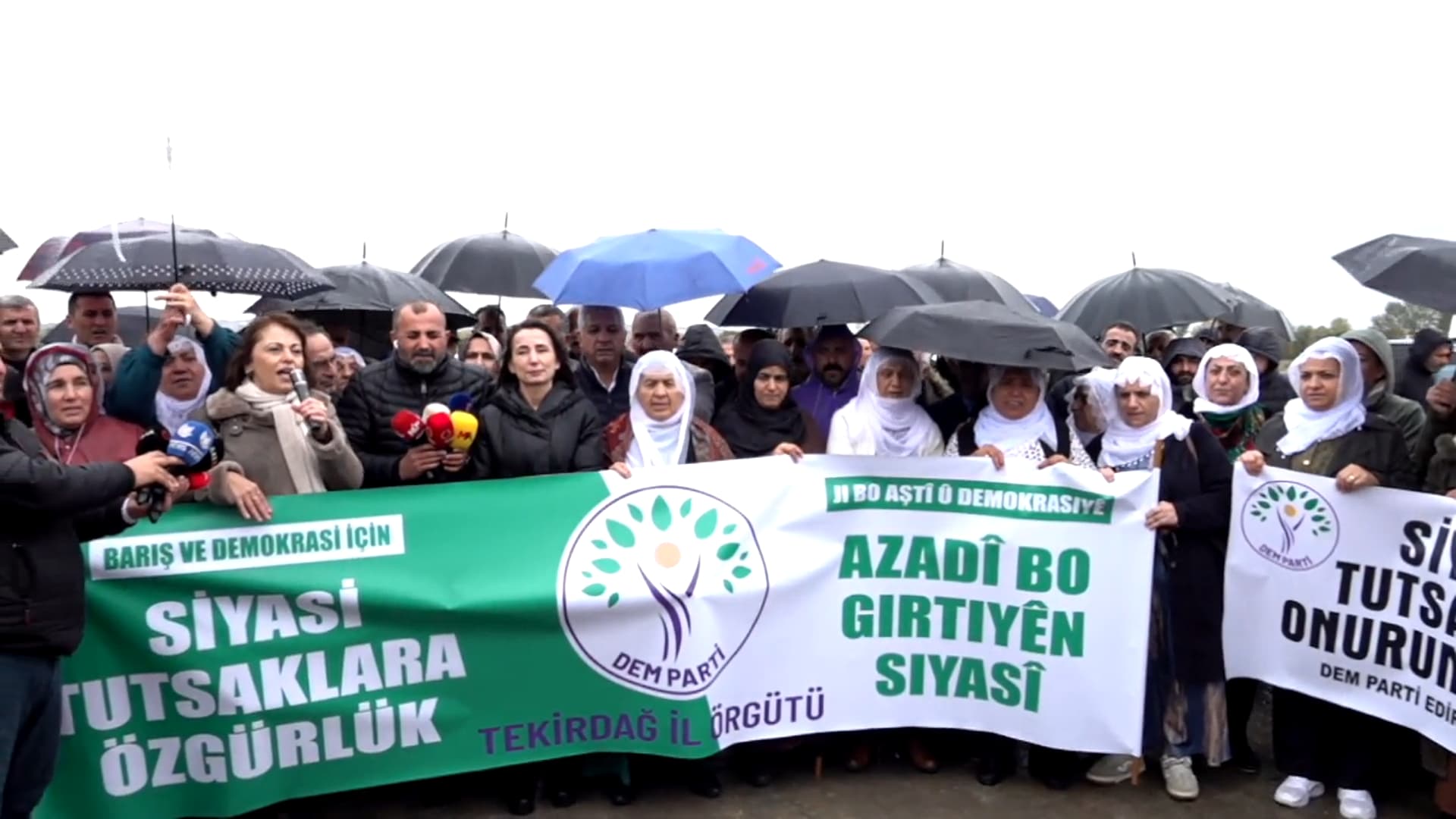
In October, Co-Chair of the Peoples’ Equality and Democracy Party (DEM Party), Tuncer Bakirhan told Rudaw that Turkey’s peace process was nearing the end of its first phase, with broader Kurdish rights and the release of political prisoners expected to feature in the next stage.
While the ongoing peace process between PKK and Ankara continues to grind on, the conference offered an optimistic note, placing Kurdish linguistic integrity at the forefront of any route to sustainable peace.
Hope for the future
Urtzi Urrutikoetxea, chair of PEN International’s Translation and Linguistic Rights Committee was also present at Friday’s conference. He spoke about the Basque Country’s experience of linguistic pressure in Spain; a comparison with which may prove fruitful in the case of Kurds in Turkey.
He described how assimilation had interrupted the transmission of Euskara, the language of the Basque people. However, concerted efforts from the youth of the area over several decades had reversed Euskara’s extinction.
The situation in the Basque Country was now like a “pyramid” where, contrary to expectations, the younger generation spoke more Euskara than their grandparents.
This youthful force meant that implementing the language in school was now relatively easy.
In the field of linguicide, Basque represents a success story, coming back from the brink through a concentrated effort from the youngest in society. Restoring Euskara’s prominence in education was the most vital step for securing its future. Perhaps, in the case of young Kurds in Turkey, similar steps may be adopted for the future of Kurdish in Turkey.