ERBIL, Kurdistan Region - The European Union (EU) Council on Monday announced sanctions against two Iranian individuals and a component of Iran’s Islamic Revolutionary Guard Corps (IRGC) Navy, which oversees operations in a southern province adjacent to the Strait of Hormuz, over involvement in disrupting shipping in the strategic waterway. Tehran downplayed the move as “political” and lacking legitimacy.
The Council said it had approved “restrictive measures against two individuals and one entity under the extended legal framework targeting those involved in Iran’s actions and policies threatening the freedom of navigation,” adding that Iran’s actions are “contrary to international law and infringe upon established rights of both transit and innocent passage through international straits.”
The EU body further detailed that the sanctions target the IRGC Navy’s command in Iran’s southern Hormozgan province, accusing it of threatening shipping in the Strait of Hormuz.
Also sanctioned were Mohammad Akbarzadeh, the IRGC Navy’s deputy commander for political affairs and spokesperson, as well as Hamid Hosseini, a representative of Iran’s Oil, Gas and Petrochemical Products Exporters’ Union, whom the Council says supported actions that are ‘impeding’ lawful transit and freedom of navigation.
In response, Iran’s Deputy Foreign Minister Kazem Gharibabadi on Monday censured the EU Council’s move as a “fraudulent move,” censuring member states as major violators of Iranian rights and accusing them of “deliberately remaining silent in the face of the [ongoing] US naval blockade against Iran, which is considered an act of war.”
Noting that Tehran is not a party to the Convention on the Law of the Sea, Gharibabadi said Iran’s authority in the Strait of Hormuz is governed by the principle of “innocent passage” under customary international law and coastal security considerations. He added that Tehran “does not attach any value to this political and hypocritical move” by the Council and will continue “exercising its sovereign rights over the Strait of Hormuz.”
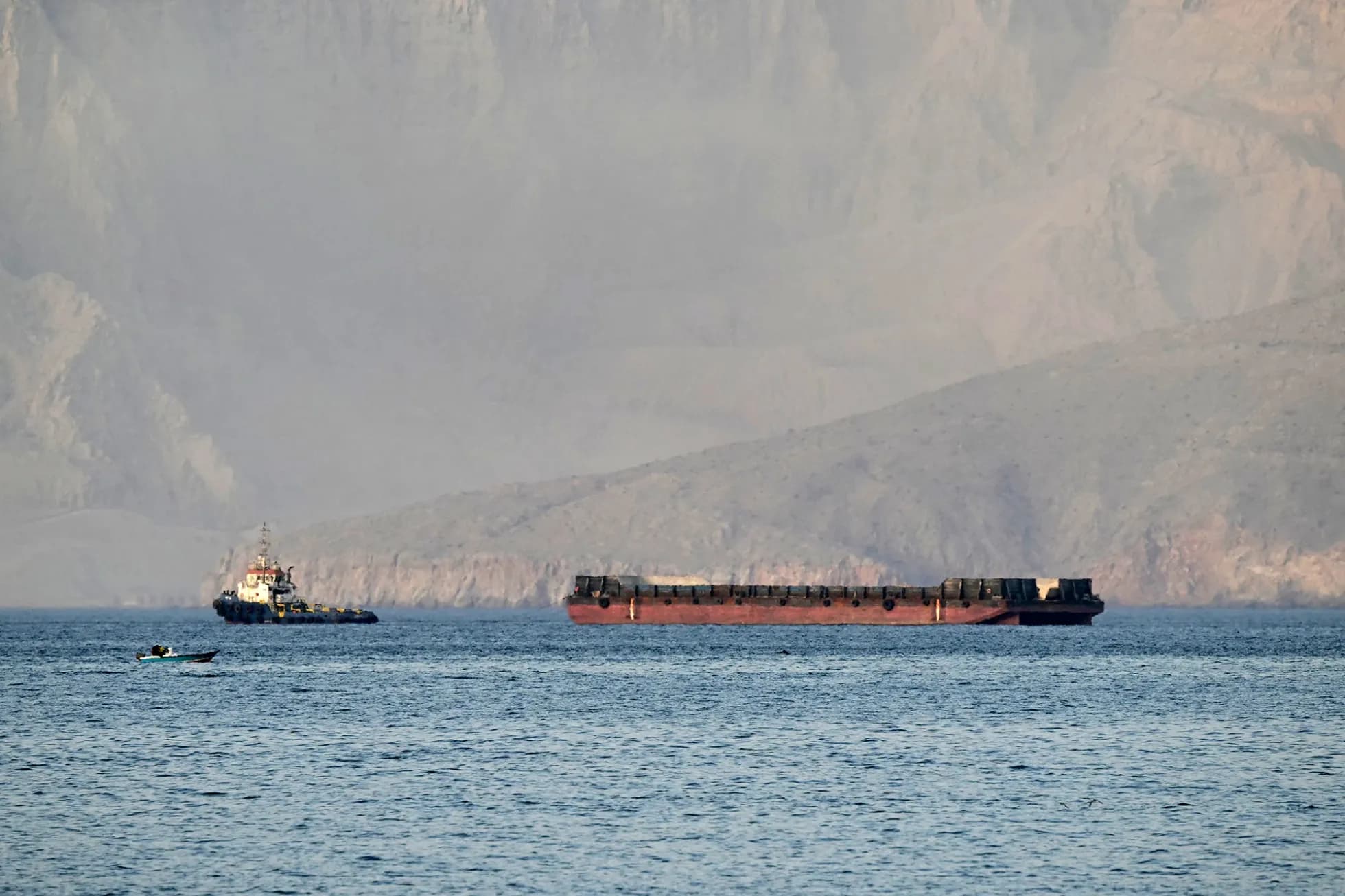
The new sanctions come against the backdrop of months of maritime restrictions in the Strait of Hormuz that have persisted since the outbreak of the Iran war in late February.
The US and Israel in late February launched a large-scale aerial campaign against Iran striking thousands of targets across the country over six weeks of hostilities before the warring sides agreed to a Pakistan-mediated ceasefire on April 8, halting fighting to allow space for talks.
While the first round of talks concluded without a final agreement on April 11, a second round has yet to take place, with a comprehensive resolution to the conflict still pending.
Alongside the diplomatic efforts, Tehran and Washington engaged in reciprocal maritime measures. Iran tightened its control over shipping through the Strait of Hormuz, while the US imposed a naval blockade on Iranian ports beginning April 13.
The Strait of Hormuz is a key chokepoint linking the Persian Gulf to the Gulf of Oman and the open ocean. It is often described as the world’s most critical energy artery, handling approximately 21 million barrels per day of oil - around 25 percent of global seaborne oil trade and 20 percent of global petroleum consumption. Beyond crude oil, the strait is also the main transit route for nearly 20 percent of the world’s liquefied natural gas (LNG).
In early May, Iran established the Persian Gulf Strait Authority (PGSA), which has reportedly been enforcing a permission-based transit system in the Strait of Hormuz, including collecting fees from vessels and inspecting or targeting those that do not comply.
Mohsen Zanganeh, a member of Iran’s parliament planning and budget committee, told the IRGC-affiliated Fars News Agency on Sunday that “an average of $1.5 million to $2 million is being collected from every ship” passing through the Strait.