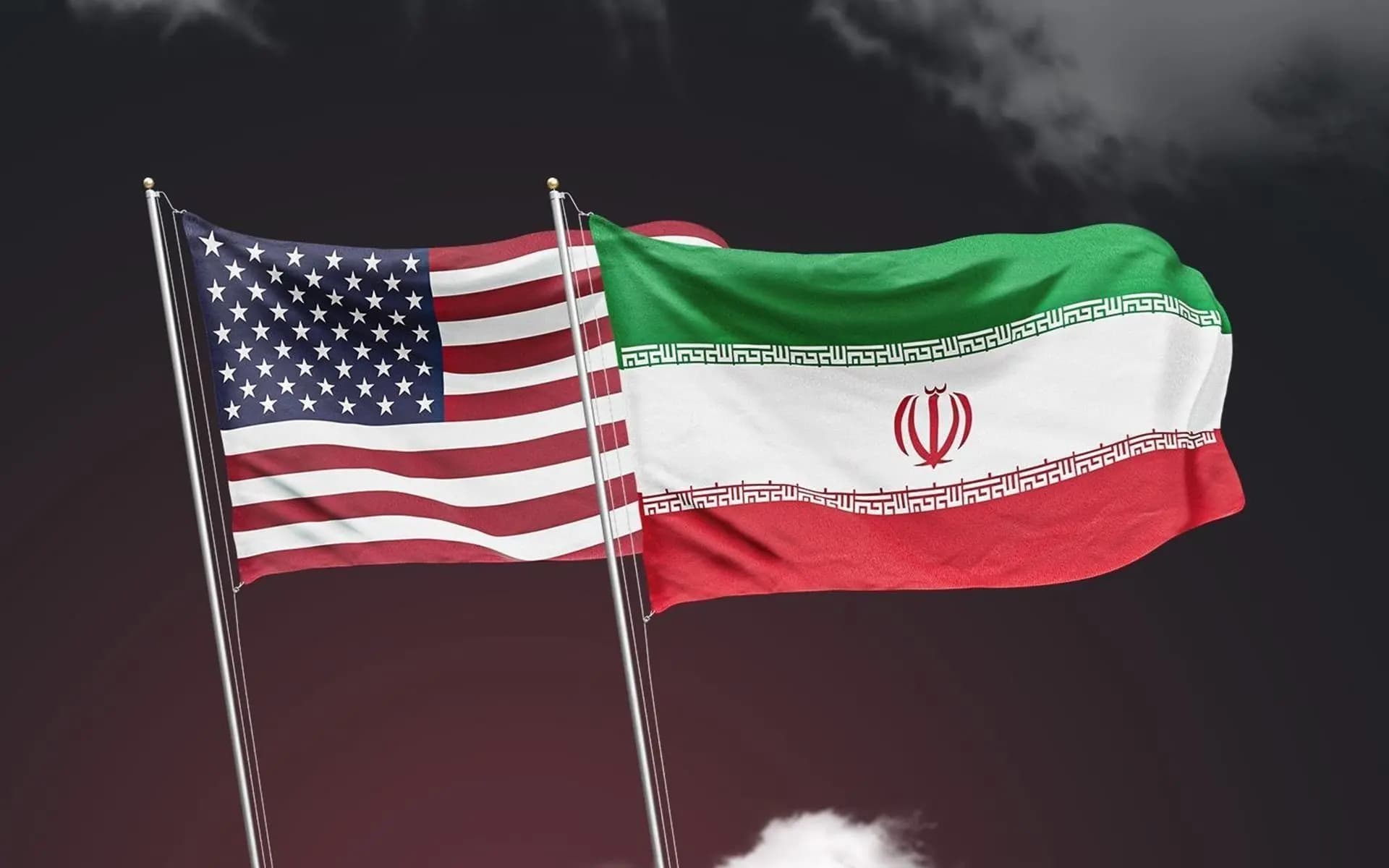

WASHINGTON DC - Iran and the United States “have signed” a war-end agreement, a senior US administration official told reporters, including Rudaw’s, on Monday, noting that President Donald Trump “personally” signed it.
A senior US official, who spoke to reporters anonymously, said the memorandum of understanding between Tehran and Washington has already been signed electronically by President Donald Trump, Vice President JD Vance, and Iranian Parliament Speaker Mohammad Bagher Ghalibaf, describing it as the first formal framework guiding renewed negotiations between the two countries.
“The President and Vice President both signed it. Speaker Ghalibaf, on the other side, signed it,” the official confirmed during a background briefing, adding, “This memorandum provides a few basic things. The first is to provide the structure for how our negotiation, our relationship will operate in the future.”
Other senior officials who spoke at the same briefing told reporters the agreement lays out a phased structure for future talks on Iran’s nuclear program, sanctions relief, regional security, and maritime access through the Strait of Hormuz.
They further confirmed that an in-person signing ceremony for the agreement is expected to take place on Friday, bringing together senior US and Iranian figures.
“We're going to have a signing ceremony for this thing on Friday,” one official confirmed, noting that the American negotiating team, including VP Vance, Jared Kushner, and Steve Witkoff, are expected to participate from the US side in addition to “a lot of people from the Iranian side."
The ceremony will formalize the already electronically signed memorandum and mark the beginning of the next phase of technical negotiations, the same official explained, noting that the core principle of the agreement is conditional reciprocity between Tehran's conduct and economic relief.
“The more the Iranians are willing to work with us on their nuclear program, on verifying that they’re not building a nuclear weapon, on not funding radicalism and terrorism in the region, the more that they’re going to be welcomed into the world economy through a combination of sanctions relief and other economic measures,” the official said.
“If they’re willing to behave like a normal country, then we’re willing to treat them like a normal country," he affirmed.
On the release of frozen Iranian assets, senior officials stressed that no economic measures have yet been implemented.
“Zero. At the end of that is zero,” one official said when asked whether any frozen Iranian funds had been released. “The very simple fact is $0 of unfrozen assets have been released by the United States or any other country."
He further suggested that reports claiming otherwise may be intended for domestic messaging, noting, “We suspect that there are some elements within the Iranian hardline system trying to signal to their allies, or maybe their domestic audience."
On future sanctions relief, officials said it would be phased and conditional on verifiable Iranian compliance, with one official noting that such action "requires Iran to do some of the things that they’re promising to do.”
The briefing further touched on the status of maritime traffic through the Strait of Hormuz, which officials said is already beginning to recover following the agreement.
“We’ve been getting as much as 25 ships per day,” one official said. “Now that we’re through, I think that’ll probably go to maybe 40 to 50 pretty quickly.” He further added that by the end of the week, “everything will be fully open.”
Meanwhile, other officials present at the briefing anticipated that restoring traffic in the key waterway would be gradual due to logistical and security constraints.
“You have mines in the Strait [of Hormuz], you have ships that have different risk tolerances,” one official explained, noting that "some crews are ready to go, some want a little more stability.”
Nonetheless, the increased shipping activity in Hormuz is already reflected in global energy markets, he added, pointing to recent declines in oil prices.
While the memorandum of understanding is set to be only the first phase, longer and more detailed technical negotiations are expected to begin soon with participation from Vice President Vance.
“This is really just the first MoU,” one official said, adding, “We’re going to launch into real technical discussions later this week.”
Officials also noted that the full text of the memorandum will be released publicly within 24 to 48 hours, with one official affirming, “Everything we do will be transparent.”
Another official also noted that "one of the really interesting things about this process is that we actually have a direct relationship with a number of people at the highest levels of the Iranian government that really hasn’t happened in 47 years.”
Officials described the broader strategy as rooted in sustained pressure combined with diplomatic engagement.
“Economic, diplomatic, and military pressure has put us in a place where the Iranians are willing to concede things they weren’t willing to concede before,” one official said.
At the same time, the US officials warned that the process remains reversible.
“If they want to behave like a normal country, then we’re willing to be extraordinarily generous,” one of the official said, warning however that “if not, President Trump has a lot of tools in his arsenal.”
Last updated at 8:20 pm.