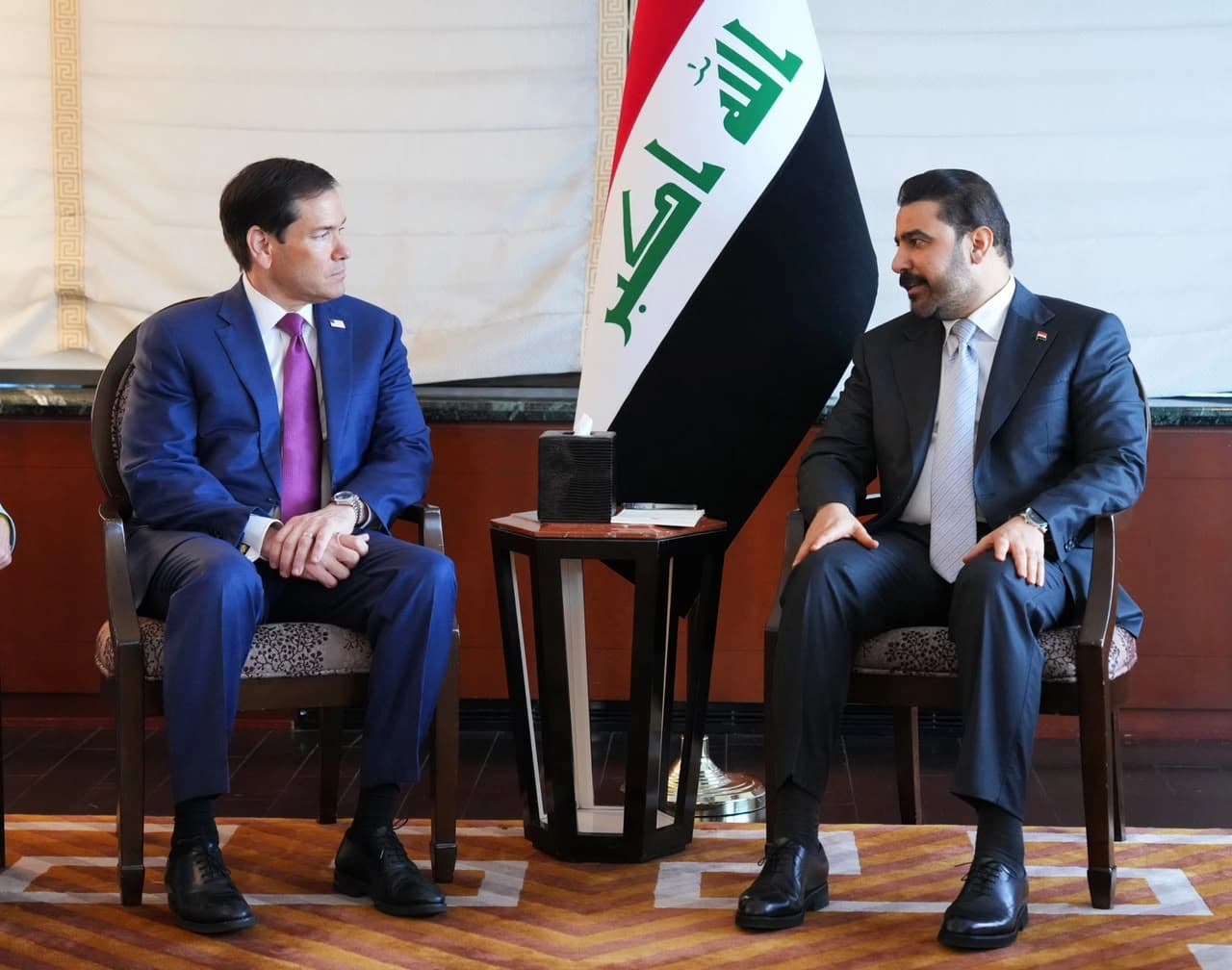
NEW YORK - As US forces withdraw their air defense systems from the Kurdistan Region, leaving Kurds more exposed to drone and missile attacks that have battered the Region since February, the new president of the UN Security Council said Monday that no country has asked the Council to address the protection of civilians there.
The Kurdistan Regional Government (KRG) has long accused the federal government in Baghdad of failing to protect its territories from attacks by both foreign powers and Iraqi armed groups, with Kurdish officials often lamenting that neither Erbil nor Baghdad possesses defenses to replace the departing American Patriot batteries.
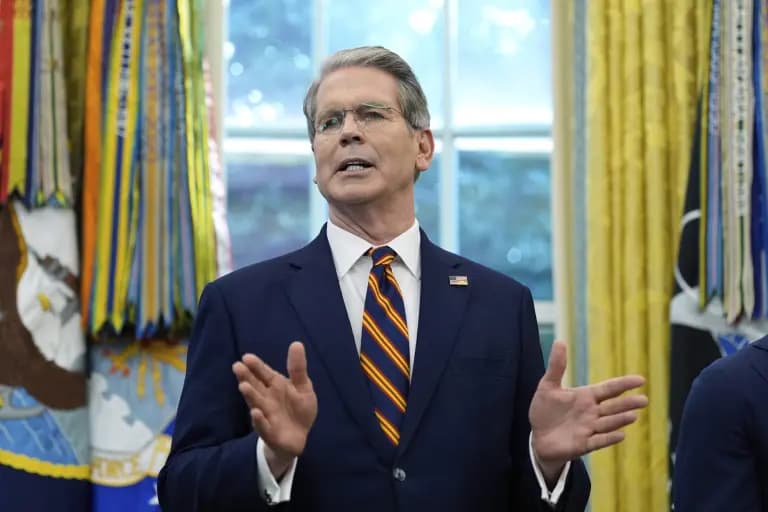
Ambassador Christina Markus Lassen, Denmark's permanent representative to the United Nations, took over the Council's rotating presidency this month. Asked at a briefing at UN headquarters whether the Council could act to protect civilians in the Region where the central government may not be doing enough, she said the issue had never reached the Council.
"Usually, we will have somebody also asking the council to discuss [an] issue, and so far it's not something that's been raised with us," Lassen said. "But that's certainly something I would look into."
“We want the fighting to stop!”
The UN secretary-general's office, asked the same day who would be responsible for protecting civilians in the Kurdistan Region once the American systems are gone, did not name any party.
"In Kurdistan as well as throughout the various regions in the Middle East, we want all of the fighting that's been involved, that's involved US and Iranian forces, to stop," Farhan Haq, deputy spokesperson for the secretary-general, told Rudaw.
"We don't want any of the neighboring countries or neighboring regions to have to face the sort of firing that's been happening, and we welcome all efforts, including by Pakistan, by Qatar, and others, to mediate."
The answers highlighted a structural gap. The UN Assistance Mission for Iraq closed on December 31 at Baghdad's request, ending the 22-year political mission through which the Council received regular reporting on Iraq. With no mission, no envoy and no standing Iraq item, a situation reaches the Council only if a member state raises it.
The member state for Iraq is the same federal government the Kurdistan Region accuses of inaction, and the KRG has no standing to seize the Council itself.
A thousand projectiles
The Kurdistan Region has been struck by more than 1,000 drones and missiles since the war between the United States, Israel and Iran began on February 28, according to Rudaw monitoring, despite the Region's declared neutrality in the conflict.
In July alone, Rudaw recorded some 88 drone and missile attacks which killed at least 10 people and injured 15 others, after assaults resumed despite the memorandum of understanding signed by Washington and Tehran in mid-June.
Prior to that, casualties included seven of the Region's Peshmerga fighters, a member of its internal security forces (Asayish) who was killed at Erbil International Airport, a married couple killed when a drone struck their village home in Erbil province in April, and members of Iranian Kurdish opposition groups whose camps have been repeatedly hit.
In May, an Iranian ballistic missile strike on a Peshmerga base in Erbil province's Soran administration killed at least six fighters and wounded 30. That month, Tehran declared the Kurdistan Region a site of "hostile bases" under its security doctrine.
Erbil province has absorbed the large majority of the strikes. Many were intercepted by US and coalition air defenses at the Erbil airport compound, and Erbil Governor Omed Khoshnaw has credited air defense systems with destroying incoming projectiles. Khoshnaw has also accused the federal government of staying silent as the attacks killed civilians in the province.
Patriots gone, troops leaving
The US military began drawing down its remaining forces near Erbil International Airport in late July and has removed all Patriot batteries from the compound, al-Monitor reported on Friday, citing sources with knowledge of the process. The pullout is running ahead of the September 30 deadline set under the 2024 US-Iraq agreement ending the anti-ISIS coalition's mission in the country.
Meanwhile, Kurdish officials said they received no advance notice of the movements and described the relocation of previously fixed defense systems as not routine.
Kurdish sources told Asharq al-Awsat they expect Iran and its allied armed factions to continue attacking after the Americans leave, and said neither the Kurdistan Region nor Iraq operates effective missile defenses or early-warning radar. The KRG cannot legally procure strategic air defenses of its own without going through Baghdad first.
Of note, Iran's Revolutionary Guards Corps (IRGC) claimed in late July to have destroyed a Patriot system and US facilities in Erbil, part of what analysts describe as a campaign to push American assets progressively out of the region.
Fluent on Syria
Lassen's uncertainty on Iraq stood in contrast to her answer, minutes earlier, on Syria, where Denmark is the humanitarian penholder and authored the Council's presidential statement on the country’s southern Druze-majority Suwayda last August.
Asked whether the Council could play a role in verifying the integration agreement between the Kurdish-led Syrian Democratic Forces (SDF) and Damascus, and the implementation of Presidential Decree No. 13 on Kurdish citizenship and language rights, she gave a detailed reply drawing on her own diplomatic service in Syria.
"We've been quite positively, cautiously, but positively surprised by the developments in Syria since the 8th of December 2024," she said, citing the Council's visit to Damascus and Secretary-General Antonio Guterres' trip last week.
"I think we have been quite impressed that it was possible to make the deal, Decree No. 13, including also the question of citizenship," she said. "Having myself served in Syria before the war and during the beginning of the war, I know how much that was an issue for the Kurdish population there."
However, she did not say whether the Council would take any formal role in verifying either agreement.
Damascus issued Decree No. 13 on January 16, restoring citizenship to Kurds stripped of nationality under the 1962 Hasaka census and recognizing Kurdish as a national language. By late May, Syrian authorities had received 2,892 family applications covering 10,516 individuals, a fraction of a stateless population estimated at between 120,000 and 300,000, and extended the application window amid continued demand.
Erbil fills the vacuum
Hours before Lassen spoke, Kurdistan Region President Nechirvan Barzani met Syrian interim President Ahmed al-Sharaa in Damascus, his first visit to Syria since the fall of longtime Syrian dictator Bashar al-Assad in December 2024.
A Syrian official source told AFP the talks addressed procedures for integrating the SDF into state forces under the January agreement, which Erbil helped broker. Al-Hadath news channel reported the two also discussed implementation of Decree No. 13 and constitutional guarantees for Kurds in a future constitution.
The US withdrawal from Iraq is due to be completed by September 30. Lassen's presidency ends August 31, and Denmark leaves the Council on December 31.