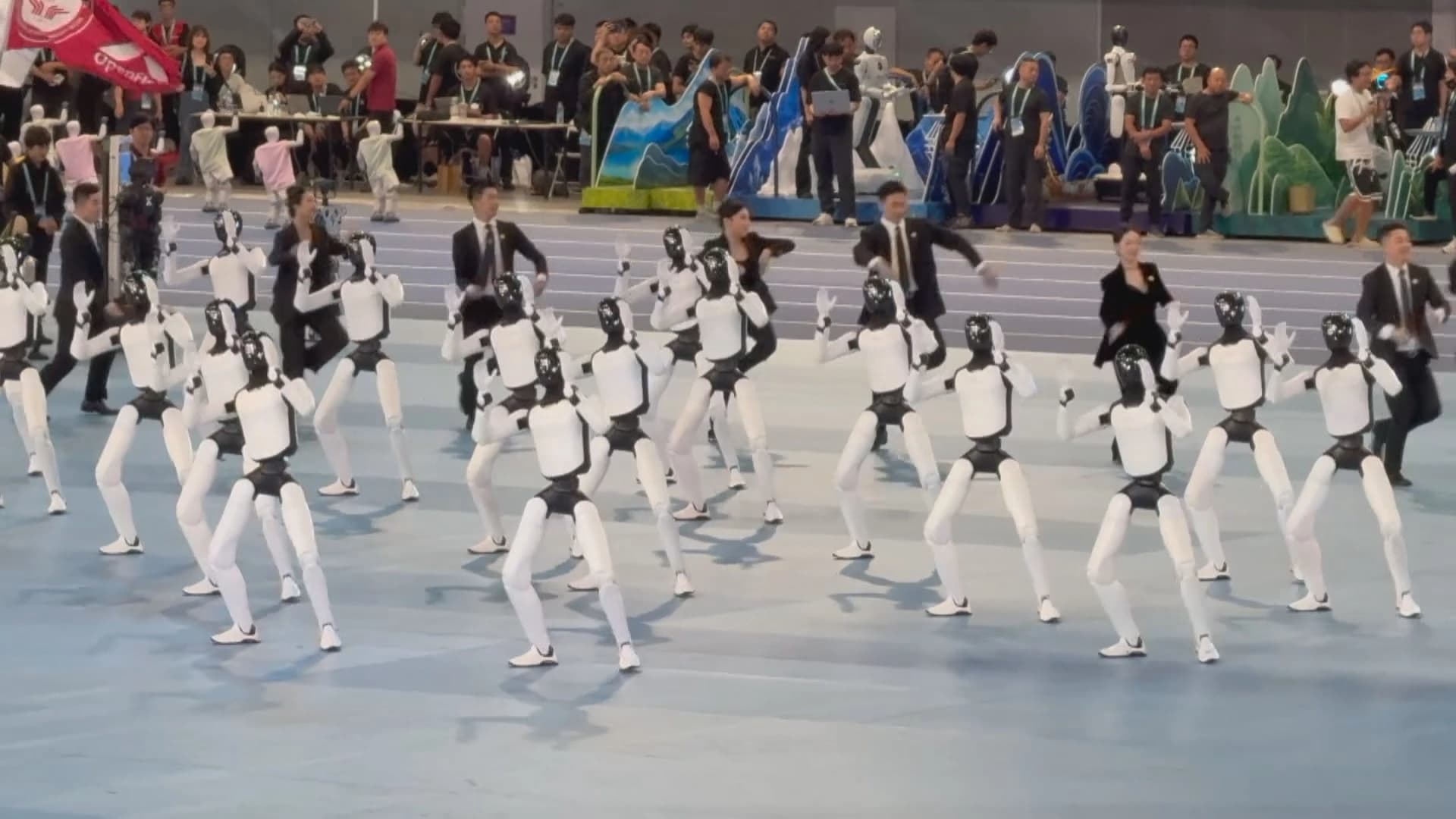

BEIJING - The line between imagination and reality is being blurred in Beijing which recently hosted its second edition of the Humanoid Robot Games featuring the latest technological advancements from China and around the world.
The competition brought together 2,056 robots from 666 teams representing 16 countries, demonstrating their abilities in events ranging from running and jumping to dancing, boxing and free fighting.
The games are designed to test not only the robots’ physical capabilities but also their programming, precision and decision-making speed.
“Our evaluation criteria focus on how closely the robots' movements resemble those of humans,” Liu Qing, a referee at the games, told Rudaw on Wednesday. “We compare their dancing with real dances, such as the Samba. I can say that compared to last year, these advancements represent a giant leap forward,” he said.
China is seeking to establish itself as a global leader in humanoid robotics. The country currently accounts for around 80 percent of global robot production and market share and invests more than $20 billion annually in the sector.
The latest generation of robots on display in Beijing is more autonomous, with developers increasingly incorporating advanced connectivity, including 5G and 6G technology.
For some young participants, the technology is also becoming part of everyday life.
“I am an only child and have no one to spend time with, so robots can become my friends and help me learn science,” said student Huang Wan Ying. “I don't think robots will take our jobs because each of us has our own field.”
Behind the performances are years of programming, training and data collection.
“We have trained these robots day and night and collected a vast amount of data,” said Dan Zhi Yuan, a trainer. “The H2 robot, which weighs 80 kilograms, has dynamic balance and very realistic movement.”
The team won the free-fighting competition, but its ambitions extend beyond this year's victory.
“We are very happy to have won the free-fighting competition, and our goal is to secure the top positions again next year,” Dan said.
The Beijing games offer a glimpse of a future in which humanoid robots could become increasingly common in homes, markets, sports arenas and potentially even battlefields.