
ERBIL, Kurdistan Region - United Nations experts have warned that the war involving Iran, the United States and Israel has deepened human rights abuses inside Iran, where authorities have continued to arrest and execute protesters as civilians face the effects of military strikes.
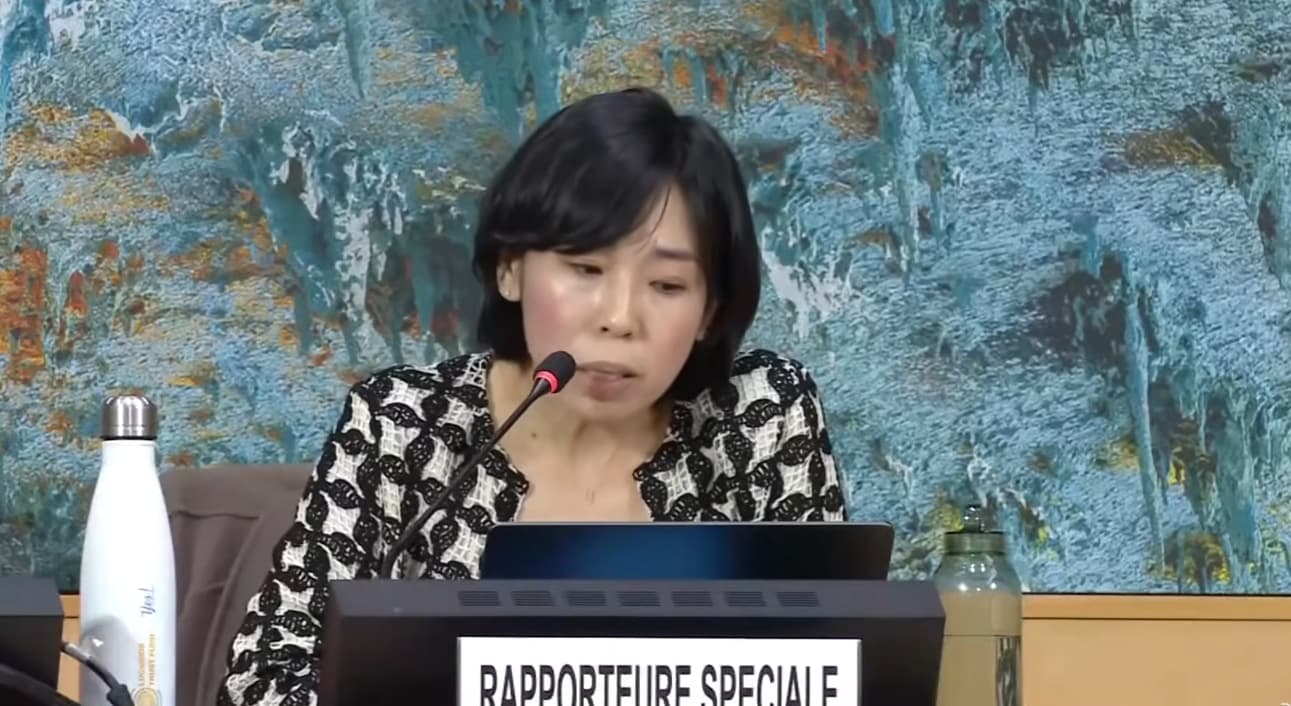
“Safety from external attack and protection from human rights violations at home are not alternatives,” said Mai Sato, special rapporteur on the situation of human rights in the Islamic Republic of Iran, in her address to the UN General Assembly’s Third Committee on Wednesday, emphasizing the plight of thousands who had suffered from strikes, lethal force and executions by Iranian authorities.
Sato highlighted that "at least 34 people had been executed in connection with the January protests" in an “unprecedented scale” of “gross human rights violations,” including “at least five executed in public,” adding that “more than 100 people, including women and children, are on death row in this context.”
In one case, she said, 34 defendants were tried in five days. Twelve were sentenced to death and seven had been executed. Sato also raised concerns about rushed hearings, forced confessions and pressure on lawyers representing protesters.
Protests erupted on December 28, 2025, in Tehran and morphed into massive waves of anti-government demonstrations that peaked in early January. A UN fact-finding mission found January 8 and 9 to be the deadliest days of the crackdown, reporting that at least 221 children were killed. The mission also said tens of thousands of people were detained and more than 100 people, including women and children, faced death sentences.
The mission said Iran’s crackdown was characterized by "extraordinarily severe repression," documenting large-scale killings by security forces, including the killing of children, as well as arbitrary detention, torture and ill-treatment, enforced disappearance, and violations of due process and fair-trial rights which amount to crimes against humanity. It cautioned that the scale of violations could be higher than it had documented, citing internet restrictions and fears of reprisals that made it difficult to gather evidence.
Sato called on Iranian authorities to halt executions, release people detained for exercising their rights and investigate deaths caused by security forces calling for human rights to be placed at the center of any diplomatic agreement.
Iran rejected the UN mechanisms as politically motivated. Foreign Ministry spokesperson Esmaeil Baghaei on Friday accused Sato’s mandate of trying to “whitewash” US and Israeli actions. Iran’s representative at the UN session also rejected the investigators’ allegations and challenged the legitimacy of their mandates.
"In late December 2025 and early January 2026, Following months of meticulous planning and a relentless campaign of propaganda and incitement, these same actors sought to hijack the peaceful protests of Tehran's bazaar merchants and transform them into a campaign of unprecedented chaos, violence, and destabilization. What began as peaceful expressions of economic grievances was cynically exploited as yet another opportunity to advance their long-cherished ambition of destabilizing the Islamic Republic of Iran from within," said Ali Karimi Magham, the second secretary of the Iranian permanent mission to the UN.
Iranian forces have long used executions and public hangings as tools to quell protests and stifle public dissent, underscoring growing concerns among human rights organizations over the use of capital punishment.
Sato's call follows earlier warnings from UN experts on Tehran's use of capital punishment.
“Iran’s death penalty is used to silence dissent, with broadly defined national security offences recasting peaceful activity as a threat. That must change,” a body of UN experts said earlier in the month. “Iran’s own history shows that grievances left unaddressed resurface, however brutally they are repressed. Executions do not end dissent, but breed the next wave of it.”
Iran executed at least 2,003 people between October 10, 2025, and October 8, 2026, an increase of at least 30 percent compared with the previous reporting period, according to an annual report by the US-based Human Rights Activists News Agency (HRANA).
The surge has raised concerns among human rights groups that executions could increase further amid the possibility of renewed escalation in the conflict involving Iran, Israel and the US amid mounting international criticism of Iran’s use of the death penalty.
A day after the reporting period of the HRANA report, a body of rights experts called on Tehran to immediately halt all executions, warning that Iran remains among a shrinking number of countries that retain capital punishment and has one of the world's highest execution rates relative to its population.