ERBIL, Kurdistan Region - A UN official told Rudaw on Tuesday that Kurdish students in northeast Syria (Rojava) have the right to freedom of expression as they protest to preserve their mother tongue amid efforts to integrate the region with Damascus, following injuries to several students during a demonstration in Qamishli against a proposed university merger and fears of losing the right to study in Kurdish.
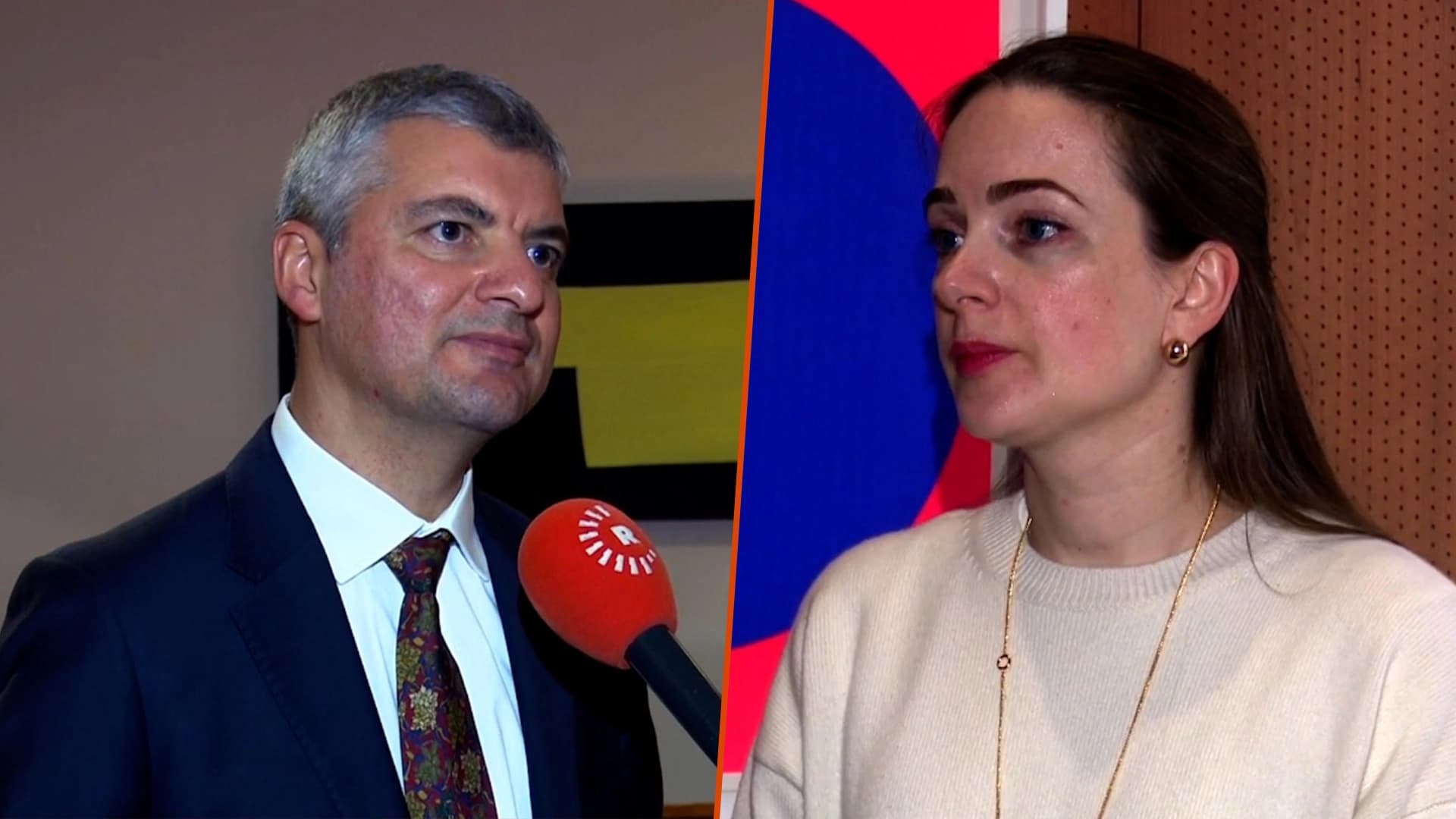
“We stand for the right for people to engage in protests without obstruction or harassment,” Farhan Haq, deputy spokesperson for the secretary-general of the United Nations, said in response to a question by Rudaw’s Namo Abdulla at a press briefing in New York.
Violence erupted on Monday after students at Rojava University in Qamishli blocked a government delegation’s convoy from leaving the campus, where officials had held talks on integrating the university into state-run al-Furat University in Deir ez-Zor province.
The protesters accused the security personnel of firing tear gas to disperse them, injuring around 25 students.
“We want our language, Kurdish. We do not want our university to be closed or transferred to Deir ez-Zor, Aleppo or Damascus. We want our university to remain here,” Kajiyan Mihemed, an injured second-year geography student, told Rudaw's Vivian Fatah on Monday.
“They did not even get out of their vehicle to meet with us. That is why they injured us,” she added.
Mezgin Hassen, a professor at the Rojava University, accused the security forces of using “military force” to crack down on the “peaceful and civilized protest,” she said in a speech carried by Hawar News Agency (ANHA), affiliated with the Kurdish administration in Rojava.
Hassen also rejected “attempts to impose a new administrative and academic reality without consensus or consideration for the university's distinct status and its students' achievements.”
ANHA on Tuesday reported solidarity vigils and demonstrations across 10 Kurdish cities in Rojava, including Qamishli and Amuda, in support of the Rojava University and Kurdish language education.
The dispute comes amid broader efforts by Damascus and the Kurdish authorities to integrate Kurdish-administered institutions into Syria's state structures, raising concerns over the future of Kurdish-language education and the preservation of educational and cultural rights established during more than a decade of the Kurdish autonomous administration in Rojava.
In October, Syria’s higher education ministry stated that it will proceed with merging several universities with the aim of “unifying the regulatory authority of higher education institutions in the Syrian Arab Republic.”
Rojava University in Qamishli and Kobane University were on the list, with the latter initially expected to merge with the University of Aleppo.
Both universities rejected the integration, citing the overlooking of the right to study in Kurdish - a dominant pattern in Kurdish-held areas since 2011.
Kurdish leaders have made constitutional recognition of the Kurdish language, particularly its use in education, a central demand in the negotiations, seeking to safeguard linguistic and cultural rights developed during more than a decade of autonomous administration.