


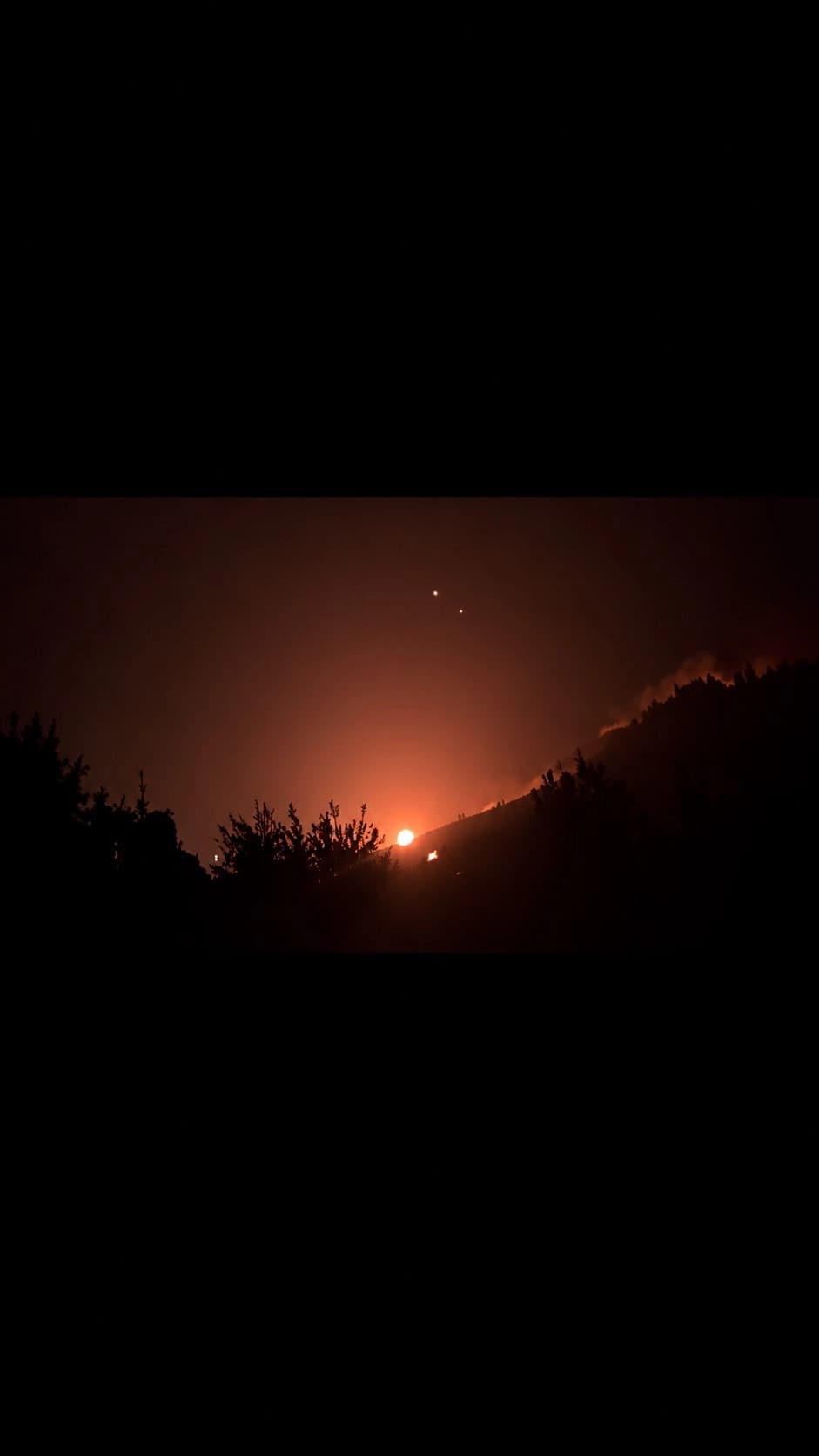
ERBIL, Kurdistan Region - An air base in Erbil’s northeastern Harir subdistrict that hosts US forces was attacked twice on Sunday, the local mayor told Rudaw, suspecting the use of drones.
"The first attack was at 4:43 am this morning, Sunday, and the second attack was at 8:15 am,” Sherwan Jalal, Harir district mayor, told Rudaw, adding that "the attacks were stronger compared to previous attacks. There is much suspicion they were drones.”
Smoke was seen rising over the district following the attacks.
"Both attacks targeted Harir airport, and there were no casualties,” he added.
Since Saturday, more than 10 similar missile and drone attacks have been carried out, most of them targeting Erbil International Airport, where US-led coalition forces are present in part of the facility and have intercepted most of the attacks.
The pro-Iran Saraya Awliya al-Dam (Guardians of Blood Brigades) group said in a statement dated Sunday that its “mujahideen” conducted an operation “with a squadron of drones” against “American bases in Erbil.”
Early Sunday, a large plume of smoke rose over Erbil following the strike. Casualties and damage were not immediately clear.
The claim came as pro-Iran armed groups vowed retaliation following US and Israeli strikes on Iran on Saturday.
Iran began its response less than three hours after the start of the US and Israeli strikes on Saturday, targeting sites in Israel, Saudi Arabia, Qatar, the United Arab Emirates, Bahrain, Kuwait, and the Kurdistan Region, according to Iranian state media.
The strikes resulted in the killing of Iran’s Supreme Leader Ayatollah Ali Khamenei, Iranian state media confirmed Sunday, along with IRGC Commander Mohammad Pakpour and the head of Iran’s Defense Council, Ali Shamkhani.
Iran has vowed retaliation for the death of its leader, while US President Donald Trump warned against further attacks, saying, “WE WILL HIT THEM WITH A FORCE THAT HAS NEVER BEEN SEEN BEFORE!”
.jpg&w=3840&q=75)
.png&w=3840&q=75)