کوردیKURDÎENGLISHTÜRKÇEعربي
Rudaw Logo
Live
Kurdistan
Middle East
OpinionsAnalysisWorldECONOMYInterviewCultureMultimedia
Live
Rudaw

Download the Rudaw app

App StoreGoogle Play
Privacy Policy•Terms of Use

© 2026 All rights reserved.

Rudaw

Download the Rudaw app

App StoreGoogle Play
Privacy PolicyTerms of Use

© 2026 All rights reserved.

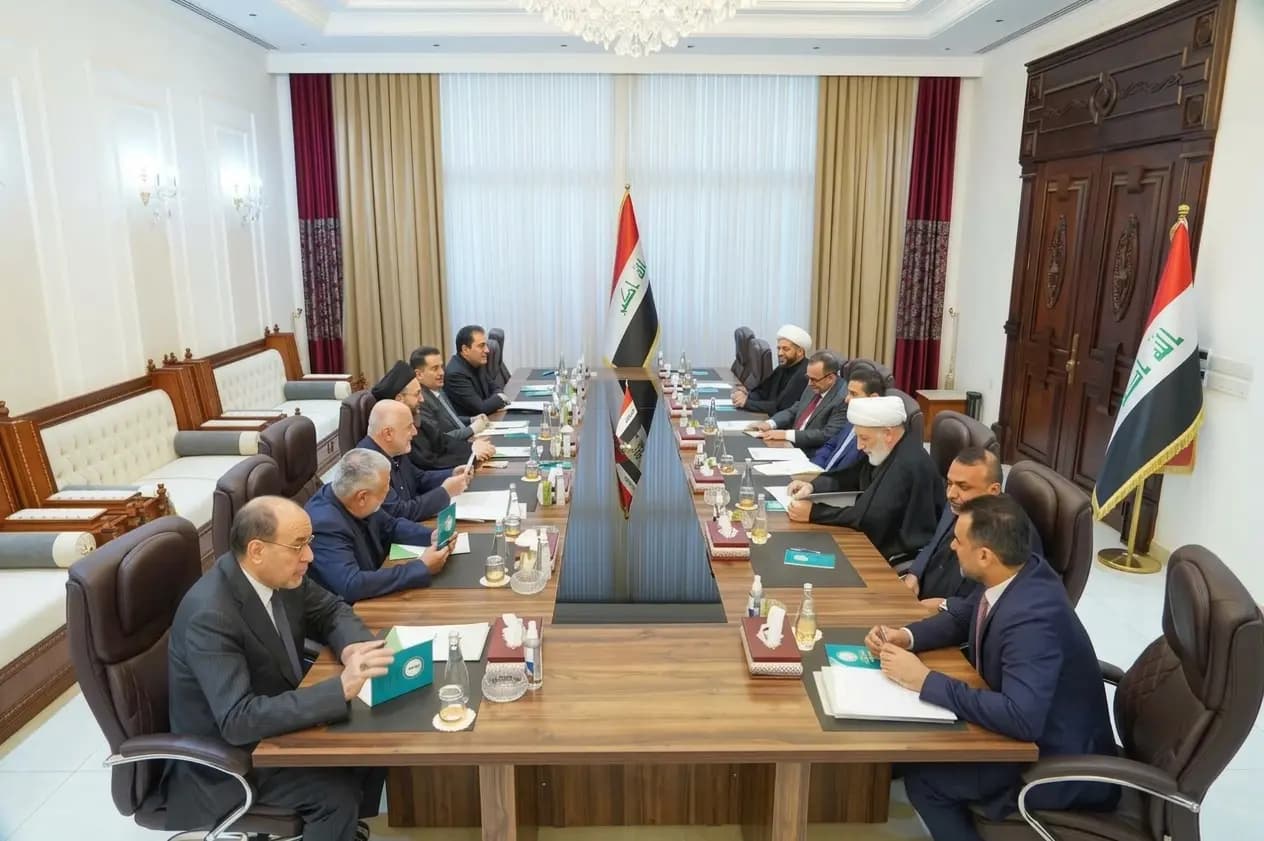
PM Masrour Barzani received delegation from Coordination Framework in Erbil on February 2, 2026. Photo: KRG

PM Masrour Barzani received delegation from Coordination Framework in Erbil on February 2, 2026. Photo: KRG

Kurdistan

Coordination Framework delegation arrives in Erbil

RUDAW English

RUDAW English

02-02-2026
Listen
0:00
0:00
Text Size
RUDAW English
RUDAW English02-02-2026

Related Articles

Germany pledges continued support for Kurdistan, Iraq despite troop withdrawal
Kurdistan18-11-2026

Germany pledges continued support for Kurdistan, Iraq despite troop withdrawal

Iran strikes PJAK positions with drone in Sulaimani province
Kurdistan17-11-2026

Iran strikes PJAK positions with drone in Sulaimani province

Sulaimani separate status requires popular vote, not party decisions: Coordination Framework official
Kurdistan17-11-2026

Sulaimani separate status requires popular vote, not party decisions: Coordination Framework official

ERBIL, Kurdistan Region - A delegation from Iraq’s ruling Shiite Coordination Framework, led by outgoing Prime Minister Mohammed Shia’ al-Sudani, arrived in Erbil on Monday. 

The high-profile delegation was received by Kurdistan Region Prime Minister Masrour Barzani at Erbil International Airport and is expected to meet with leaders from the Region’s ruling Kurdistan Democratic Party (KDP) and Patriotic Union of Kurdistan (PUK). 

The visit comes as politicking intensifies to elect Iraq’s next president, amid Kurdish parties’ failure to agree on a unified candidate, and to name the country’s next prime minister, following what appears to be a US veto of Nouri al-Maliki, the Coordination Framework’s nominee for the post.

Iraq held legislative elections on November 11. The parliament convened on December 29 to elect its speaker and two deputies. Under the constitution, the president must be elected within 30 days of the first parliamentary session. Once sworn in, the president has up to 15 days to task the nominee of the largest parliamentary bloc with forming a government.

Since 2003, an informal power-sharing system has allocated the parliament’s speakership to Sunni Arabs, the premiership to Shiite Arabs, and the presidency to the Kurds.

The KDP and the PUK have both nominated candidates for the Iraqi presidency, and their failure to agree on a single joint nominee has reportedly resulted in a political deadlock. The PUK, which has largely held the mostly ceremonial post since the 2003 US invasion of Iraq, argues that the presidency is its entitlement. The KDP has rejected this claim, offering the PUK all other federal positions in exchange for the presidency.
 

Related Articles

Germany pledges continued support for Kurdistan, Iraq despite troop withdrawal
Kurdistan18-11-2026

Germany pledges continued support for Kurdistan, Iraq despite troop withdrawal

Iran strikes PJAK positions with drone in Sulaimani province
Kurdistan17-11-2026

Iran strikes PJAK positions with drone in Sulaimani province

Sulaimani separate status requires popular vote, not party decisions: Coordination Framework official
Kurdistan17-11-2026

Sulaimani separate status requires popular vote, not party decisions: Coordination Framework official

Questions