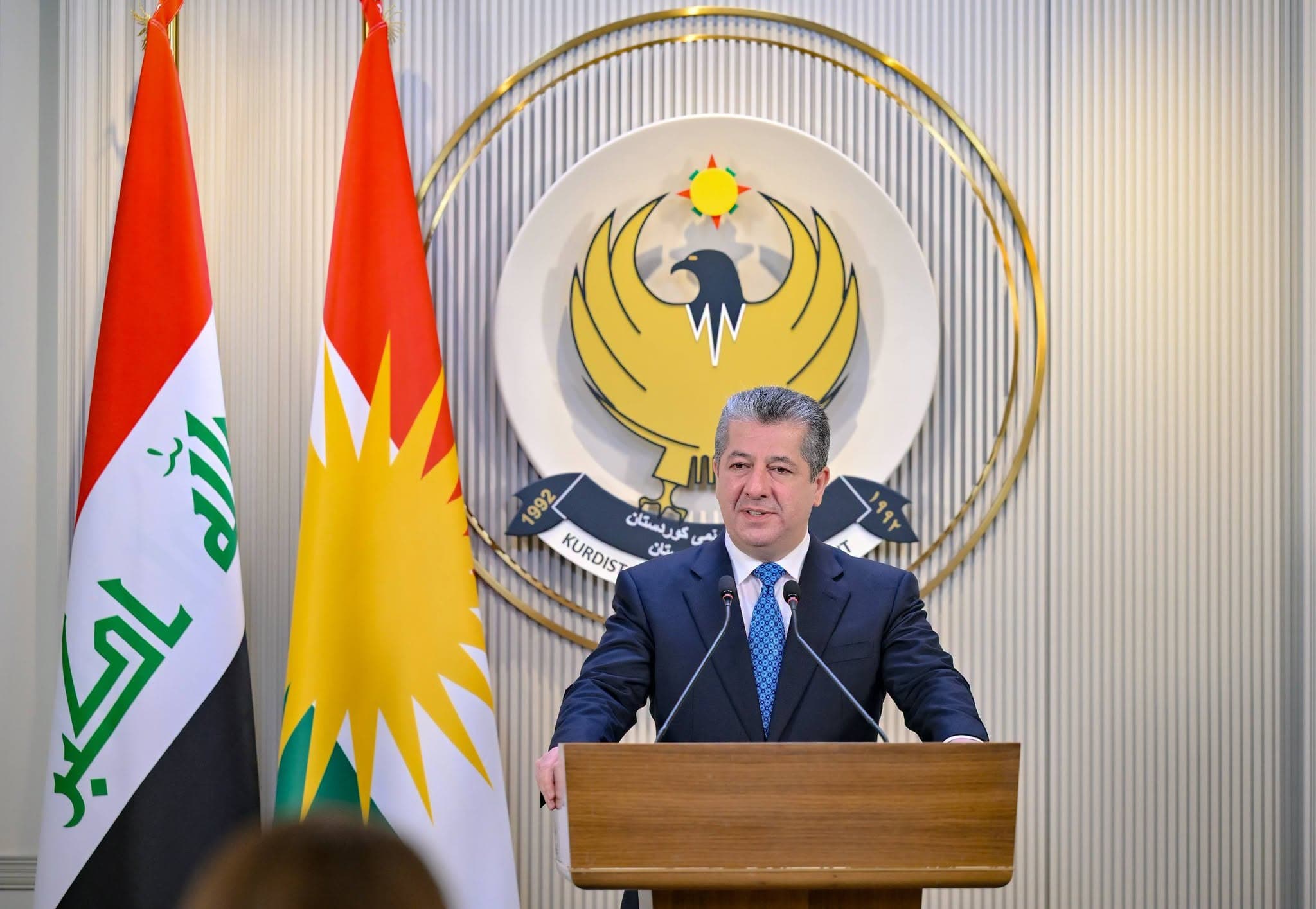
ERBIL, Kurdistan Region - President Masoud Barzani on Friday received French Foreign Minister Jean-Noel Barrot in Erbil, with developments in northeast Syria (Rojava) and efforts to prevent ethnic conflict topping the agenda, alongside broader discussions on regional security and political stability.
According to a statement from the Barzani Headquarters, Barrot highlighted the roles of President Barzani and French President Emmanuel Macron in encouraging Damascus and the Kurdish-led Syrian Democratic Forces (SDF) to “reach an agreement in Syria.” He also praised the preeminent Kurdish leader’s “role in addressing challenges in Iraq and the wider region.”
For his part, President Masoud Barzani said he spared no effort “to prevent political disagreements from escalating into an ethnic conflict between Kurds and Arabs, and to prevent ethnic cleansing of the Kurdish people in Syria.” He also reiterated his support for the agreement between the Syrian government and the SDF, expressing hope that it would provide a foundation for “stability and the resolution of issues at this stage.”
The SDF and Damascus on January 29 reached an internationally brokered agreement, following weeks of clashes. Facilitated primarily by France and the United States, the deal aims to end hostilities and integrate Rojava’s civil and military institutions under state authority.
The agreement came after the Syrian Arab Army and affiliated armed groups launched a large-scale offensive in mid-January, seeking to push back the SDF - the de facto military force in Rojava - from areas in northern and northeastern Syria.
Following his meeting with Barrot, President Barzani hosted SDF Commander Mazloum Abdi, urging both Damascus and the Kurdish-led forces to adhere to the ceasefire and integration agreement.
The leader of the Kurdistan Democratic Party (KDP) further emphasized “the necessity of coordination among all parties to ensure the protection and consolidation of the Kurdish people’s rights in Syria in the coming phases, within the framework of the constitution.”
In addition to developments in Rojava, President Barzani and the senior French diplomat also discussed political developments in Iraq and the Kurdistan Region.
The Kurdish leader reiterated “the desire for all problems and issues in the Middle East to be resolved through peaceful means, so the region can achieve stability,” while warning that “the risk of ISIS regaining strength remains” and emphasizing the need for coordination among all parties to counter terrorism.
President Barzani also expressed gratitude to France for its support during “difficult times,” while Barrot reaffirmed that France “has always held a special sympathy for the cause of the Kurdish people in the Middle East” and supports their rights through peaceful means, underlining Paris’ commitment to “the protection of the Kurdistan Region and the continued existence of a strong Kurdistan Region.”
The senior diplomat also conveyed “special greetings” from French President Macron and presented President Barzani with a 1967 letter from his father, the late Mulla Mustafa Barzani, to then-French President Charles de Gaulle, preserved in the archives of the French foreign ministry.
President Barzani praised the gesture, describing the letter as “a valuable document demonstrating the long-standing friendship between the people of Kurdistan and France.”