
Rudaw has learned that since October 2017, 391 Turkmen and Arab families from other provinces have transferred their ration cards to Kirkuk — including 371 in May, according to official letter No. 4532.
Based on Rudaw’s information, the food rations have been transferred without a residency support letter, and their names have been registered in the directorate of residency affairs.
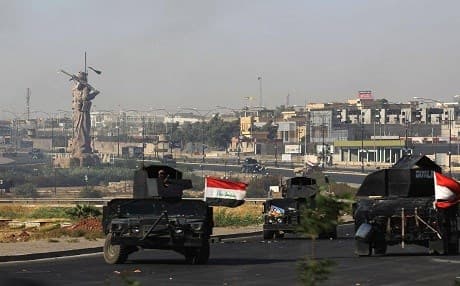
Kirkuk is a diverse province home to Kurds, Arabs, Turkmen, and other components. Kurds maintain there has been an Arabization process in effect since the federal takeover in October and ousting of Kurdish governor Najmaldin Karim.
Rakan al-Jabouri, the acting governor of Kirkuk province who is an Arab, denies the claims.
“There is no such thing as a process of demographic change. It is only that we need to think humanely of things. Kirkuk is a big city, and we all can fit in. The displaced, who have come and settled in Kirkuk, have nothing left in their homes and are in a bad condition," he told Rudaw.
Jabouri sees the migration of people from Anbar, Saladin, Tel Afar, and Hawija as a just humanitarian cause.
"Allowing them to remain Kirkuk is from a humane perspective. After all, we haven’t given anyone land. They have bought land and houses on their own,” he added.
ISIS has remnants in parts of Iraq, notably Anbar and areas outside of Kirkuk. According to the UN's migration agency, 2,045,718 Iraqis remained displaced in May.
“They are faring through bad conditions. So that their conditions don’t deteriorate further, we have allowed for food ration form transfers, because they are scared of obtaining their monthly food rations in their own areas,” Jabouri said.
Arabs from elsewhere in Iraq were brought into the disputed areas of Kirkuk largely between 1970 and 1978. After 2003, however, Iraq began a policy of de-Arabization to reverse the demographic changes.
“I don’t know why they are afraid of this. Ever since 2003 Kurdish people have returned to Kirkuk and we haven’t been afraid. But now the Kurdish parties have started making a fuss and want to hamper serving the people," said Jabouri.
"We, in the Kirkuk administration, say Kirkuk is for everyone, and we all live together in it. Whatever party or person names this in any way they want, this is their wish. We call this serving, and we will continue it, and we won’t let this go under anyone’s words," he added.
Falah Khalil Jalal from Yaychi district has been the mayor of Kirkuk city since October 16. He notified all the chieftains in the province to provide residency support letters to people displaced during the ISIS conflict without signatures or referring them back to the mayoral authority of the city.
“Iraq’s unity denotes that Iraq is the house of all Iraqis. Kirkuk being a small Iraq, it is everyone’s right to live there. Falah Yaychi’s decision isn’t illegal. Kirkuk is now the home of the components. The city’s stability and co-existence is the true picture of Kirkuk,” Ali Mufti, the spokesperson of the Turkmenli party, told Rudaw.
The Patriotic Union of Kurdistan won 6 of Kirkuk's 13 seats and one in Diyala in the parliamentary election on May 12. The Turkmen won three seats in Kirkuk.
A PUK delegation unilaterally visited the acting governor, and presented five points for the situation. They received verbal assent to stop the process. However, days later after the visit, the acting governor of Kirkuk dismantled a camp in Daquq, sending some of them back to their homes, and giving others the liberty to choose where they wanted to settle in Kirkuk.
After the meeting, they called on Kurdistani parties to seriously start tackling the issue.
“We told Rakan al-Jabouri honestly that we were silent on removing and changing Kurdish officials. However, we will no longer allow for Kurdish posts to be filled with Arabs and Turkmen without our approval or referring to the PUK,” Rawand Mala Mahmoud, the deputy head of PUK’s office, told Rudaw.
Mahmoud added they questioned Jabouri about the transfer of food ration forms, but the acting governor rejected the allegations had asked for evidence.
Former governor Karim of the PUK and the acting head of the Kirkuk's provincial council, Rebwar Talabani of the KIU are no longer in the province. The KDP refused to run candidates in the province, calling it "occupied."
“The Kurdish officials who left their posts and city and aren’t now ready to return to Kirkuk to oust that governor and prevent the plans against Kurds are responsible for the success of any Arab and Turkmen plan and action against Kurds,” Mahmoud added, referring to the KDP, Kurdish security forces, and acting governor Jabouri.
Mahmoud expressed it is essential for Kurds to fill the posts in Kirkuk quickly.
“After coming out of the meeting, Rakan al-Jabouri told us, ‘I have become member of Iraq’s parliament, but as long as you are in disunity and unable to appoint a governor, your conditions won’t be any better,' ” Mahmoud said.
However, other Kurdish officials have said the recent decisions in Kirkuk are unconstitutional, and that once the provincial council convenes, all the decisions will be annulled.
Out of 41 seats in the provincial council, Kurds have 26 seats. Prior to October 16 events, Kurds held 16 administrative positions, but most are filled by acting officials who are Turkmen or Arab.
Relevant video: Kurdish residents claim Arabization resumes in Kirkuk

.jpeg&w=3840&q=75)
.jpeg&w=3840&q=75)