


Kurdistan

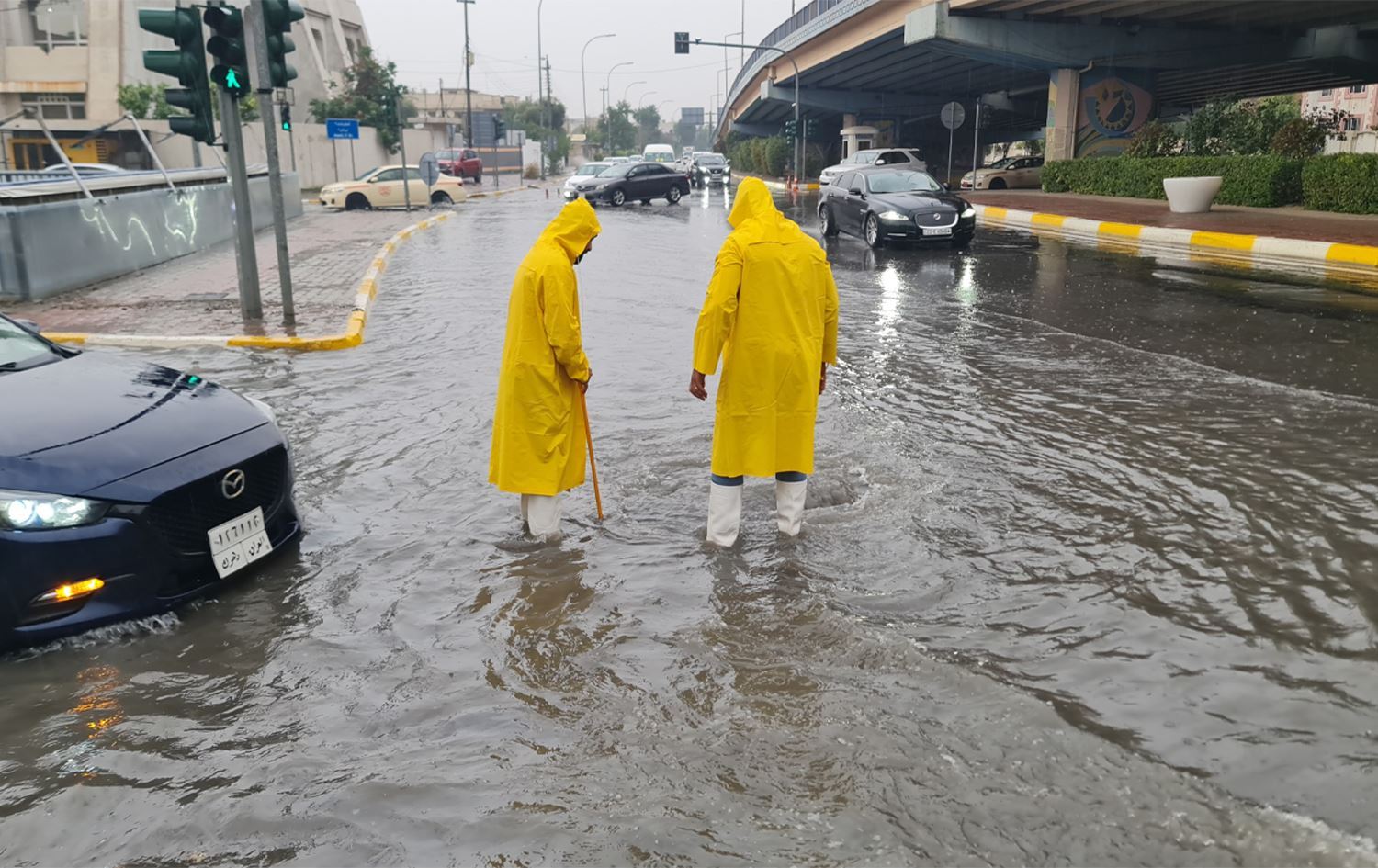
Civil defense workers opening a manhole in Erbil on November 14, 2023. Photo: Rudaw/Bilind T. Abdullah
ERBIL, Kurdistan Region - Authorities across the Kurdistan Region have throughout the weekend maintained caution and preparedness as heavy rainfall is expected to hit the area, increasing the risk of flooding in low-lying zones.
The Region’s meteorology department said on Sunday that “weather today will be generally cloudy and rainy, with a rapid increase in wind, a drop in temperature and rainfall across all areas.”
Aso Kamal, former director of the meteorology department in the Region’s eastern Sulaimani province, told Rudaw that “because the weather is unstable and the rainfall is unusual, there is a possibility of flooding and rising water in low-lying areas and valleys, though not across the entire Kurdistan Region.”
He added that “the peak of this wave will be 48 hours on Monday and Tuesday, and during that period there is a greater possibility of flooding in low-lying areas.”
For its part, Erbil’s municipality on Sunday warned against “throwing garbage or waste into drains and manholes or blocking them,” urging residents to report any clogged drainage points and “not allow anyone to dispose of garbage or waste in water drainage channels.”
A day prior, Erbil Governor Omed Xoshnaw said in a Facebook statement following a meeting with municipal and relevant officials that “to address any potential incidents caused by the rainfall, all necessary preparations have been made.”
Meanwhile, in the Region’s northern Duhok province, water and sewage Director Younis Jano told Rudaw that six teams equipped with machinery have been deployed to flood-prone areas, while the municipal directorate has 25 additional teams on standby, along with civil defense and traffic units.
Heavy rainfall triggered flash floods in Duhok in March 2024, killing three people, with the bodies of two victims still unaccounted for. At least 11 others were also injured and hundreds were left homeless as more than 160 houses and 50 vehicles were damaged.
Regarding neighborhoods that were dangerously flooded in recent years, Jano said “problems in such areas… have been resolved to a large extent with the danger of major flooding has decreased by 30 percent.”
He noted that from Sunday until Monday, approximately 100 millimeters of rain are expected to fall in central Duhok. However, because the rainfall is forecast to be gradual, the danger of severe flooding is not high, he said.
Nonetheless, Jano pointed to major infrastructure gaps, especially in Duhok city where “the sewage system is not capable of receiving all the rainwater; its current capacity can only allow the transfer of 30 to 35 percent of the water underground.”
The local official noted that while there was a master plan in place to address this problem, funding shortages hindered its implementation.
Meanwhile, across Iraq, Baghdad’s Civil Defense spokesperson Nawas Sabah Shakir on Sunday urged citizens to follow safety guidelines during heavy rainfall, avoid electricity poles and downed wires, and remain vigilant to prevent “unwanted incidents.”
The Region’s meteorology department said on Sunday that “weather today will be generally cloudy and rainy, with a rapid increase in wind, a drop in temperature and rainfall across all areas.”
Aso Kamal, former director of the meteorology department in the Region’s eastern Sulaimani province, told Rudaw that “because the weather is unstable and the rainfall is unusual, there is a possibility of flooding and rising water in low-lying areas and valleys, though not across the entire Kurdistan Region.”
He added that “the peak of this wave will be 48 hours on Monday and Tuesday, and during that period there is a greater possibility of flooding in low-lying areas.”
For its part, Erbil’s municipality on Sunday warned against “throwing garbage or waste into drains and manholes or blocking them,” urging residents to report any clogged drainage points and “not allow anyone to dispose of garbage or waste in water drainage channels.”
A day prior, Erbil Governor Omed Xoshnaw said in a Facebook statement following a meeting with municipal and relevant officials that “to address any potential incidents caused by the rainfall, all necessary preparations have been made.”
Meanwhile, in the Region’s northern Duhok province, water and sewage Director Younis Jano told Rudaw that six teams equipped with machinery have been deployed to flood-prone areas, while the municipal directorate has 25 additional teams on standby, along with civil defense and traffic units.
Heavy rainfall triggered flash floods in Duhok in March 2024, killing three people, with the bodies of two victims still unaccounted for. At least 11 others were also injured and hundreds were left homeless as more than 160 houses and 50 vehicles were damaged.
Regarding neighborhoods that were dangerously flooded in recent years, Jano said “problems in such areas… have been resolved to a large extent with the danger of major flooding has decreased by 30 percent.”
He noted that from Sunday until Monday, approximately 100 millimeters of rain are expected to fall in central Duhok. However, because the rainfall is forecast to be gradual, the danger of severe flooding is not high, he said.
Nonetheless, Jano pointed to major infrastructure gaps, especially in Duhok city where “the sewage system is not capable of receiving all the rainwater; its current capacity can only allow the transfer of 30 to 35 percent of the water underground.”
The local official noted that while there was a master plan in place to address this problem, funding shortages hindered its implementation.
Meanwhile, across Iraq, Baghdad’s Civil Defense spokesperson Nawas Sabah Shakir on Sunday urged citizens to follow safety guidelines during heavy rainfall, avoid electricity poles and downed wires, and remain vigilant to prevent “unwanted incidents.”


Comments
Rudaw moderates all comments submitted on our website. We welcome comments which are relevant to the article and encourage further discussion about the issues that matter to you. We also welcome constructive criticism about Rudaw.
To be approved for publication, however, your comments must meet our community guidelines.
We will not tolerate the following: profanity, threats, personal attacks, vulgarity, abuse (such as sexism, racism, homophobia or xenophobia), or commercial or personal promotion.
Comments that do not meet our guidelines will be rejected. Comments are not edited – they are either approved or rejected.
Post a comment