ERBIL, Kurdistan Region - US Special Envoy for Syria Tom Barrack announced that he met on Thursday with the Syrian Democratic Forces (SDF) Commander Mazloum Abdi and Ilham Ahmad, co-chair of the northeast Syria (Rojava) foreign relations office, in Erbil, the second meeting of its kind in less than a week to bring ongoing clashes between the Kurdish-led force and Damascus-affiliated factions to a halt and secure a lasting ceasefire.
“We were honored to meet today with General Mazloum Abdi and Ilham Ahmed,” Barrack said in a post on X. “The United States reaffirmed its strong support for and commitment to advancing the integration process outlined in the January 18 agreement between the Syrian Democratic Forces and the Syrian government.”
Syrian government forces and affiliated armed groups have advanced since mid-January into areas previously held by the SDF in eastern Aleppo, as well as parts of Deir ez-Zor, Raqqa, and the Kurdish-majority Hasaka province.
The SDF functions as the de facto military force in Rojava and, until November - when Damascus joined the anti-ISIS coalition - served as the coalition’s sole on-the-ground partner, playing a key role in ISIS’s territorial defeat in Syria in 2019.
On Tuesday, the Syrian presidency said Damascus and the SDF reached a “mutual understanding” on several issues, agreeing to “grant the SDF a period of four days for consultations to develop a detailed plan for the practical mechanism of integrating the areas [under their control].”
The statement added that “if an agreement is reached, Syrian forces will not enter the centers of [the predominantly Kurdish cities of] Hasaka and Qamishli [in Rojava] and will remain on their outskirts.”
US President Trump’s envoy Barrack stressed that maintaining calm remains the foundation for any progress, noting that “the essential first step is the full upholding of the current ceasefire, as we collectively identify and implement confidence-building measures on all sides to foster trust and lasting stability.”
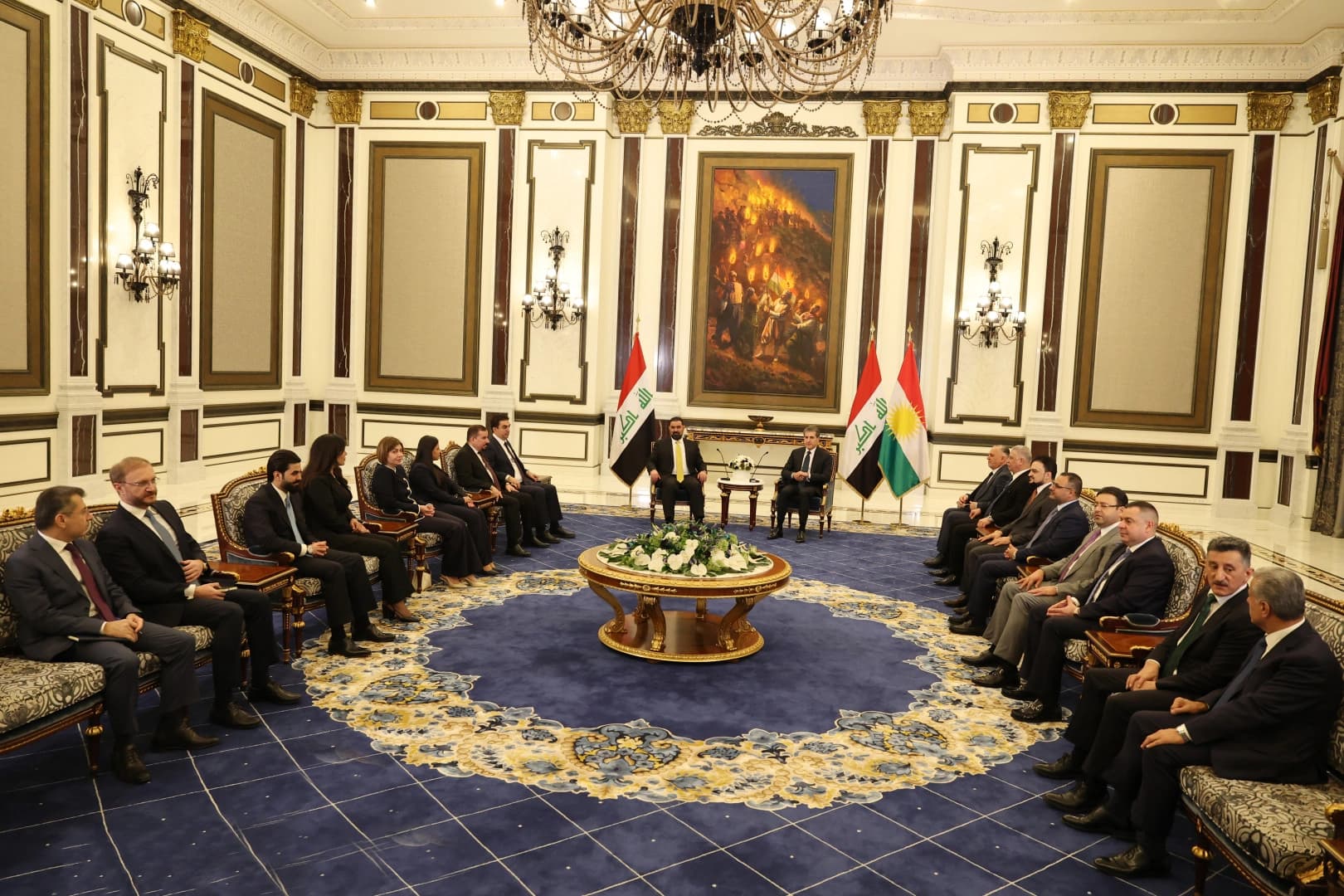
The meeting came as Kurdistan Region President Nechirvan Barzani also received Abdi in Erbil earlier on Thursday to discuss the latest developments in Syria, efforts to de-escalate tensions, and the protection of Kurdish rights within a unified country.
“President Nechirvan Barzani emphasized his ongoing efforts and communications with all relevant parties to maintain the ceasefire, halt tensions, and immediately resume dialogue between the SDF and Damascus,” according to a statement from the Kurdistan Region Presidency.
“He also reaffirmed the importance of securing and protecting the rights of Kurds and all other components (communities) within a unified Syria,” the statement added.
The risks posed by a potential Islamic State (ISIS) resurgence and its implications for regional security were also discussed during the meeting.
Erbil's Thursday talks mark the second visit by Barrack and Abdi to the Region’s capital in recent days.
A day after the Saturday meeting between Barrack and the Kurdish leadership, the Syrian interim government announced that they had reached an agreement with the SDF to immediately halt clashes and integrate SDF-held areas into state institutions. The deal includes significant concessions by the Kurdish-led force. Following the announcement, the Syrian army declared a nationwide ceasefire.
Syrian interim President Ahmed al-Sharaa announced the agreement late Sunday, saying it was signed by him and SDF Commander Mazloum Abdi. Sharaa said Abdi had been scheduled to visit Damascus, but the meeting was postponed to Monday due to bad weather.
Key provisions of the agreement include the integration of SDF personnel “individually” into the Syrian defense ministry rather than as a unified force, the full handover of Deir ez-Zor and Raqqa provinces, and the integration of their civil institutions and employees into national ministries. The deal also outlines state control over all border crossings and energy resources, including oil and gas fields, with the aim of returning them to the national economy, while acknowledging the unique status of Kurdish areas.