Kurdistan
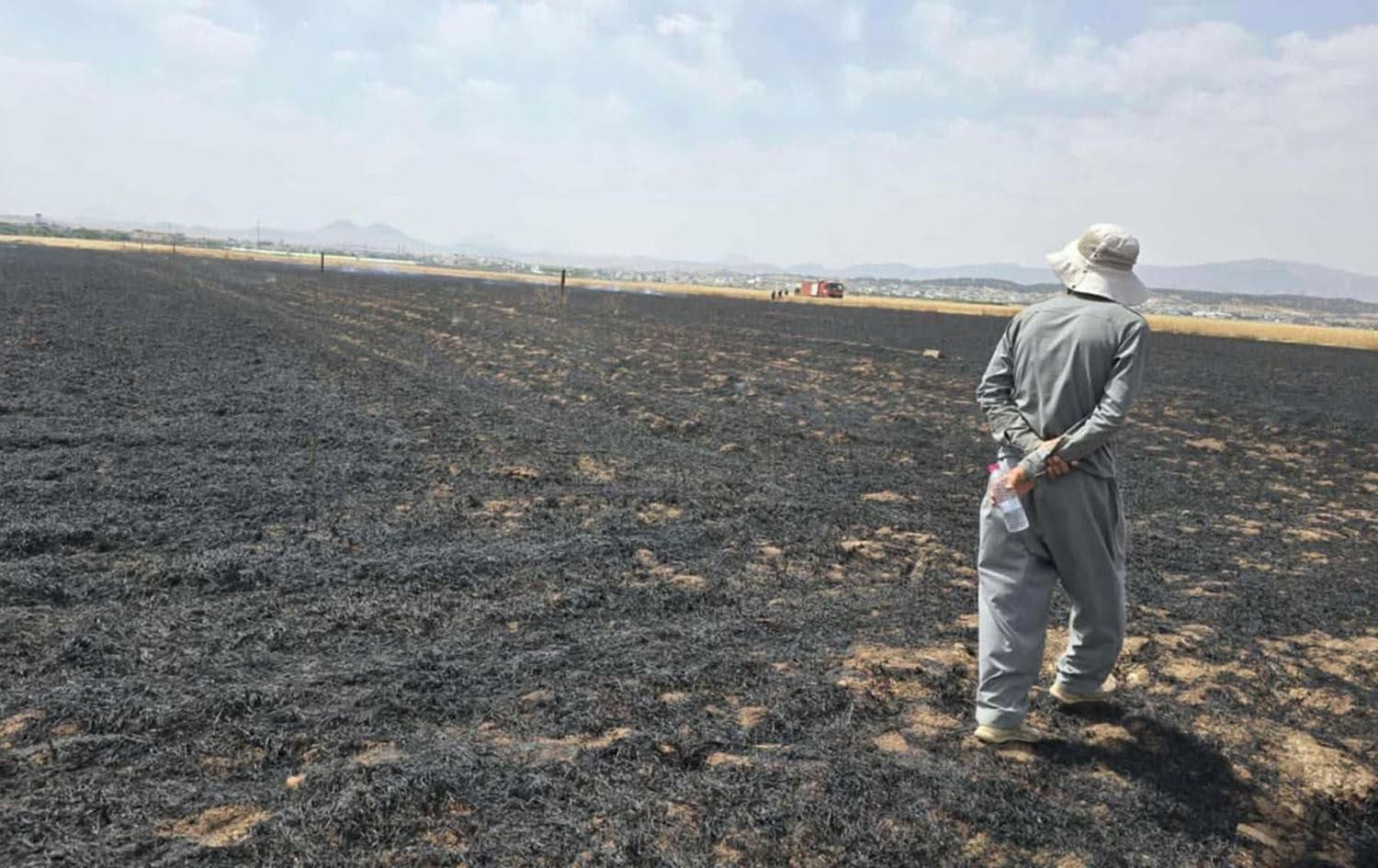
Burned land in Sulaimani province. Photo: Sulaimani directorate of forest and environment police/Facebook
ERBIL, Kurdistan Region - A series of wildfires scorched large swathes of land across Sulaimani province on Wednesday and Tuesday, burning around 1,000 dunams of forest and shrubland and damaging thousands of trees, according to local officials.
A major blaze broke out on Tuesday night in a village in Penjwen district, east of Sulaimani, burning between 500 and 700 dunams of shrubland and damaging six orchards, said Hogir Mohammed of the Penjwen forest and environment police, adding that firefighting teams were deployed that night and brought the fire under control by around 5 am.
“The fire consumed nearly 2,000 trees in an artificial forest, all of which were pine trees,” Penjwen Mayor Hemin Ibrahim told Rudaw.
A statement from the Sulaimani forest and environment police later said the Penjwen fire burned around 700 dunams of land and 2,000 trees.
In the Zarayan subdistrict, southwest of Sulaimani, another fire burned 40 dunams of wheat fields. Preliminary reports attributed the blaze to a fault in a combine harvester, though no further details were provided.
Earlier on Wednesday, the forest police reported that a separate fire in the Arbat subdistrict, southeast of Sulaimani, had burned around 100 dunams of land and damaged nearly 1,000 trees.
In the Sitak area, northwest of Sulaimani city, a fire burned 200 dunams of land and trees before being quickly contained by forest police, civil defense teams, and local residents.
Another fire in Darbandikhan district, southeast of the province, scorched 14 dunams and destroyed 500 trees, according to officials.
In July of last year, strong winds drove a fire that burned 200 dunams of land on Mount Goizha, just north of Sulaimani city.
Another fire in southern Erbil on Friday forced villagers to evacuate their homes and caused several injuries, including among children. The blaze was sparked by an electricity panel blowing up, according to multiple witnesses, and nearly 1,000 dunams of land were burned.
Fires are a perennial concern in Iraq and the Kurdistan Region. They are especially frequent in the summertime when the scorching heat heightens the risk.
A major blaze broke out on Tuesday night in a village in Penjwen district, east of Sulaimani, burning between 500 and 700 dunams of shrubland and damaging six orchards, said Hogir Mohammed of the Penjwen forest and environment police, adding that firefighting teams were deployed that night and brought the fire under control by around 5 am.
“The fire consumed nearly 2,000 trees in an artificial forest, all of which were pine trees,” Penjwen Mayor Hemin Ibrahim told Rudaw.
A statement from the Sulaimani forest and environment police later said the Penjwen fire burned around 700 dunams of land and 2,000 trees.
In the Zarayan subdistrict, southwest of Sulaimani, another fire burned 40 dunams of wheat fields. Preliminary reports attributed the blaze to a fault in a combine harvester, though no further details were provided.
Earlier on Wednesday, the forest police reported that a separate fire in the Arbat subdistrict, southeast of Sulaimani, had burned around 100 dunams of land and damaged nearly 1,000 trees.
In the Sitak area, northwest of Sulaimani city, a fire burned 200 dunams of land and trees before being quickly contained by forest police, civil defense teams, and local residents.
Another fire in Darbandikhan district, southeast of the province, scorched 14 dunams and destroyed 500 trees, according to officials.
In July of last year, strong winds drove a fire that burned 200 dunams of land on Mount Goizha, just north of Sulaimani city.
Another fire in southern Erbil on Friday forced villagers to evacuate their homes and caused several injuries, including among children. The blaze was sparked by an electricity panel blowing up, according to multiple witnesses, and nearly 1,000 dunams of land were burned.
Fires are a perennial concern in Iraq and the Kurdistan Region. They are especially frequent in the summertime when the scorching heat heightens the risk.
Comments
Rudaw moderates all comments submitted on our website. We welcome comments which are relevant to the article and encourage further discussion about the issues that matter to you. We also welcome constructive criticism about Rudaw.
To be approved for publication, however, your comments must meet our community guidelines.
We will not tolerate the following: profanity, threats, personal attacks, vulgarity, abuse (such as sexism, racism, homophobia or xenophobia), or commercial or personal promotion.
Comments that do not meet our guidelines will be rejected. Comments are not edited – they are either approved or rejected.
Post a comment