
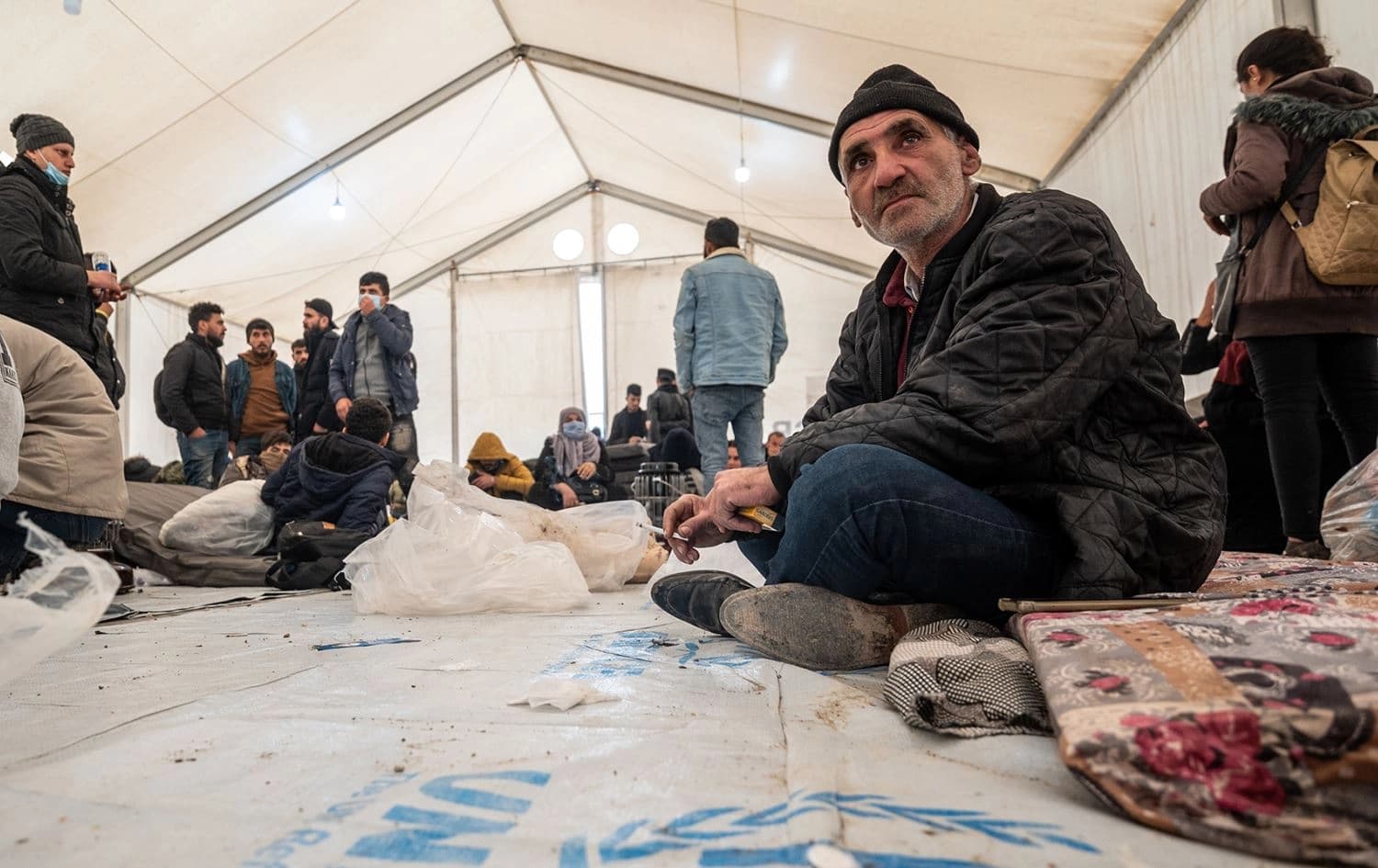

ERBIL, Kurdistan Region - One in twelve Syrian Kurdish refugees who reside in the Kurdistan Region's Duhok province are stateless and do not possess their country's nationality, a humanitarian organization that assists people forced to flee said on Sunday.
The Norwegian Refugee Council (NRC) said it surveyed around 1,300 Syrian refugee families and revealed that almost 7,000 stateless Syrians exist out of nearly 86,000, which is eight percent of the total Syrian refugee population in Duhok.
"Not only have many Syrian Kurds in KRI [Kurdistan Region of Iraq] been living in displacement for over a decade, but their struggle is compounded by the fact that they remain stateless and on paper belong nowhere," NRC Country Director in Iraq James Munn said.
The data for the survey was obtained from Domiz camps, as well as Bardarash camp in Duhok province, and camps outside of the city, Policy and Advocacy Advisor at NRC Caroline Zullo told Rudaw English on Monday.
Unregistered Syrian stateless Kurds (maktoum in Arabic, plural maktoumeen), were stripped of their citizenship by an impossibly rapid census conducted in 1962 in northeast Syria’s (Rojava) Hasaka province where the highest concentration of Kurds are.
The census was conducted in a single day and around 120,000 Syrians in Hasaka were stripped of their citizenship in the aftermath, the overwhelming majority of whom were Kurds.
"Maktoumeen" was a term coined for those who could not provide authorities any documents during the one-day census, while those who possessed ID documents and could provide limited documentation to prove their citizenship were classed as foreigners (ajanib in Arabic).
"In addition to being denied citizenship in their country, stateless Syrian Kurds have for generations faced a long list of restrictions such as not being able to own land, obtain a marriage certificate, enroll in school, vote, or get a job," according to NRC.
The NRC survey also says that more than a quarter of the refugees intend to travel elsewhere, meaning they will face difficulties regarding their legal status upon exiting the Kurdistan Region.
"We are still living in camps and our children cannot properly attend school ... We also do not have many opportunities for jobs, but it is the same for Syrian citizens here [in Duhok] too. We just want to get an ID for any country for the future of our children," Ahmed, a Syrian Kurd, told NRC.
Due to the hereditary nature of statelessness, the number of "maktoumeen" has dramatically increased in the decades following the census.
In 2011, the total number of stateless Syrian Kurds had reached more than 517,000, according to data by the non-governmental organization Syrians for Truth and Justice (STJ).
The NRC has called on the Kurdistan Regional Government (KRG), the Iraqi federal government, and the government of Syria "to provide clear mechanisms and safe pathways to access services and obtain documentation."
The Kurdistan Region is home to almost two million internally displaced persons (IDPs) and refugees, according to numbers from the KRG's Joint Crisis Coordination Center (JCC) with over 240,000 Syrian refugees living in the Region.
.png&w=3840&q=75)
