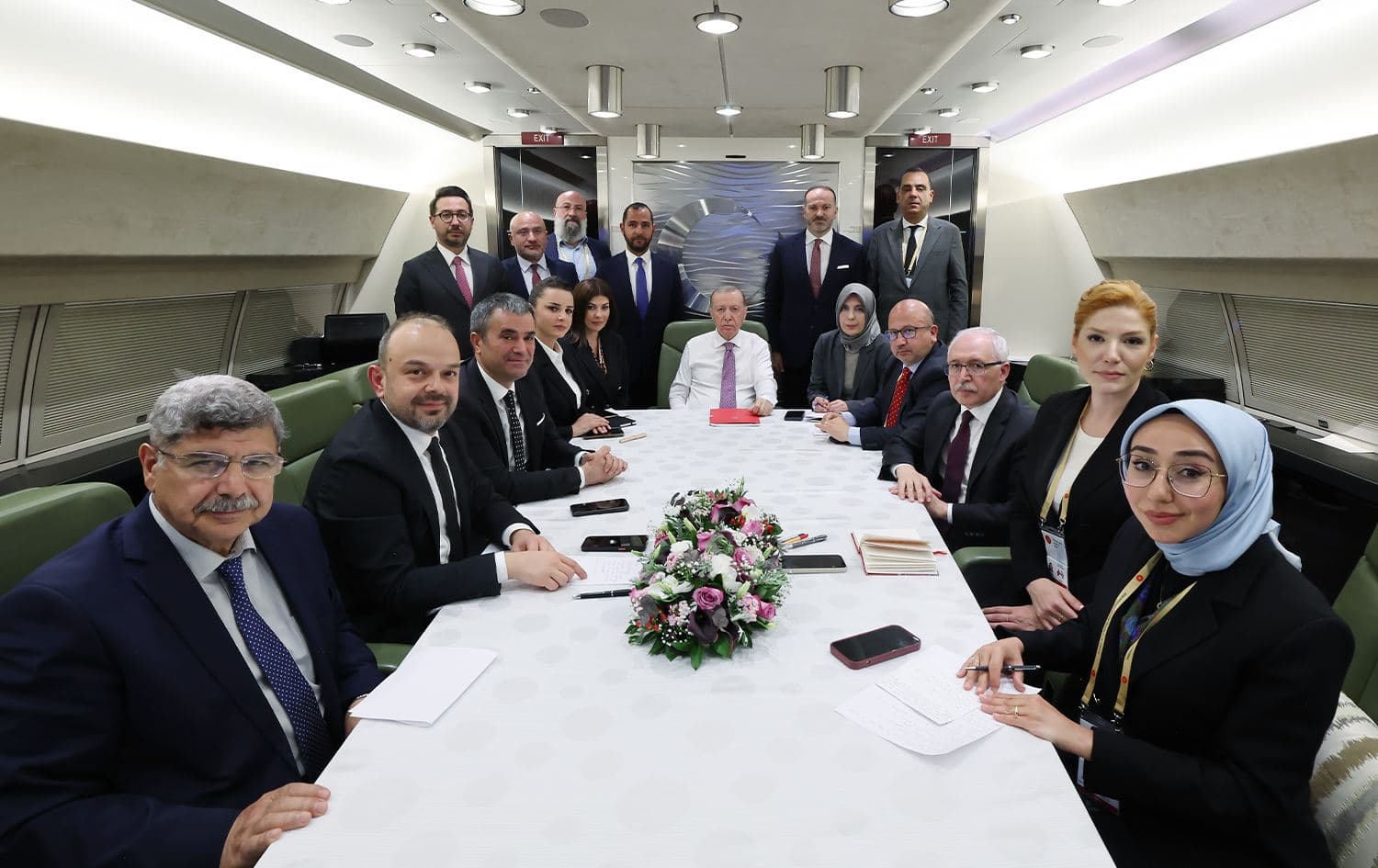

“The PKK’s disarmament and dissolution process also includes its Syrian branch,” Erdogan said, as cited by the state-owned Anadolu Agency, with Ankara viewing the YPG as the Syrian front for the PKK.
He stressed that the YPG should either respond to Ocalan’s call, abide by the March 10 agreement, signed between Syria’s interim President Ahmed al-Sharaa and Kurdish-led Syrian Democratic Forces (SDF) chief Mazloum Abdi, or do both.
Sharaa and Abdi signed a landmark agreement on March 10 to integrate the SDF into the state apparatus. The agreement recognizes the Kurds as an integral part of Syria, includes a countrywide ceasefire, and stipulates the return of displaced Syrians to their hometowns.
“They [the YPG] are currently going through a period of transition and search. We consider the coming days to be very critical. Our relevant institutions are monitoring the process of all armed groups integrating into the Syrian army through their respective counterparts,” Erdogan said.
“We are following the issue concerning the YPG very, very closely,” he stressed.
Earlier in May, the PKK announced its intent to disband and end its armed campaign against the Turkish state. The group described the move as a step toward a peaceful resolution to the conflict that has lasted more than 40 years and claimed over 40,000 lives.
The PKK’s decision followed a party congress held from May 5 to 7 in the mountains of the Kurdistan Region, where senior commanders responded to jailed leader Abdullah Ocalan’s earlier call - relayed in late February by Turkey’s pro-Kurdish Peoples’ Equality and Democracy Party (DEM Party) - urging a shift toward political engagement.
Turkey claims that there are PKK members within the ranks of the YPG, the backbone of the US-backed SDF. Ankara has designated both as terrorist groups.
Erdogan also called on neighboring Iraq to prioritize the issue of the notorious SDF-controlled al-Hol camp in northeast Syria’s Hasaka province, which houses tens of thousands of Iraqis and Syrians with links to the Islamic State (ISIS).
“Iraq needs to focus on the camp issue. Especially since the vast majority of women and children in the Al-Hol camp are from Iraq and Syria. They need to take responsibility for their own,” Erdogan said.
“As these matters are resolved, the significance of the YPG will diminish, and integration will become easier,” he added.
The repatriation of ISIS affiliates has long been a contentious issue in Iraq, given the heinous human rights violations and war crimes the group committed following its 2014 seizure of large swaths of territory in Iraq’s north and west.