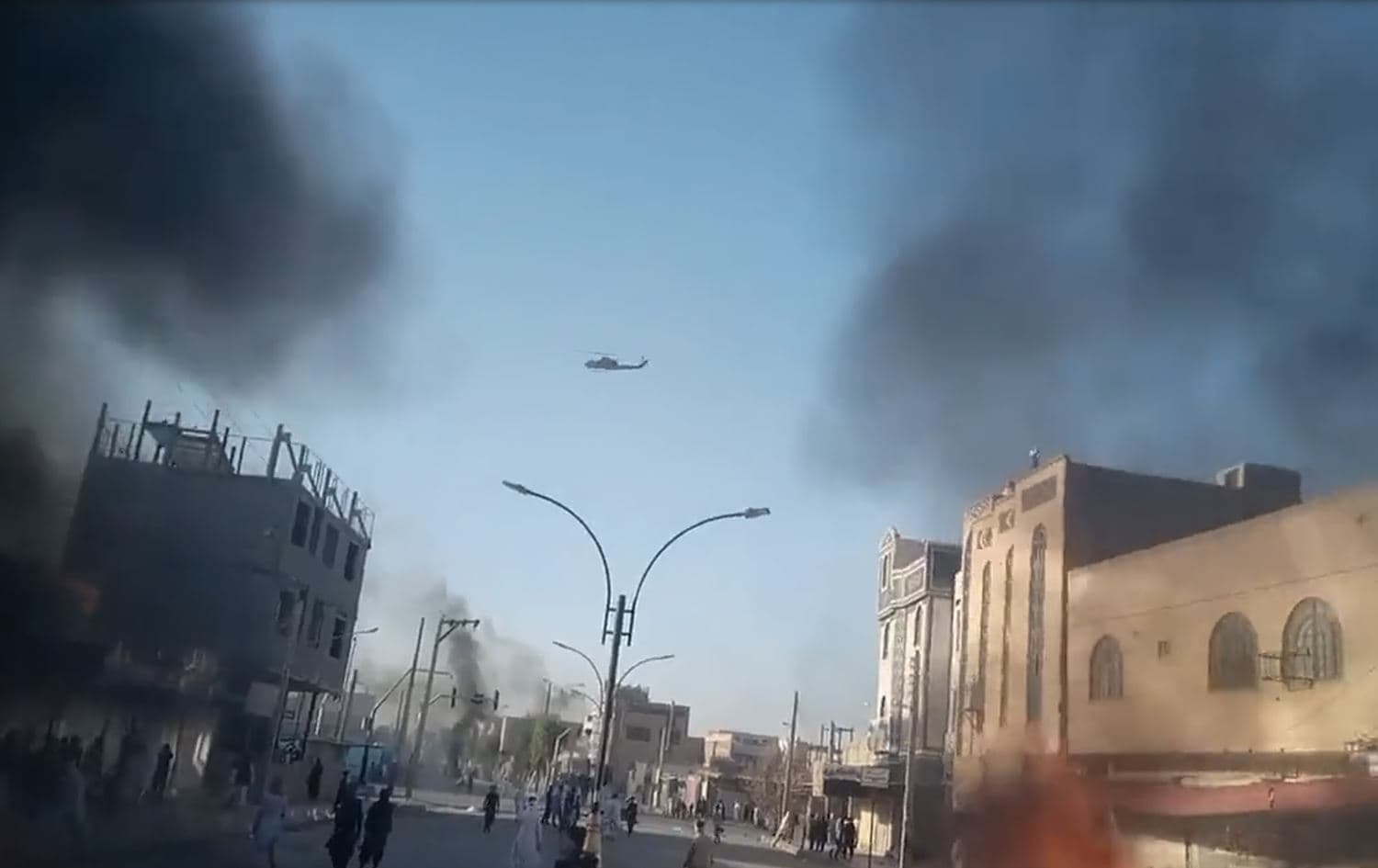

Outside the police station, located near Makki Grand Mosque in Zahedan, the provincial capital of Sistan and Baluchestan, security forces opened fire towards unarmed protesters with videos from the scene published by Baluchi activists showing hundreds of people running for cover.
The city resembles a war zone since crowds of angry protesters marched towards a local police station after Friday prayer, chanting anti-government slogans. Protesters demanded a response from the authorities regarding the case of a 15-year-old girl said to have been sexually assaulted by a senior police officer a month ago, accusing the government of covering up the offense.
Activists said that the death of a young Kurdish woman, Mahsa (Zhina) Amini in Tehran last month also added fuel to protesters' anger.
"We have confirmed the killing of 42 people and 193 wounded by the security forces but the real number is much higher and many wounded are refraining from going to the hospital for fear of arrest," Abdollah Aref the head of human rights watchdog Baloch Campaign told Rudaw English on Saturday.
He added that most of the fatalities were a result of a lack of medical attention as most families were afraid to admit their wounded relatives to government-owned medical facilities.
Baluchis are a mainly Sunni ethnic minority in Iran, living predominantly in the southeastern Baluchestan region, near the border with Pakistan.
"The city is militarized with drones flying overhead and all the schools and government offices closed. Some have been reported missing but no one knows where they are and if they have been arrested," Aref said.
Videos posted on Twitter by other activists portray a defiant city reluctant to give up, chanting as helicopters flew overhead.
پرواز هلی کوپترهای نظامی بر فراز آسمان #زاهدان رسماً میدان جنگ شده#مهسا_امینی pic.twitter.com/l0sdpyYn5L
— ادریس عزیزی بلوچ (@edris___azizi_b) October 1, 2022
Photos were also published of dozens of people who were reportedly killed or wounded, with severe gunshot wounds, lying on the ground and being attended by other protesters, with no ambulances in sight.
Aref, who resides outside Iran and is in contact with activists and residents of Zahedan said that some activists placed the number of dead at around 100, adding that he could not confirm the figure.
"The internet was patchy yesterday and activists were using VPN to send videos and photos out of the events but last night the authorities switched off the internet," he recounted.
IRGC-affiliated media claimed that protesters used weapons when attacking the police station - a claim Aref rejects, accusing security forces of forcing people to make false confessions on camera about carrying weapons.
The head of the IRGC intelligence, his deputy, and two other guards were reportedly killed, according to Iran's state media, without any details being provided about how protesters would be capable of killing such senior officials.
IRGC officials and other members of the Iranian security apparatus adopted a strong position, threatening "rioters." Thousands of people have been arrested, including many women's rights activists, with hundreds wounded and over 80 killed in the two weeks of protests that have engulfed Iran since Amini's death.
Iranians inside the country and across the world have staged protests calling for the overthrowal of the regime in Tehran.
Authorities in Tehran have labeled the protests as foreign intervention aimed at turning Iran into another Syria, adding that Amini had died of a heart attack, and not at the hands of security forces.
Protests however, are showing no sign of subsiding as university students across the country, particularly in the Kurdish areas, are on strike on Saturday.