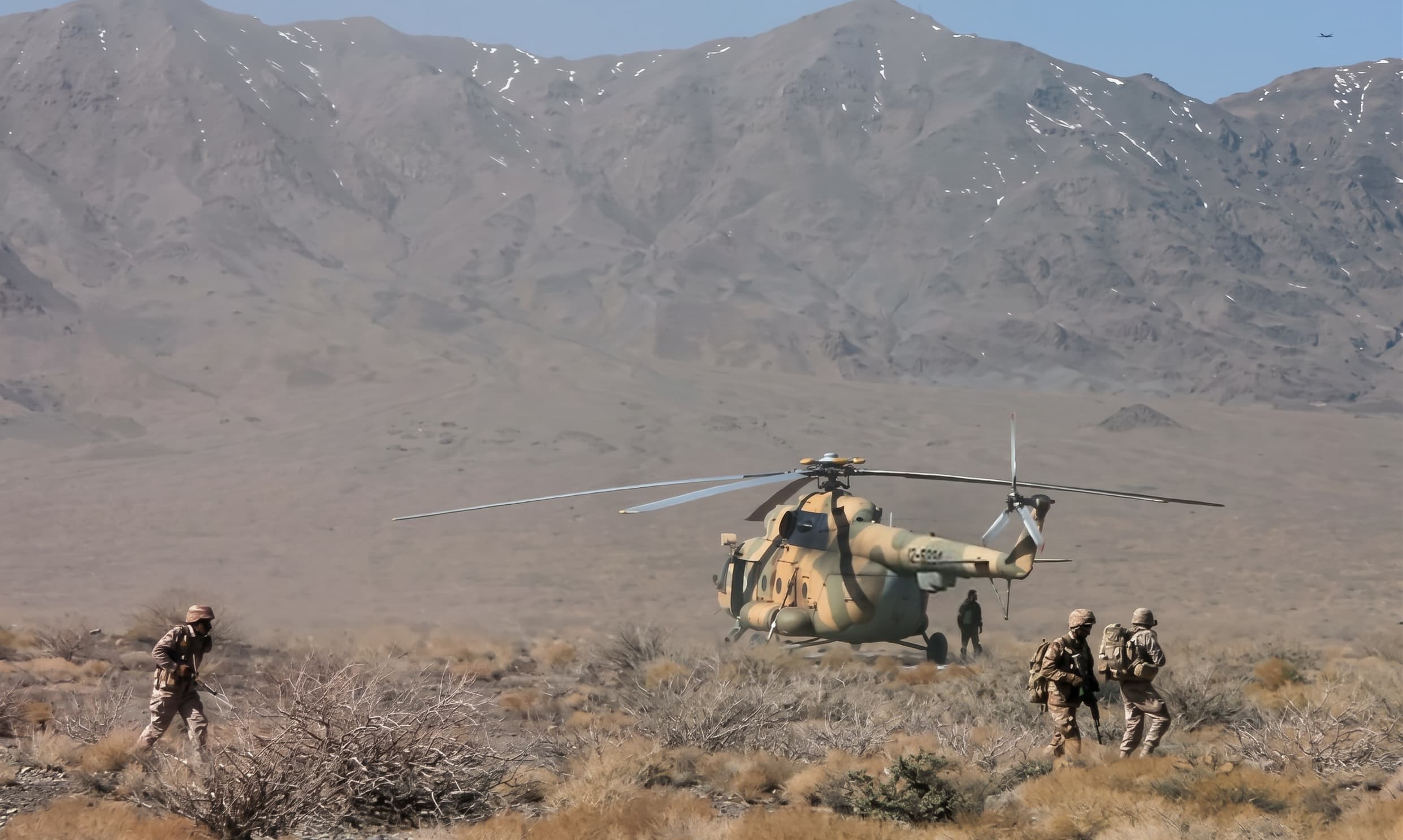
ERBIL, Kurdistan Region - Israel and the United States carried out extensive airstrikes across Iran’s western Kurdish regions on Sunday and early Monday, targeting dozens of military installations, including bases belonging to the Islamic Revolutionary Guard Corps (IRGC).
The air campaign comes amid concerns in Tehran the Kurds may stage an uprising against the Islamic republic.
The US and Israel launched their campaign against Iran early Saturday, targeting dozens of senior military and security figures in Tehran. Among them, the country’s Supreme Leader Ayatollah Ali Khamenei was killed.
The IRGC’s Hamza Command, which is responsible for parts of Iran’s western Kurdish areas, issued a warning Sunday to Kurdish opposition groups based in the Kurdistan Region, threatening strikes if they attempt to cross into Iran.
“In the event of the slightest movement by separatist elements, their complete destruction will be on the agenda,” the Hamza Command said in a statement.
Around a dozen armed Kurdish opposition groups are based in the Kurdistan Region’s mountainous areas, with thousands of fighters, according to sources close to the groups.
Five main Kurdish opposition groups formed a coalition last week, calling for regime change in Iran and the establishment of a democratic, secular government in Tehran.
“Our main and common goals in this alliance are to struggle for the toppling of the Islamic Republic of Iran, to realize the right of Kurdish self-determination, and to build a national and democratic institution based on the political will of the Kurdish nation in Eastern Kurdistan,” the coalition said in a statement.
The IRGC and its proxy forces have also carried out regular missile and drone attacks on the Kurdistan Region, including strikes targeting Erbil International Airport.
The US-led campaign against Islamic State (ISIS) coalition has used interceptors and C-RAM, to shoot down drones aimed at its positions and other locations, including Peshmerga bases.
In the early hours of Monday morning, footage of a massive strike on a military installation in the Kurdish city of Sanandaj was circulated on Iranian and Kurdish social media indicating that intensity of the campaign. The attack was preceded by around two dozen attacks in Urmia, Ravansar, Kamyaran, Kermanshah, Paveh, Piranshahr and Mahabad and several other border villages and locations.
US President Donald Trump has said his objective is to destroy the Iranian regime, after which, he said, the Iranian people would decide the country’s future.
“I call upon all Iranian patriots who yearn for freedom to seize this moment to be brave, be bold, be heroic, and take back your country. America is with you,” Trump said in a video address on Sunday. “The rest will be up to you, but we'll be there to help.”
In a phone call with The Atlantic, Trump said Iran’s new leadership was seeking talks. “They want to talk, and I have agreed to talk, so I will be talking to them,” he said.
Iran’s top security official Ali Larijani said on X that “We will not negotiate with the United States,” following reports that Tehran is seeking to resume talks with Washington through intermediaries.