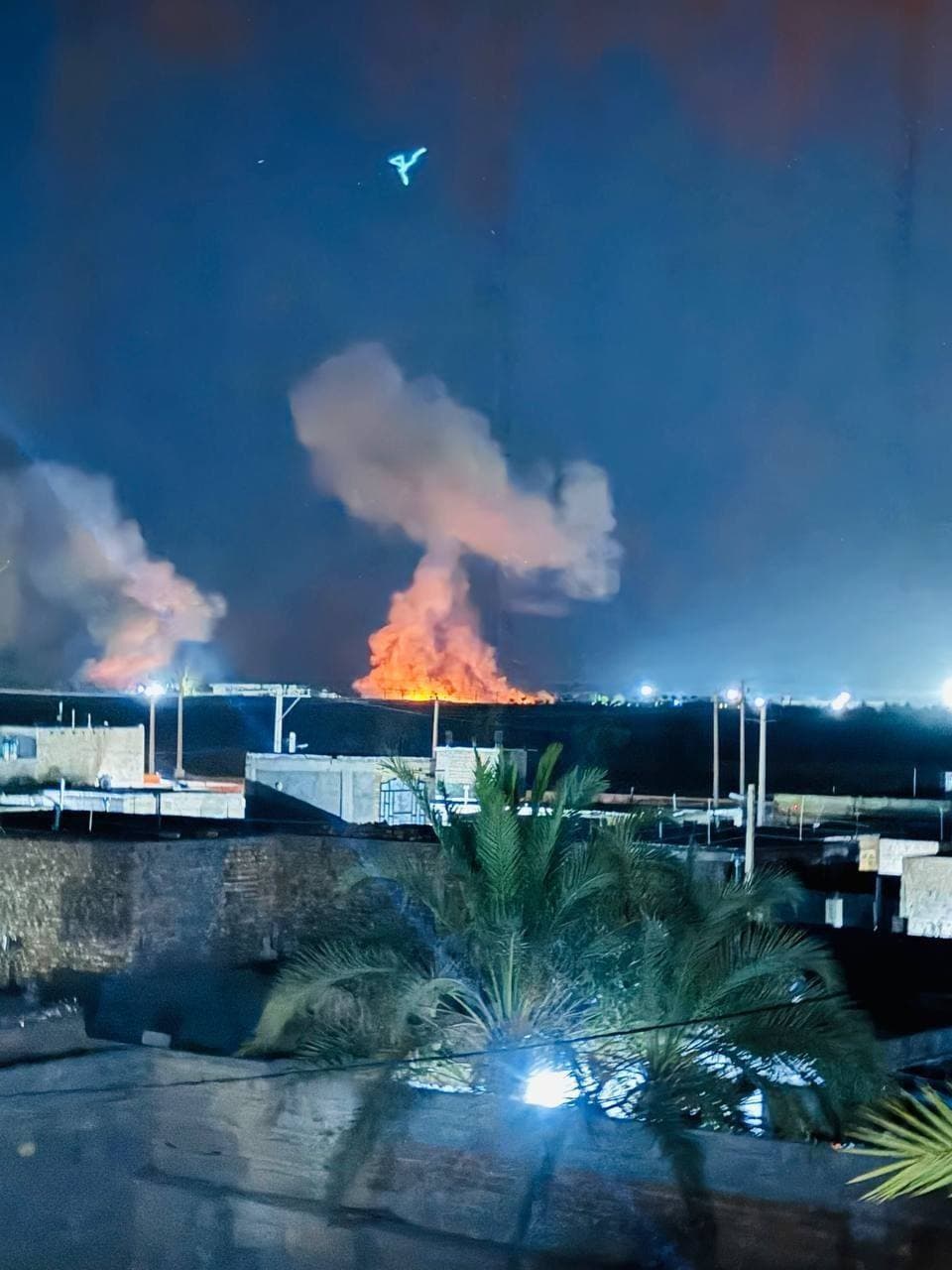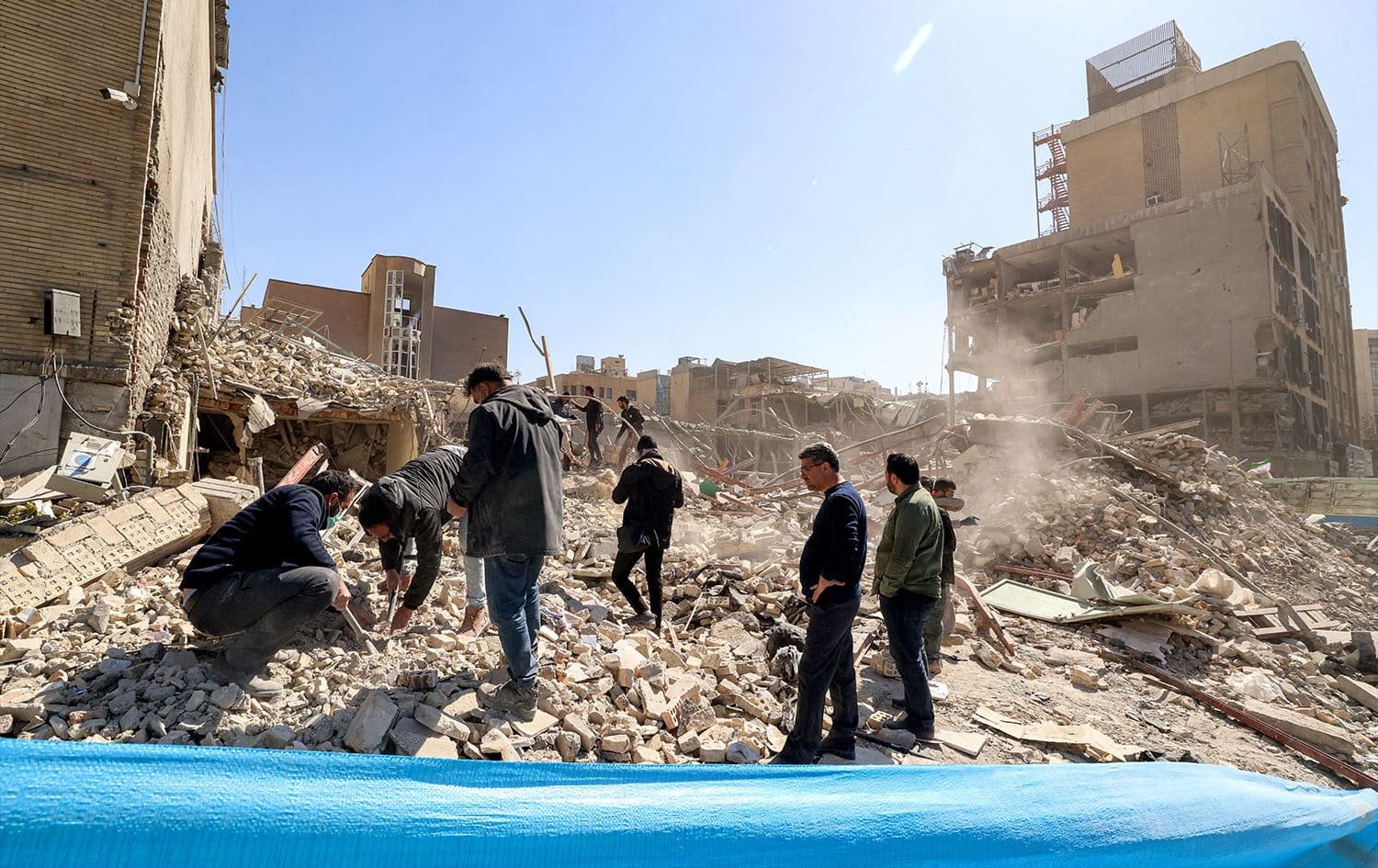
ERBIL, Kurdistan Region - US and Israeli airstrikes targeting Iranian military, security, and missile facilities continued on Monday and Tuesday across several cities, including Tehran, Karaj, Isfahan, Qom, Shiraz, the industrial port city of Bandar Abbas, and Bushehr, with powerful explosions reported in multiple locations.
According to local media, loud blasts were heard across central, southern, and eastern Tehran, with videos of the explosions widely circulated on social media. In Karaj, explosions were reported in the Rey and Azimiyeh areas, and strikes reportedly targeted mountainous areas surrounding the city.
On Monday night, two powerful explosions were heard near Iran’s state broadcasting center in Tehran. Iran’s Khabar channel reported that US and Israeli strikes targeted areas around the facility, with large plumes of smoke seen rising nearby. Officials at the broadcasting center said operations continued without disruption, and Iranian television channels remained on air. The Israeli military later confirmed on X that it had targeted Iran’s broadcasting center in Tehran.
Strikes around old parliament building
IRGC-affiliated Tasnim News Agency and Fars News reported that one of the most intense waves of strikes in Tehran targeted several locations around the old parliament building, along with other sites in eastern parts of the capital.
According to the outlets, the old parliament building itself was struck, though the current parliament complex was not targeted. Iranian media also reported that the secretariat building of the Expediency Discernment Council in Tehran was hit. Videos circulating online showed explosions in the area.
On Tuesday morning, Iranian media reported that the IRGC’s Fath Air Force base in located in Alborz province near Karaj, was also targeted.
Casualties reported in Bushehr
Iranian media described the overnight strikes in Bushehr, southern Iran, as particularly intense. Official figures cited by local outlets said five members of the IRGC’s air and naval forces were killed.
Explosions were also reported Tuesday morning in the cities of Qom, Isfahan, and Khomeini Shahr though authorities have not yet released details on the locations struck or the extent of damage.
Earlier reports alleging an attack on an oil pipeline in Khuzestan province were denied by provincial authorities. Aside from the confirmed deaths of five IRGC members in Bushehr, no official nationwide casualty figures from the overnight strikes have been released.
Kerman attack
Iran’s Southeastern Regional Army Command said an attack on an aviation base in the city of Kerman killed 13 personnel.
According to the statement, the strike occurred in the early hours of Monday and resulted in the deaths of several officers and employees stationed at the base.
Mazandaran casualties
Officials in Iran’s Mazandaran province announced that 18 residents of the province were killed in Israeli strikes while “defending the Islamic Republic” outside provincial borders. The statement said those killed included 17 men and one woman and described them as having “reached martyrdom.”
Iranian retaliation claims
The IRGC said its missile and drone attacks targeting US bases in the region are ongoing. On Tuesday, it announced a new wave of strikes targeting the US air forces in the Sheikh Isa area of Bahrain using missiles and drones, claiming the base’s main command center was destroyed.
IRGC spokesperson Ali Mohammad Naeini said Tuesday morning that 650 US soldiers had been killed or wounded during the first two days of the conflict, alleging that Washington was concealing the true figures. He claimed that 160 US personnel were killed or wounded in a single attack on a US military facility in Bahrain.
Diplomatic tensions
Iranian Foreign Minister Abbas Araghchi accused Washington of entering a “war of choice” on behalf of Israel after US Secretary of State Marco Rubio said US strikes were carried out preemptively to protect American forces from anticipated Iranian retaliation.
“Mr. Rubio admitted what we all knew: U.S. has entered a war of choice on behalf of Israel. There was never any so-called Iranian ‘threat’,” Araghchi wrote on X.
Succession speculation after Khamenei's killing
Speculation is intensifying over the selection of Iran’s next Supreme Leader following the killing of Ayatollah Ali Khamenei.
Iran’s interim Leadership Council - consisting of President Masoud Pezeshkian, Chief Justice Gholam-Hossein Mohseni-Ejei, and Ayatollah Alireza Arafi - has said a new leader will be determined soon.
Under Iran’s constitution, the responsibility for selecting the Supreme Leader lies with the 88-member Assembly of Experts.
Ayatollah Ali Moallem, a member of the Assembly, said the process would not take long and would be conducted according to religious criteria, adding that political or partisan factions would not interfere. He did not name potential candidates or provide a timeline for the decision.