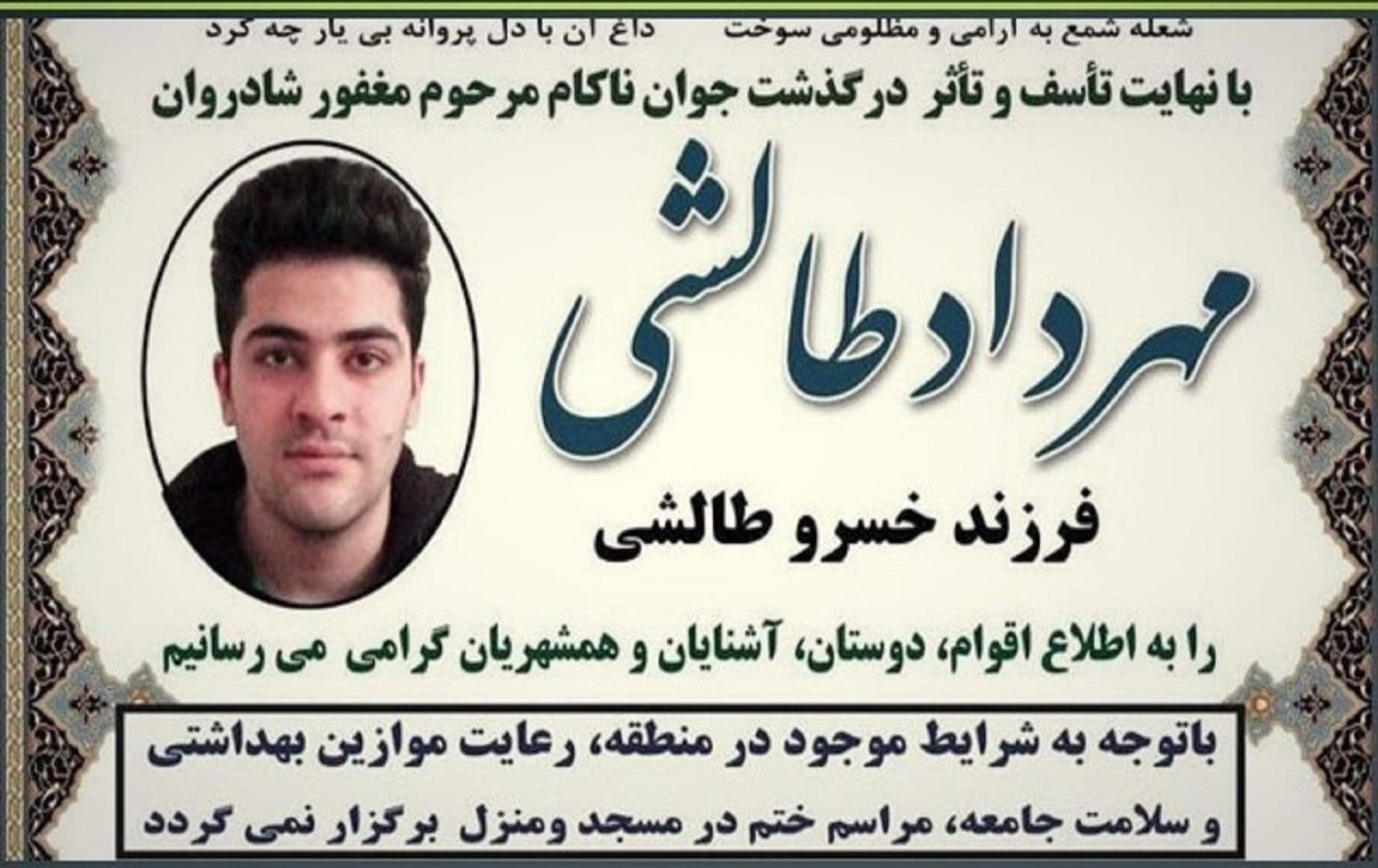

ERBIL, Kurdistan Region— A young Kurdish man was tortured and killed three days after being detained by police in Tehran, the Kurdistan Human Rights Network (KHRN) reported on Tuesday.
Mehrdad Taleshi, 20, who lived in Tehran and was from Divandarreh in Kurdistan province, was arrested on February 1 on suspicion of possessing drugs, Hengaw Organization for Human Rights also said on Tuesday. His corpse was taken to a hospital three days later.
Police told Taleshi's family that he had a heart attack, but his body showed signs of torture, KHRN said.
Taleshi's family said the young man, an athlete, had no criminal record or history of drug use.
In less than a month, Iranian authorities have arrested nearly 80 people in Kurdish cities, a human rights watchdog reported. The arrests come as monitors have raised concern about a spike in arrests and executions of minorities in the Islamic Republic.
Two Kurds, Wahid Sheikh Mohammedi and Fardin Bayazidi, were arrested on unknown charges by Iranian security forces in the town of Oshnavieh in late January and taken to an unknown location, KHRN reported.
Human rights watchdogs have also documented tens of executions in late 2020 and into this year. Within one month, 26 people were executed, including a woman, according to the Human Rights Activists News Agency (HRANA), an NGO that monitors human rights violations across Iran.