


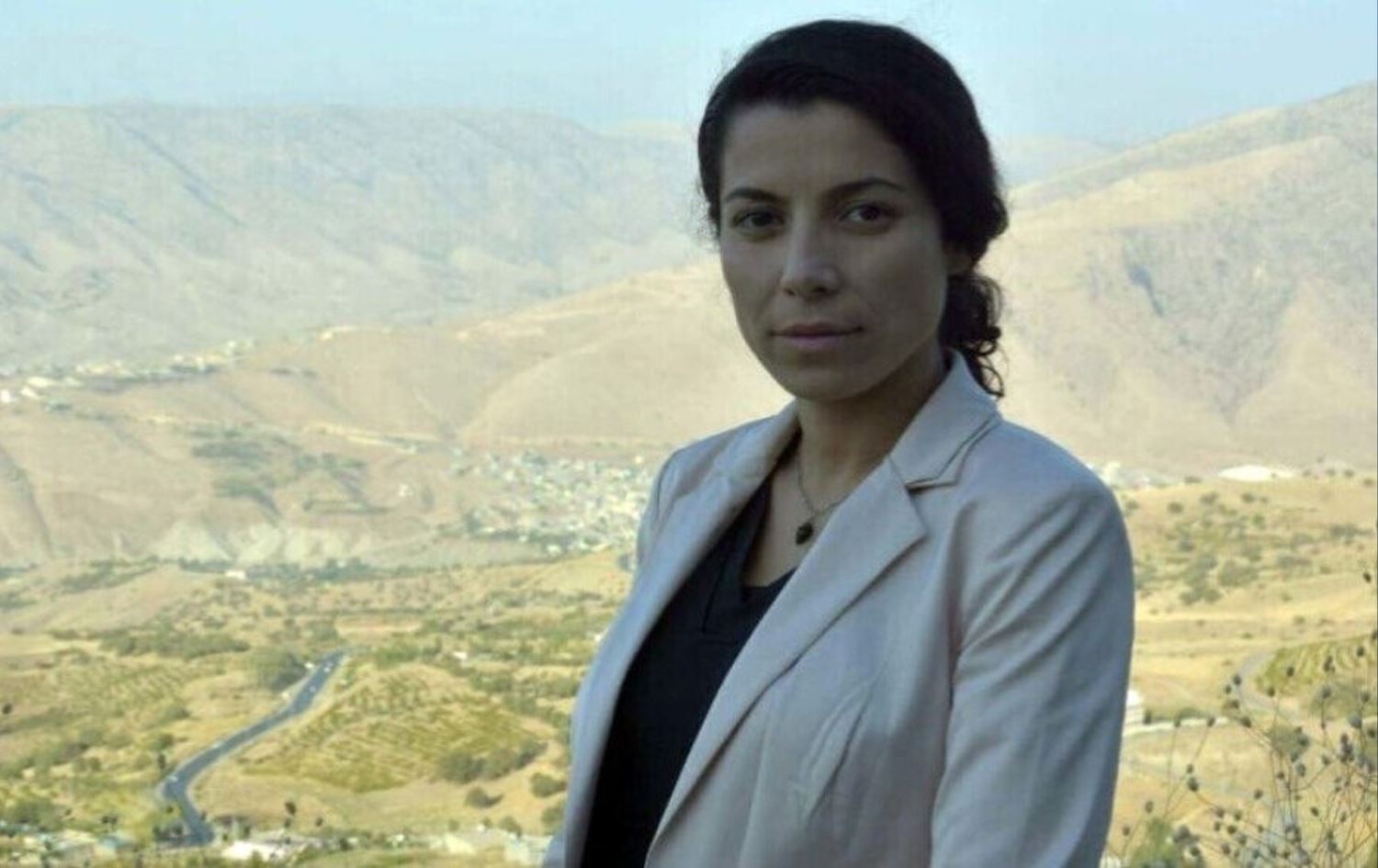
ERBIL, Kurdistan Region - Iran’s Supreme Court has annulled the death sentence of Kurdish women’s rights activist Wrisha (Varisheh) Moradi, citing legal and investigative “deficiencies,” and has sent the case back for reconsideration, her lawyer said.
Mustafa Nili, Moradi’s lawyer, said in a Wednesday post on X that after reviewing an appeal in her case, the court annulled the verdict “due to deficiencies in the investigation and failure to observe legal formalities (failure to inform of the charge forming the basis for issuing the death sentence during the proceedings).”
The case has been referred back to Branch 15 of the Tehran Revolutionary Court for further proceedings.
Moradi is from western Iran's (Rojhelat) Sanandaj province. She was arrested by security forces in August 2023 on charges of baghi (armed rebellion against the state) and for allegedly being a member of the Free Life Party of Kurdistan (PJAK), which is blacklisted by Iran.
She was sentenced to death in November 2024, and the Center for Human Rights in Iran reported at the time that she had been transferred to Tehran’s Evin Prison, “where she spent nearly five months in solitary confinement.”
In February, a group of 229 Iranian lawyers petitioned against Moradi’s sentence alongside other “political prisoners,” urging a fair retrial.
Iranian authorities frequently arrest Kurds in connection with political activism and protests. Many detainees are held without due process and face arbitrary detention and lack of legal representation.
Iran’s use of the death penalty has drawn widespread international criticism. The country executed 909 prisoners in 2024, a nine percent increase from the previous year.
Arrests surged following the 2022 death of Mahsa (Zhina) Amini, a Kurdish-Iranian woman who died in custody after being detained by the morality police for allegedly wearing a lax hijab. Her death sparked the most intense nationwide protests in decades.
Iran ranks second globally for known executions, and rights groups have repeatedly said the death penalty is used to suppress minority groups, including Kurds and Baluchis, who were active in the 2022 Jin, Jiyan, Azadi (Women, Life, Freedom) protests.


Comments
Rudaw moderates all comments submitted on our website. We welcome comments which are relevant to the article and encourage further discussion about the issues that matter to you. We also welcome constructive criticism about Rudaw.
To be approved for publication, however, your comments must meet our community guidelines.
We will not tolerate the following: profanity, threats, personal attacks, vulgarity, abuse (such as sexism, racism, homophobia or xenophobia), or commercial or personal promotion.
Comments that do not meet our guidelines will be rejected. Comments are not edited – they are either approved or rejected.
Post a comment