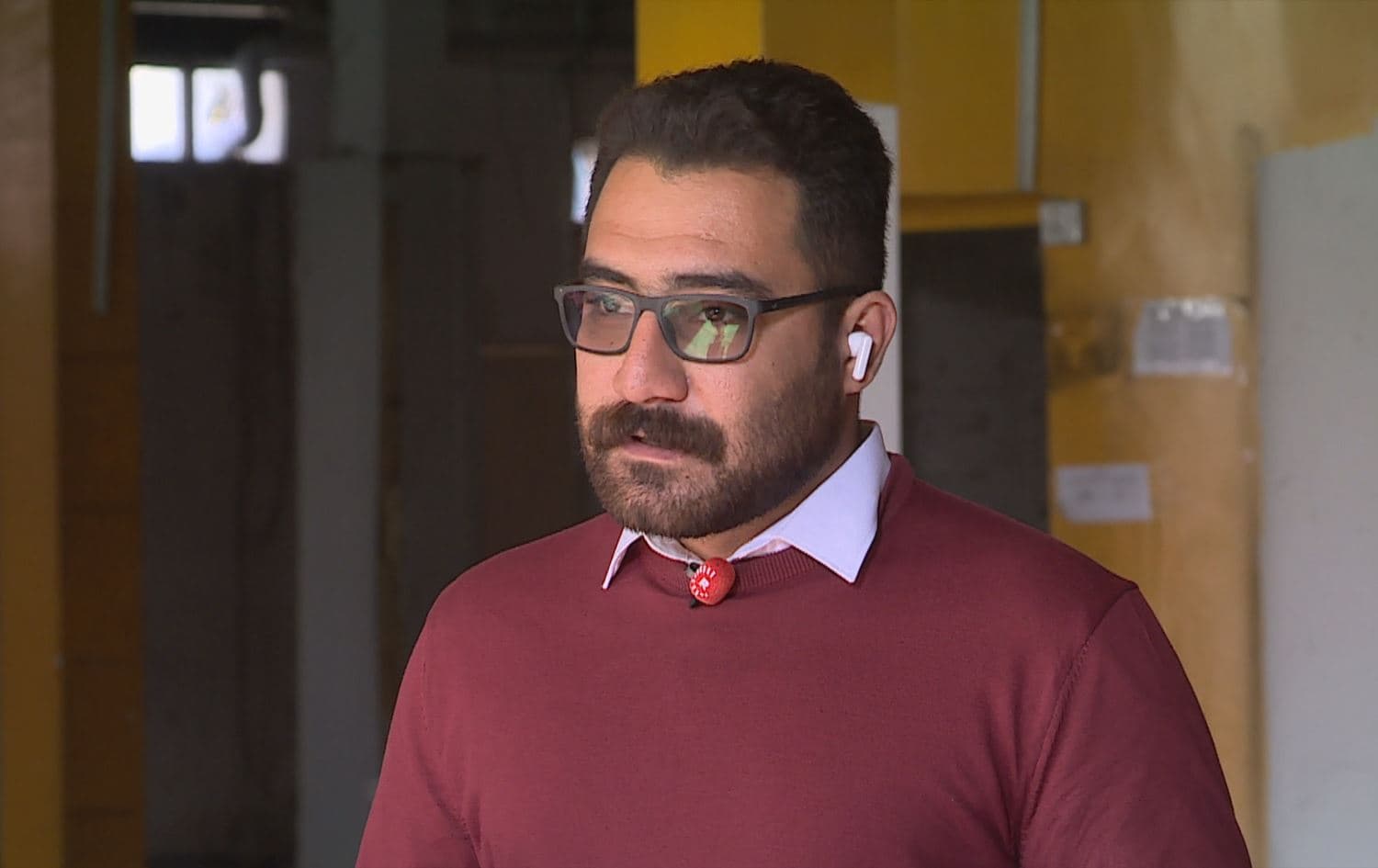

ERBIL, Kurdistan Region - A Kurdish refugee family from Iran living in Erbil have said they are anxiously waiting for news from relatives inside the country after communications were severed for several consecutive days. Internet and phone services have been cut, preventing families from contacting loved ones as unrest spreads across Iran.
“I was in contact with my family, my father and mother. I asked about them to see how they are. I [talked] with friends and relatives. It was Wednesday when essential food had run out in Iran. [Cooking] oil and rice also ran out. Nothing remains now,” Bahnam Jamali, a refugee, told Rudaw on Monday.
The prolonged uncertainty has taken a heavy emotional toll on families living in exile.
“We have no rest. We only think about what is happening,” said Glara Mstafawi, Jamali’s wife.
Iran is currently facing its most significant internal security threat in years, marked by a wave of anti-government protests triggered by a historic currency crash that saw the Iranian currency hit a record low of 1.45 million rials to the US dollar.
For those who have already been separated from family members for years, the silence has been especially painful.
“The government is doing a large genocide in Iran. Unfortunately, it has been able to do so quietly. Honestly, we are constantly anxious. I was in contact with two close people in my family. They told me that if they [authorities] see anyone on the streets at night, they shoot at them with war [live] rounds. They do not care if it is a family, a child or a woman,” said Yazdan Farahmand, another Kurd from Iran living in Erbil.
The nationwide protests began on December 28 when merchants shuttered their shops at the Alaeddin Mall in Tehran’s Grand Bazaar, but has since spread to at least 156 separate demonstrations across 27 of Iran’s 31 provinces.
The US-based Human Rights Activists News Agency (HRANA) reported that as of Sunday, at least 483 protesters and 47 security personnel had been killed. However, these figures are likely underestimated, especially given the government-imposed internet blockout that has entered its sixth day on Tuesday. Some reports suggest that several thousands of people have been killed.
Meanwhile, the New York-based Center for Human Rights in Iran (CHRI) reported last week that over 2,000 people had been “arbitrarily arrested,” a figure that has since risen to over 10,000 according to activist aggregates.
Iran’s nationwide internet and communications shutdown is severely disrupting trade, cutting the country off from regional and international markets.
In the past days, authorities have blocked internet and phone services amid ongoing protests, leaving traders unable to work.
Trade between Iran and the Kurdistan Region alone is valued at about $6 billion annually, but commercial activity has now slowed to a near standstill.
Trade in Kurdistan Region paralyzed amid Iran blackout
The internet shutdown is also severely disrupting trade between Iran and the Kurdistan Region, where roughly 30 percent of imported goods originate from Iran.
Kayfi Khoshnaw, spokesperson for the Erbil Exchange Market, said money transfers have nearly collapsed.
“[The rate of our remittances with Iran] has decreased by 90 percent. People do not dare to transfer money to their account numbers [in Iran] because they receive no [reply] or confirmation... You don’t know whether the money has reached your bank account or not,” he said.
Importers say shipments are stalled and untraceable. “We currently have three shipments in Iran, and we have no information on where they have reached or the status of their processing,” said Soran Ali, an importing company owner. “Our shipments were supposed to arrive two to three days ago.”
Others reported similar losses.
“Our goods are purchased from five Iranian factories… We currently have six trucks at the border, and we don't even know which border they are at,” said Rizgar Osman, another importer, adding that each truck is worth about $20,000.
At Sulaimani’s main fruit and vegetable market, traders say the blackout has caused chaos.
“At this moment, when communication is cut, a lot of problems have been created for us,” said Atta Mohammed, a member of the Sulaimani Vegetable Market Syndicate. “We do not know the prices of our goods… This is a major obstacle for us.”
The internet shutdown in Iran has alarmed Iranians living abroad, leaving them unable to contact their families amid deadly anti-government protests. In Erbil, a Kurdish family is anxiously waiting for news from relatives in Iran.
— Rudaw English (@RudawEnglish) January 13, 2026
Reporting: Payam Sarbast pic.twitter.com/ZnSJE4Q4Gw
Human rights groups say the shutdown is also preventing information from reaching the outside world.
“The Internet is not [available] there… The people of Kurdistan are being killed, and the Islamic Republic is suppressing them in an extremely brutal manner,” said Zhila Mostajer, co-founder of the Hengaw Organization for Human Rights, warning that violence is unfolding largely unseen.
Horvan Rafaat and Payam Sarbast contributed to this report from Erbil, and Alla Shally reported from Germany.