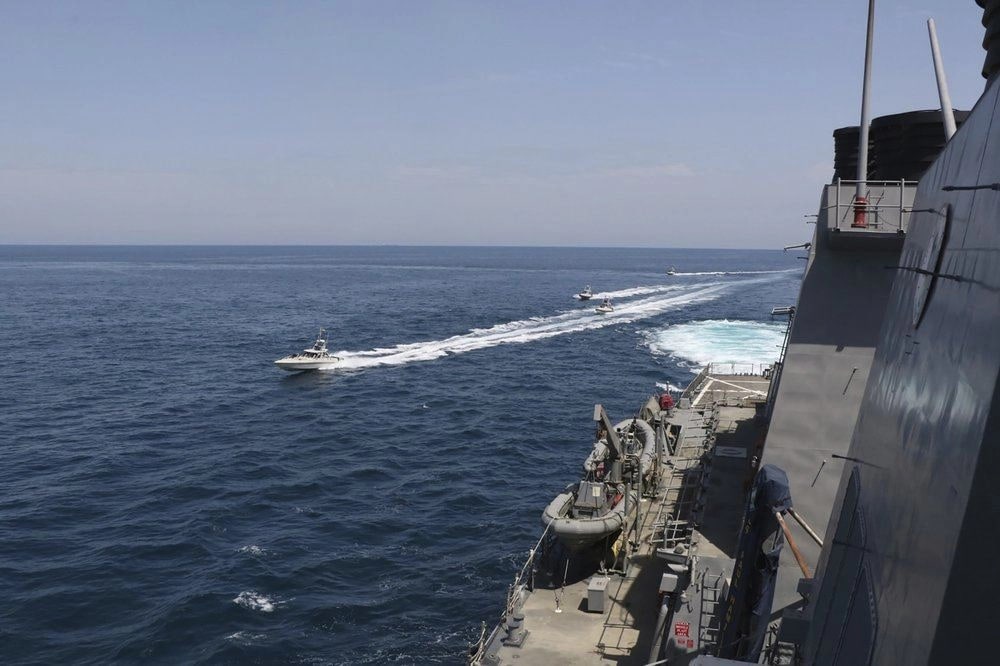

ERBIL, Kurdistan Region - Eleven Iranian navy vessels allegedly made “dangerous and harassing approaches” to US warships in the Persian Gulf on Wednesday, according to the US navy.
Islamic Revolutionary Guard Corps Navy (IRGCN) vessels approached the US Navy’s Bahrain-based 5th Fleet while they were “conducting joint integration operations” with Apache attack helicopters in the international waters, according to a statement by the American fleet.
The Iranian vessels reportedly “repeatedly crossed the bows and sterns of the US vessels at extremely close range and high speeds,” with one going as close as ten yards to an American ship.
According to the statement, the US crew warned the encroaching vessels to disengage through bridge-to-bridge radio dispatches, as well five blasts from the horns of the ship, as well as long range acoustic noise maker devices. They received a response from the Iranians an hour later, who then began spacing themselves from the US vessels.
“The IRGCN's dangerous and provocative actions increased the risk of miscalculation and collision,” reads the statement, which adds that the moves were “not in accordance with the internationally recognized Convention on the International Regulations for Preventing Collisions at Sea (COLREGS) "rules of the road" or internationally recognized maritime customs.”
The IRGCN’s actions were also in flagrance of international law that calls on vessels “to act with due regard for the safety of other vessels in the area,” the statement added.
Monday’s altercation came shortly after armed men presumed to be from Iran’s Revolutionary Guard, held and released a Hong Kong-flagged tanker ship Tuesday off the coast of Iran near the crucial Strait of Hormuz on the same day.
Iranian officials have not commented on either incident.
Tensions between the two countries spiked following the US drone strike in Iraq that killed Iranian general Qasem Soleimani and Iran’s retaliatory fire of ballistic missiles at US bases in January.
Washington has blamed attacks launched on bases with US-troops in Iraq on Iran-aligned elements of the Popular Mobilisation Forces (PMF) military network formally integrated into Iraq’s security forces.
The United States has deployed Patriot air defense batteries to Iraqi bases to protect American troops recently targeted by Iranian missiles
The US has been heavily criticized by human rights watchdogs and activists alike for the dire effect its sanctions are said to be having on Iran’s ability to respond to the ongoing coronavirus pandemic, which has claimed 4,777 lives since the outbreak began.
According to Iran analyst Ariane M. Tabatabai Trump’s sanctions and the global pandemic have, “exacerbated the effects of Iran’s own incompetence and corruption, leading to significant discontent among the populace.”
A big point of contention between the two countries has been Washington’s unilateral withdrawal from the landmark 2015 nuclear deal, aimed at curbing Tehran’s nuclear ambitions in return for sanctions relief.
The global financial dominance of the US dollar has meant the deal’s European, Russian and Chinese signatories have been able to do little to alleviate pressure on Iran’s economy from Washington’s crushing sanctions.
In response, Iran has begun a gradual abandonment of its commitments to the nuclear deal - moves that Iran has argued are reversible if sanctions relief is provided.
Tehran announced in January that it would no longer comply with restrictions on nuclear enrichment, the latest move in undermining the landmark deal.