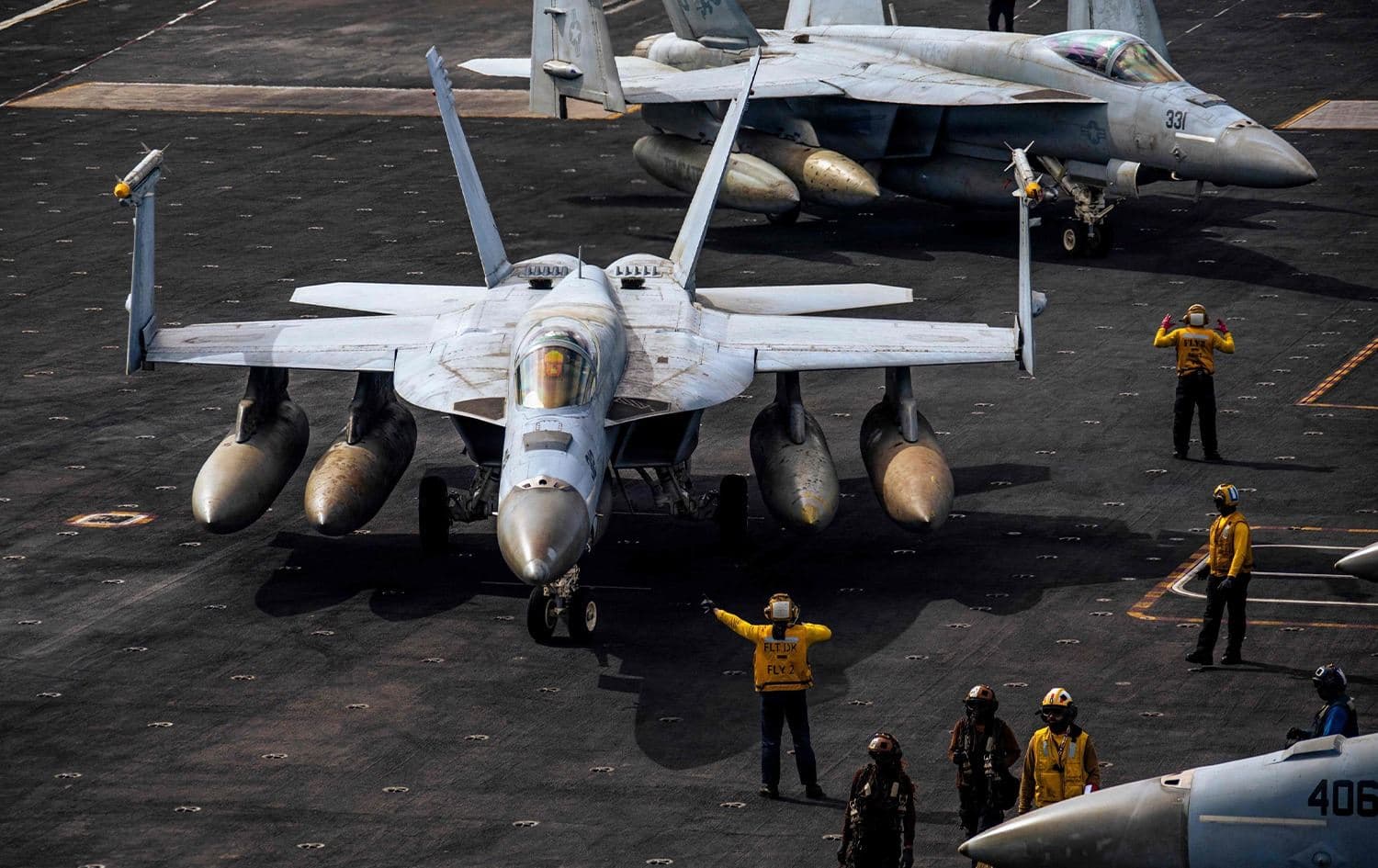

ERBIL, Kurdistan Region - Iran warned on Saturday that it could resort to military options in response to a US blockade in the Strait of Hormuz, as Washington deploys thousands of sailors and Marines, along with three aircraft carriers, to the Middle East, marking the largest regional buildup since the 2003 invasion of Iraq.
“If the aggressor US military continues its siege, banditry, and maritime piracy in the region, it should be assured that it will face a response from the powerful Iranian armed forces,” the Khatam al-Anbiya Central Headquarters, which oversees Iran’s wartime operations, said in a statement.
Meanwhile, the US Central Command reported on Friday that it has deployed 12 vessels, including three aircraft carriers, along with more than 200 military aircraft and over 15,000 Marine personnel across the region.
Iranian Foreign Minister Abbas Araghchi arrived in Islamabad late Friday to present a proposal for a potential agreement with the United States to Pakistani officials. US President Donald Trump’s special envoy Steve Witkoff and his son-in-law Jared Kushner also arrived in Islamabad on Saturday.
However, no direct meeting for a second round of talks between US and Iranian delegations in the Pakistani capital has been confirmed.
Trump extended a Pakistan-brokered two-week ceasefire with Iran on Tuesday, saying he wanted to give Tehran time to submit a “unified proposal” for a peace agreement.
According to the Islamic Revolutionary Guard Corps-affiliated Fars News Agency, Araghchi conveyed “Iran’s views and considerations regarding an end to the war.” It remains unclear whether Tehran has submitted the proposal requested by Washington.
The same agency highlighted Pakistan’s “readiness” to continue mediation efforts “until a result is achieved.”
A key sticking point in the US-Iran truce remains the Strait of Hormuz, a strategic waterway through which more than one-fifth of global energy supplies pass during peacetime. Iran imposed restrictions on the route for most of the nearly six-week war with the US and Israel that began on February 28. During the conflict, US and Israeli forces struck more than 17,000 sites across Iran.
After Iran began easing restrictions following the ceasefire, Washington imposed a blockade on Iranian vessels entering and leaving its ports on April 13. Tehran has since said it will not participate in a second round of talks unless the blockade is lifted.
“The US must know that the armed forces of the Islamic Republic of Iran possess greater strength and preparedness than ever before to defend their sovereignty, territory, and national interests,” Khatam al-Anbiya said in Saturday’s statement.
It added that Iran is prepared to “inflict even more severe losses upon the American-Zionist enemies in the event of renewed aggression.”