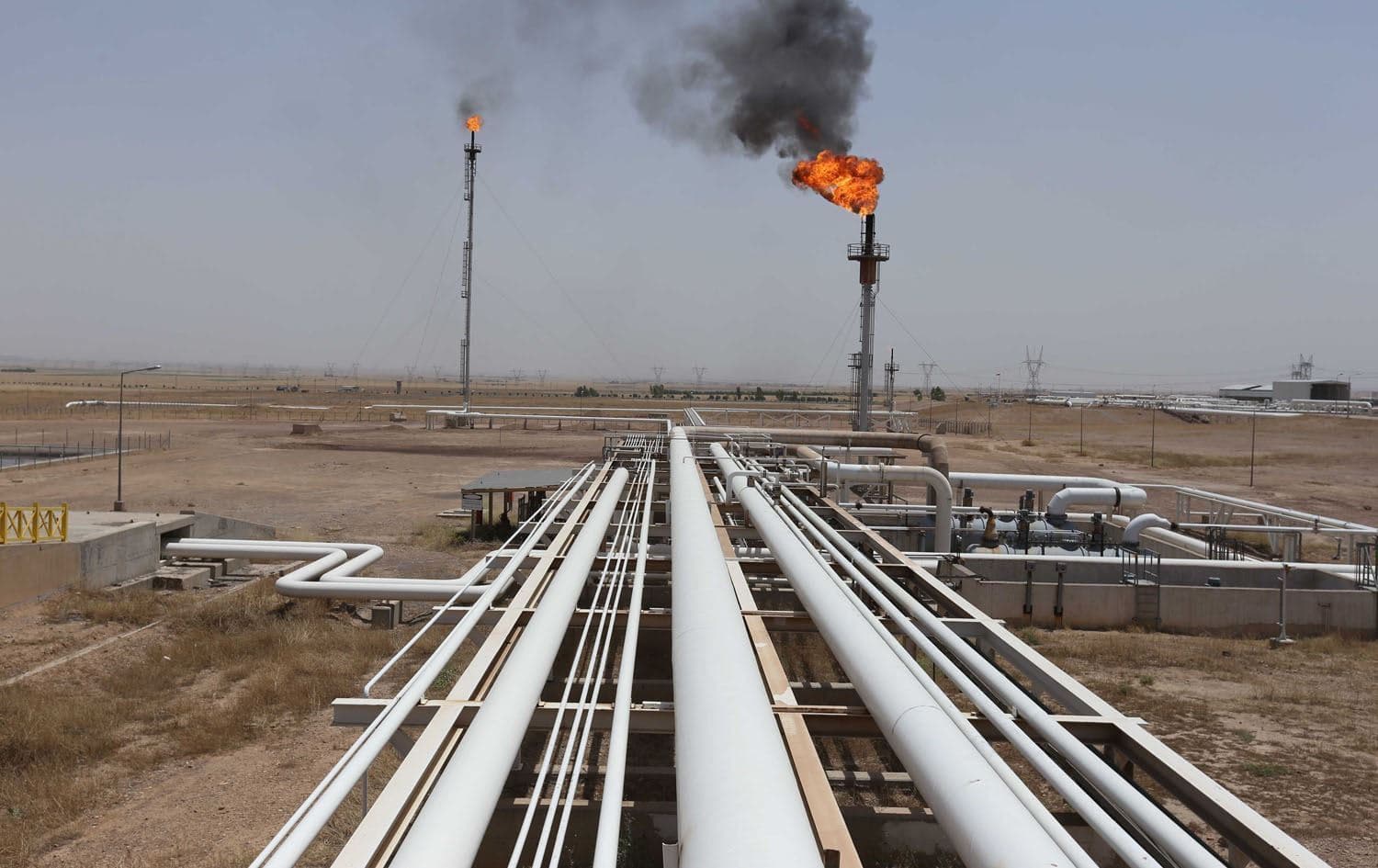

ERBIL, Kurdistan Region - Iraq’s oil ministry has begun testing a repaired pipeline that will carry oil from Kirkuk to Turkey’s Ceyhan port, a source within the ministry told Rudaw on Friday.
Baghdad conducted oil pumping trials this week, through three compressor stations in Kirkuk, Beiji and Mosul, a ministry source told Rudaw’s Hemin Baban Rahim on the condition of anonymity.
One third of the pipeline is inside Iraq and Kurdistan Region, and the remaining passes through Turkish territory to Ceyhan port where the oil is loaded into ships.
The pipeline has been out of commission since it was damaged by the Islamic State (ISIS) when the group captured Mosul in 2014.
Repairs are now finished and the pipeline passed the first trial run without any problems, the source said. A second test will be done before exports resume.
Iraq has been repairing its oil infrastructure damaged during the war with ISIS. In February, Prime Minister Mohammed Shia’ al-Sudani presided over the reopening of the country’s largest oil refinery in Baiji, nearly a decade after it stopped operations.
With the refinery now back online, “we are on track to meet the country's total oil derivatives needs by mid-next year, potentially even surpassing this goal ahead of schedule,” Sudani said.
Iraq is one of the world’s top oil producers, pumping out some four million barrels per day according to Sudani. However, it still imports gas and refined products, especially from its neighbor Iran.
“Halting oil derivative imports will save billions of dollars,” Sudani said, “that can be reallocated to other public services and economic sectors, marking significant reform.”
Sudani’s government has eyed self-sufficiency in several energy-related sectors, especially oil and gas.
Last month, Sudani announced that Iraq will be self-sufficient with respect to oil derivatives within two months and that will lead to over $3 billion annually in savings when it ends imports.
Oil is Iraq’s main source of income, relied on to cover government costs and pay civil servant salaries. The country pocketed $97.5 billion from oil sales in 2023, a significant decline from 2022’s record-setting $115 billion.