
ERBIL, Kurdistan Region – Iraqi High Commission for Human Rights (IHCHR) issued a statement warning that a “security escalation” in central Baghdad might lead to a “massacre” of protesters in the area.
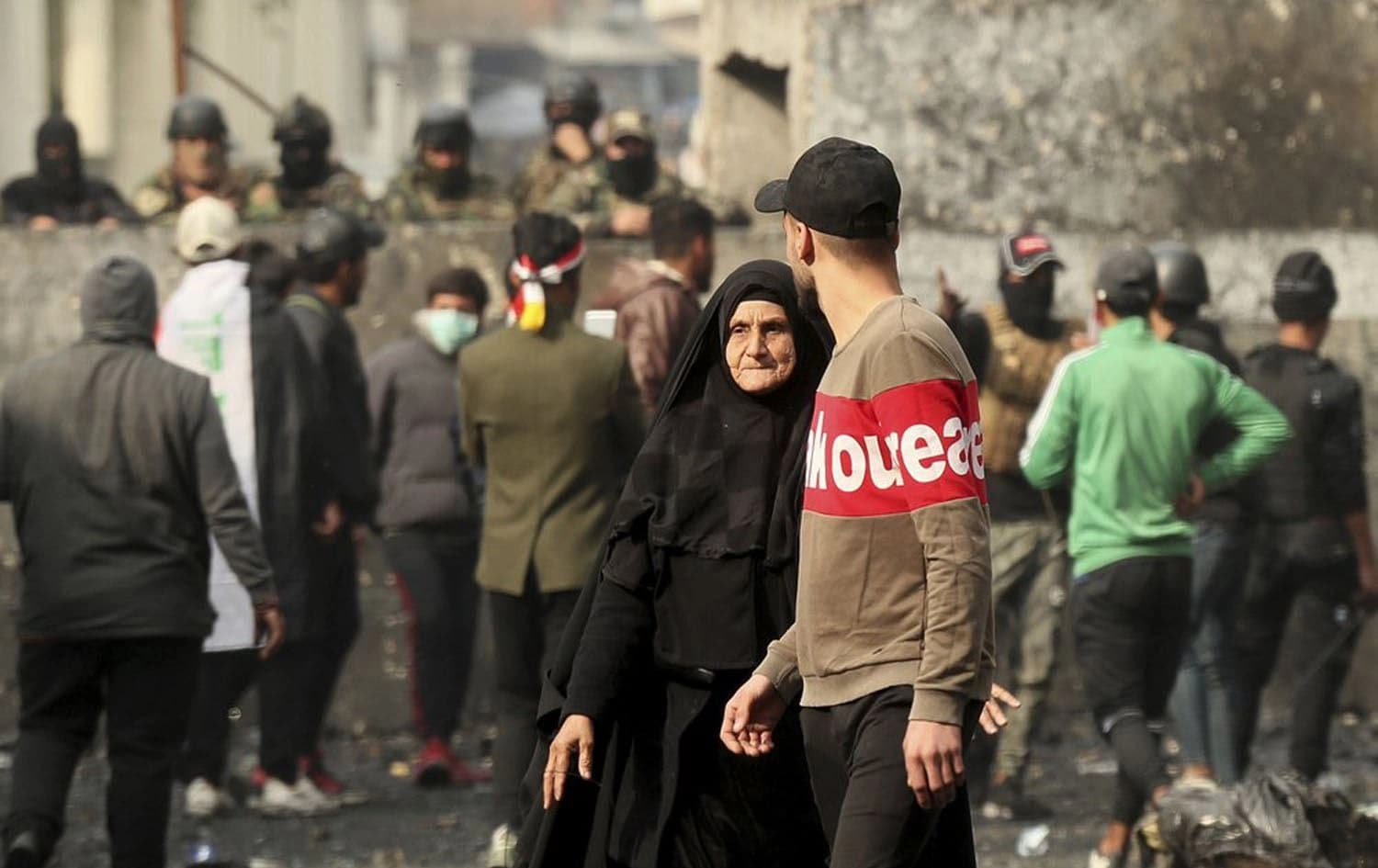
According to AP, unknown armed groups opened fire on protesters late Friday in Baghdad’s Khilani Square. At least 15 people died and more than 60 others were wounded.
IHCHR also called on the security forces to bring back “stability” to the squares and streets where protests are taking place, and stated that these forces are responsible for the lives of the protesters.
Youth took to the streets across southern Iraq on October 1, protesting against a lack of basic services, rampant corruption and high unemployment.
After a pause to observe the Shiite commemoration of Arbaeen, protesters expanded their demands, calling for an end to the current governance system and the resignation of the three top officials – the president, prime minister, and parliamentary speaker.
Around 400 protesters and members of the security forces have been killed since October 1, with around 16,000 others have been wounded due to clashes between security forces and protesters.
Currently, unidentified armed groups are pushing protesters stationed in Khilani Square, Ahrar Bridge, and Sinak Bridge back toward Tahrir Square, the central locus of the protest movement in Baghdad.
Ahrar, Sinak and Al-Jimhuriyah bridges all lead to the Green Zone (also known as the international zone), the heavily fortified safe haven of the Iraqi federal government and the location of all of Baghdad’s foreign embassies and diplomatic missions.
This most recent lethal targeting of protesters comes only a day after a stabbing incident in Baghdad, as an unknown group of people started to stab protesters. A medic from Tahrir Square published a video confirming the stabbing of nine protesters on Thursday, including six men and three women.
This wave of violence on the streets of Baghdad comes after a brief period of relative quiet and even optimism on the part of protesters after Iraqi Prime Minister Adil Abdul-Mahdi announced the submission of his resignation to parliament.
Renewed targeting of protesters by unknown assailants using lethal force came after the US Treasury Department announced in a press release that four prominent Iraqi political and paramilitary leaders have been sanctioned for killing protesters, including Qais al-Khazali, the Secretary General of Popular Mobilization Force (PMF) militia Asaib Ahl al-Haq, and Hussein Falih Aziz al-Lami, who is a senior PMF commander.
The Popular Mobilization Forces, also known as the Hashd al-Shaabi in the Arabic language, are predominantly Shiite paramilitaries that were formed in 2014 after a fatwa (religious decree) issued by Ayatollah Ali al-Sistani, the highest Shiite authority in Iraq. Al-Sistani called on Iraq’s Shiites to take up arms as Islamic State (ISIS) loomed uncomfortably close to Baghdad.
After helping defeat ISIS, the PMFs gained formidable political power, and are often considered to be proxies of the Iranian government. Despite being formally incorporated into Iraq’s armed forces in 2016, they are often accused of operating outside the authority and oversight of the Iraqi government.