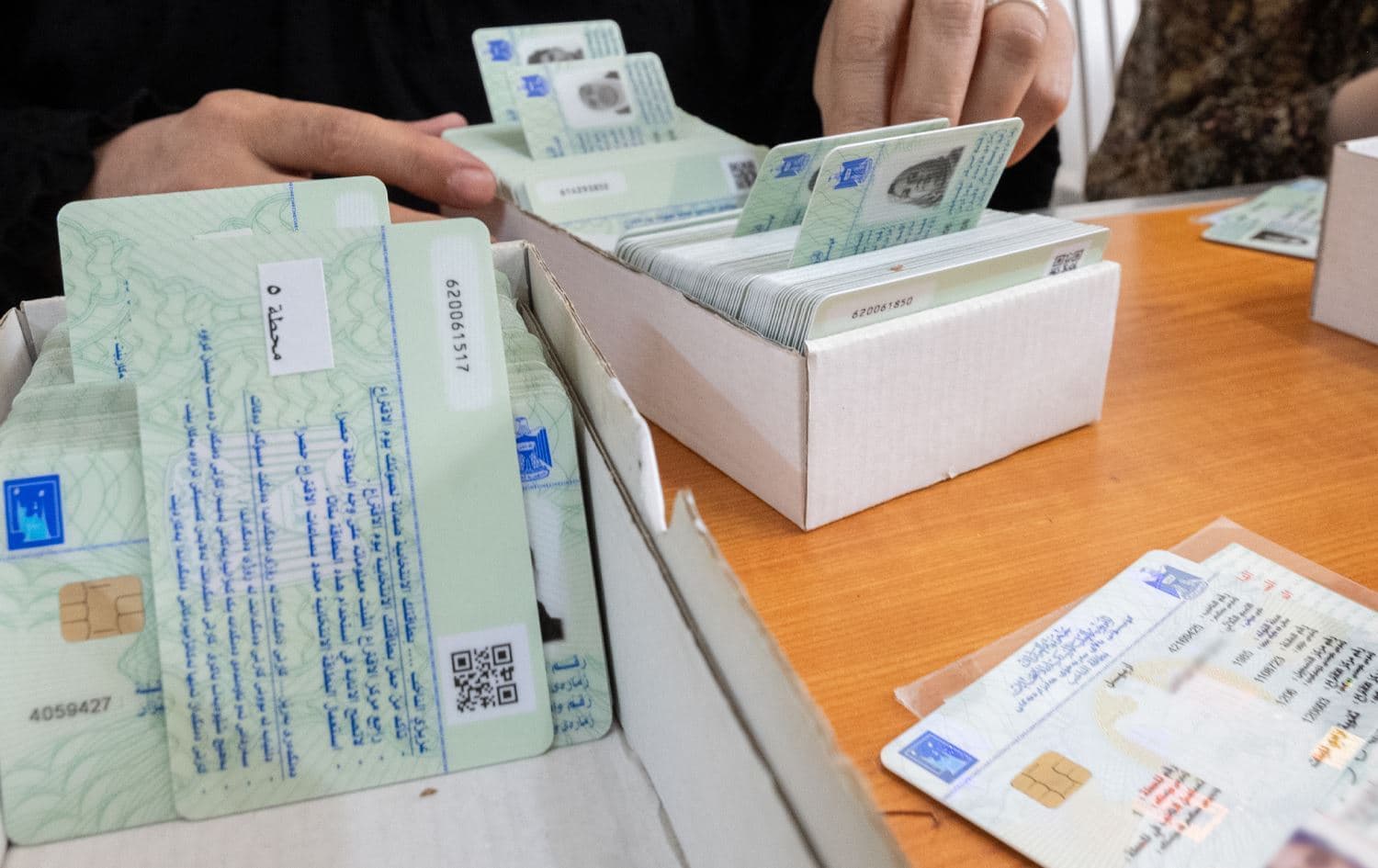

“The issue is very serious, and we see and hear in many places about the buying and selling of votes and voter cards. This is truly a very great danger and must be prevented,” Hadi Salami, a member of the legislature’s integrity committee, told Rudaw.
Salami said that they have requested security and intelligence forces to intervene and investigate the practice “thoroughly and as quickly as possible,” adding that “in Baghdad, the price has reached 500,000.”
Lawmaker Sherwan Dubardani, representing the northern Nineveh province, confirmed the existence of such a phenomenon.
“It is certainly true. Voting cards are bought and sold at prices ranging from 75,000 [about $50] to 300,000 dinars [about $215] in Mosul,” he said.
But Iraq’s electoral body denied the issue, stressing that nobody can vote on behalf of someone else.
“We will investigate and severely punish the perpetrators, but we do not consider this matter to be true, because no one can vote on behalf of someone else,” Jumana al-Ghalai, spokesperson for Iraq’s Independent High Electoral Commission (IHEC), told Rudaw.
According to Ghalai, electronic fingerprint scanning devices on election day prevent the use of voting cards by other people.
Iraq’s parliamentary elections are scheduled for November 11, with special voting set for two days earlier.
Approximately 29 million citizens in Iraq and the Kurdistan Region will have the right to vote by the end of the year, but only those with biometric voting cards will be able to cast a ballot.
Malik Mohammed contributed to this report.