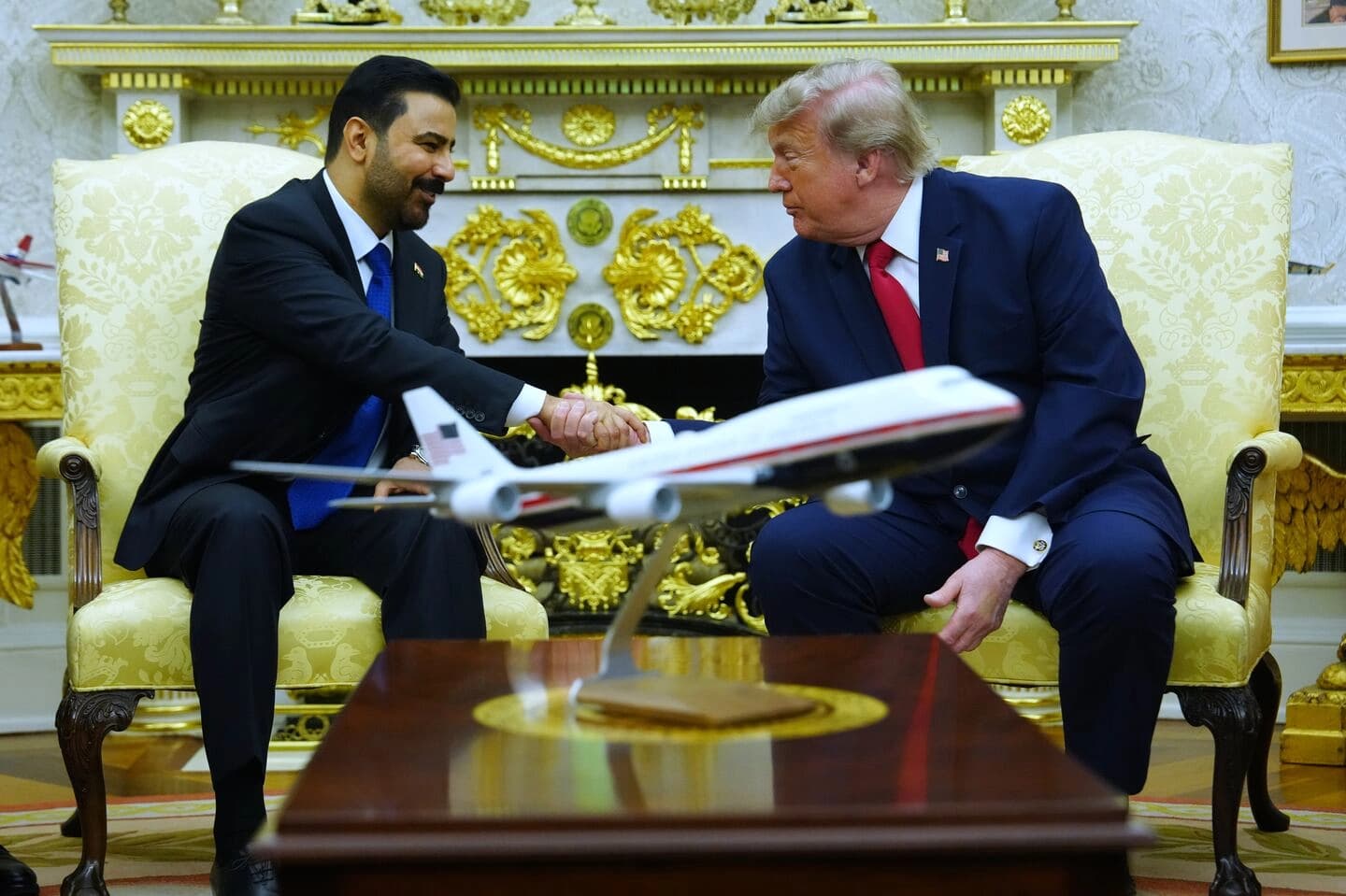
ERBIL, Kurdistan Region - The Kurdistan Democratic Party (KDP) said it rejects “the manner” in which Nizar Amedi was elected as Iraq’s president during Saturday’s parliamentary session.
“We reject that manner of election, and we do not recognize anyone designated in that manner as a representative of the Kurdistan majority and will not deal with them,” the party said in a statement.
The Patriotic Union of Kurdistan’s (PUK) Amedi was sworn in after securing 227 votes in a second round, which required a simple majority.
The KDP said the process was “conducted in a manner that was outside the approved by-laws of the Council,” adding that the speakership set the meeting agenda “without adhering to the Council's by-laws.”
Sherwan Dubardani, a lawmaker from the KDP bloc, told Rudaw earlier on Saturday that “the session is fundamentally illegal because, according to Article 37 of the Parliament’s by-laws, the speaker and both deputy speakers must approve the session’s agenda.” But Farhad Atroushi, a deputy speaker of the Iraqi parliament from the KDP, rejected the session.
Amedi and Kurdistan Islamic Union (KIU) candidate Muthanna Ameen advanced to a runoff after none of the candidates secured a two-thirds majority in the first round. The KDP’s Fuad Hussein did not qualify for the second round.
The KDP also said the candidate designated for the presidency was “outside a Kurdish mechanism.”
Iraq held legislative elections in early November. In late December, parliament elected its speaker and two deputies. Under Iraq’s constitution, lawmakers must elect a president within 30 days of forming parliamentary leadership.
Disagreements between the KDP and the PUK over the presidency had stalled government formation, with both parties nominating candidates and failing to agree on a joint nominee.
The KDP and former premier Nouri al-Maliki’s State of Law coalition announced Friday they would not attend the session, citing a lack of political consensus. The KDP holds 26 seats in parliament, while the State of Law coalition has 29.
Under Iraq’s informal power-sharing system, the presidency is allocated to the Kurds, the parliamentary speakership to Sunni Arabs, and the premiership to Shiite parties.
After a president is elected, they must, within 15 days of being sworn in, task the prime minister nominee from the largest parliamentary bloc with forming a government.