Iraq
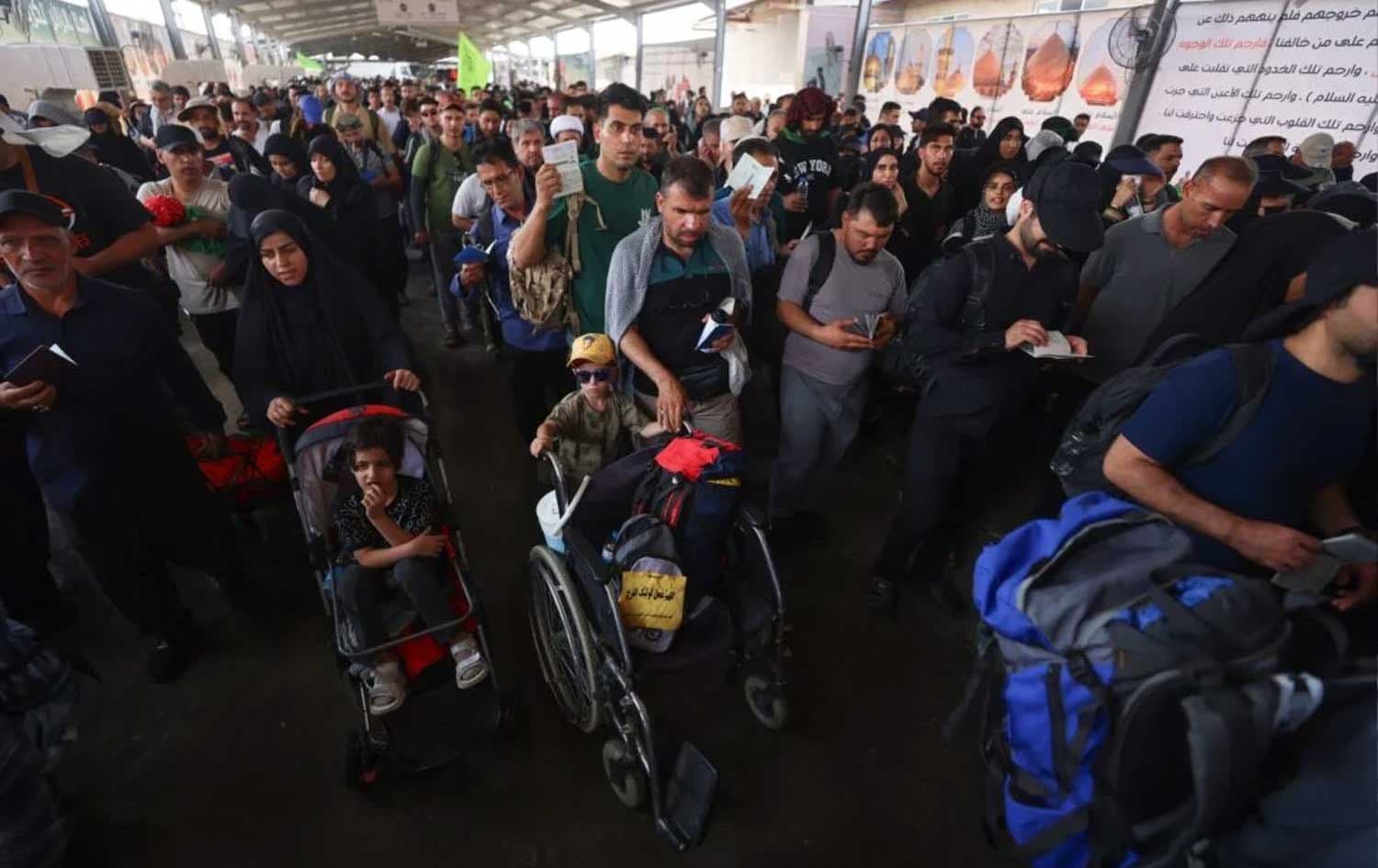
Shiite pilgrims arriving from Iran go through border control at the Zurbatiyah crossing in Iraq's Wasit province on August 6, 2025. File photo: AFP
ERBIL, Kurdistan Region - Iraq’s border crossings with Iran are operating normally and have recorded a rise in passenger traffic, the head of the Border Ports Authority said Sunday, citing improved security conditions across the region.
"Commercial activity through border crossings with Iran was not affected during recent periods of escalation," head of Iraq's Border Ports Authority Omar al-Waeli said in an interview with Iraqi News Agency (INA), noting the continuous entry of trucks "at normal rates."
The development comes after a two-week ceasefire between the United States and Iran was announced on Wednesday, following weeks of war that began on February 28.
The conflict triggered weeks of disruption, during which Iraq closed its airspace amid US-Israeli airstrikes on neighboring Iran. The shutdown forced travelers to rely on land routes and brought a major international transit corridor to a standstill.
Regarding passenger traffic, Waeli stated that "all border crossings witnessed a notable increase in the number of passengers following the stabilization of the situation in the region."
He noted that "the Authority received those stranded abroad, both Iraqis and foreigners, due to the closure of airspace, and ensured their safe return to the country and travel to their respective countries."
Iraq on Wednesday reopened its airspace after 40 days of closure. The decision follows weeks of disruption that began in late February, when Baghdad shut down its skies due to the conflict, forcing travelers to rely on land routes and halting a major international transit corridor.
Waeli stated that so far the recorded Truck entry rates remained stable between 250 and 300 trucks per day at the Mandali and the al-Munthiriya crossings in Diyala province, and between 200 and 250 trucks at the al-Shib crossing in southern Maysan province.
Located east of Basra, the Shalamcheh border crossing “witnessed the entry of between 350 and 400 trucks daily,” according to Waeli, while the Zurbatiyah crossing in Wasit province, known as the Mehran border crossing on the Iranian side, also recorded a notable increase, “reaching approximately 400 trucks daily.”
The Shalamcheh border crossing came under attack during the conflict, when a US airstrike reportedly hit the area in early April while a humanitarian aid convoy belonging to Iraq’s Popular Mobilization Forces (PMF) was present. Waeli said one person was killed and five others were injured in the strike.
"Commercial activity through border crossings with Iran was not affected during recent periods of escalation," head of Iraq's Border Ports Authority Omar al-Waeli said in an interview with Iraqi News Agency (INA), noting the continuous entry of trucks "at normal rates."
The development comes after a two-week ceasefire between the United States and Iran was announced on Wednesday, following weeks of war that began on February 28.
The conflict triggered weeks of disruption, during which Iraq closed its airspace amid US-Israeli airstrikes on neighboring Iran. The shutdown forced travelers to rely on land routes and brought a major international transit corridor to a standstill.
Regarding passenger traffic, Waeli stated that "all border crossings witnessed a notable increase in the number of passengers following the stabilization of the situation in the region."
He noted that "the Authority received those stranded abroad, both Iraqis and foreigners, due to the closure of airspace, and ensured their safe return to the country and travel to their respective countries."
Iraq on Wednesday reopened its airspace after 40 days of closure. The decision follows weeks of disruption that began in late February, when Baghdad shut down its skies due to the conflict, forcing travelers to rely on land routes and halting a major international transit corridor.
Waeli stated that so far the recorded Truck entry rates remained stable between 250 and 300 trucks per day at the Mandali and the al-Munthiriya crossings in Diyala province, and between 200 and 250 trucks at the al-Shib crossing in southern Maysan province.
Located east of Basra, the Shalamcheh border crossing “witnessed the entry of between 350 and 400 trucks daily,” according to Waeli, while the Zurbatiyah crossing in Wasit province, known as the Mehran border crossing on the Iranian side, also recorded a notable increase, “reaching approximately 400 trucks daily.”
The Shalamcheh border crossing came under attack during the conflict, when a US airstrike reportedly hit the area in early April while a humanitarian aid convoy belonging to Iraq’s Popular Mobilization Forces (PMF) was present. Waeli said one person was killed and five others were injured in the strike.
Comments
Rudaw moderates all comments submitted on our website. We welcome comments which are relevant to the article and encourage further discussion about the issues that matter to you. We also welcome constructive criticism about Rudaw.
To be approved for publication, however, your comments must meet our community guidelines.
We will not tolerate the following: profanity, threats, personal attacks, vulgarity, abuse (such as sexism, racism, homophobia or xenophobia), or commercial or personal promotion.
Comments that do not meet our guidelines will be rejected. Comments are not edited – they are either approved or rejected.
Post a comment