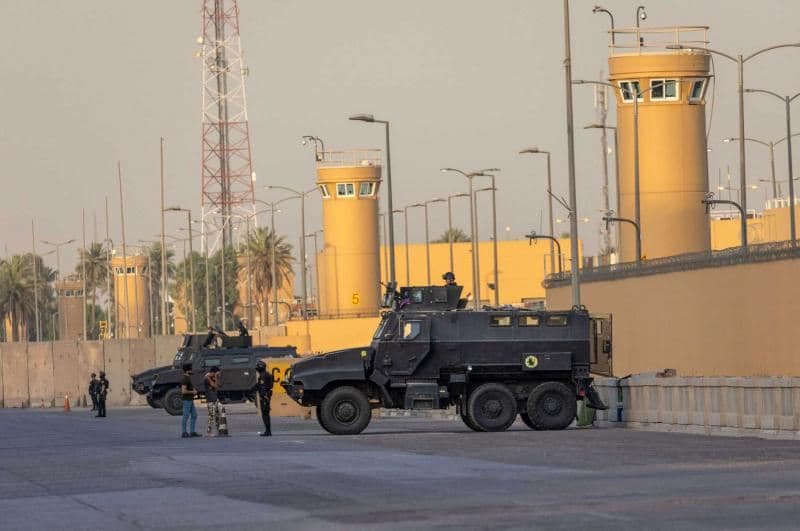
ERBIL, Kurdistan Region - The United States embassy in Baghdad has warned American citizens against traveling to Iraq and the Kurdistan Region, citing continued risks of "missile, drone, and rocket attacks" in Iraqi airspace despite a two-week ceasefire between Washington and Tehran.
“Iraqi airspace has reopened and limited commercial flights have resumed. U.S. citizens considering air travel in Iraq should be aware of the ongoing risk of missiles, drones, and rockets,” the embassy said in a statement.
The warning comes after the United States and Israel launched a preemptive air campaign on February 28 targeting sites in Iran, triggering six weeks of hostilities. In response, Iran and its allied groups carried out thousands of attacks on US assets and regional allies, including Israel.
During the conflict, more than 700 drones and missiles struck the Kurdistan Region, killing over a dozen people and injuring at least 90, according to Rudaw estimates.
Despite a two-week ceasefire brokered by Pakistan on April 8, Iran has continued to target the Kurdistan Region, carrying out more than two dozen attacks since the truce began.
“Iraqi terrorist militias aligned with Iran continue to plot additional attacks,” the embassy said, warning that potential targets include the Kurdistan Region. It added that some elements linked to the Iraqi government provide political, financial, and operational support to these groups.
Shortly after the ceasefire announcement, armed groups operating under the “Islamic Resistance in Iraq” declared a temporary halt to their attacks across Iraq and the wider region.
The Islamic Resistance in Iraq, a loose coalition of mostly Shiite factions backed by Iran, had intensified operations following the outbreak of hostilities, targeting US military bases, diplomatic facilities, and sites in the Kurdistan Region.
The group said its decision to pause attacks aligns with the ceasefire, signaling a possible de-escalation after more than a month of sustained violence.
According to figures released by the group, it claimed responsibility for 831 attacks over 39 days, most involving drones and missiles launched across Iraq and neighboring areas.
Many of these strikes targeted the Kurdistan Region, where officials have repeatedly condemned attacks on civilian areas, infrastructure, and security forces, saying the Region has been disproportionately affected despite not being a party to the conflict.
US consular services in Iraq have remained suspended since early March, while efforts continue to assist American citizens in leaving the country.
.webp&w=3840&q=75)