
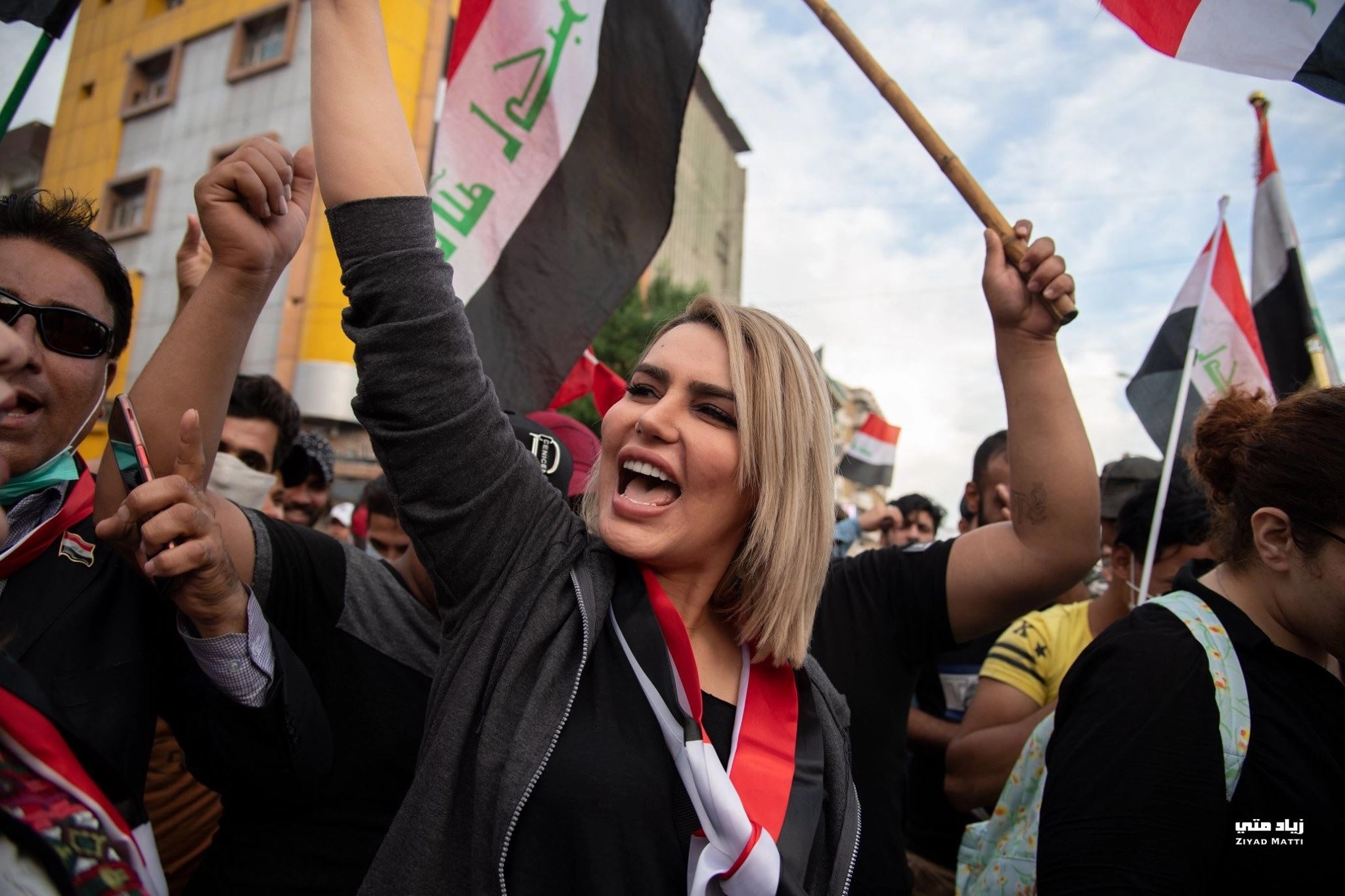

ERBIL, Kurdistan Region – Anti-government protests resumed in Baghdad on Friday, with many women also taking to the streets of the Iraqi capital. Photographer Ziyad Matti captured powerful moments amid the protests that turned violent as the day passed.
Iraqi women have always been part of the protests in Iraq. However, women in Iraq face many restrictions, including religious, cultural and tribal obstacles which leave them unable to fully participate in civic life.
Although Iraqi women theoretically share equal civil rights with men under the Iraqi constitution, religious conservatism continues to permeate all areas of public life, in opposition to the socially liberal values found among sections of the urban youth.
Anti-government demonstrations that began in early October resumed late on Thursday with demonstrators gathering near Tahrir Square, saying they are no longer demanding government reforms, and tackling unemployment, corruption, and lack of public services. This time, they are calling for the overthrow of the government.
The protests intensified throughout Friday and spread to seven other provinces in southern Iraq. The bloody day left 30 dead, according to the Iraqi High Commission for Human Rights (IHCHR), and another 12 burned to death while torching the Diwaniyah headquarters of the Badr Organization, according to AFP. More than 2,000 people were injured.
Curfews were announced in eight provinces: Basra, Diwaniyah, Muthana, Maysan, Dhi Qar, Karbala, Babylon, and Wasit.
Iraq saw nationwide anti-government protests in early October demanding action to tackle high youth unemployment, poverty, poor services, and corruption. The largest protests were in the capital where thousands of mostly young men took to the streets and were violently suppressed by security forces and armed militia groups. At least 157 people were killed and 5,494 injured in the wave of unrest, according to a report published by the Human Rights Office of the United Nations Assistance Mission in Iraq (UNAMI) on Tuesday.
Photos by Ziyad Matti