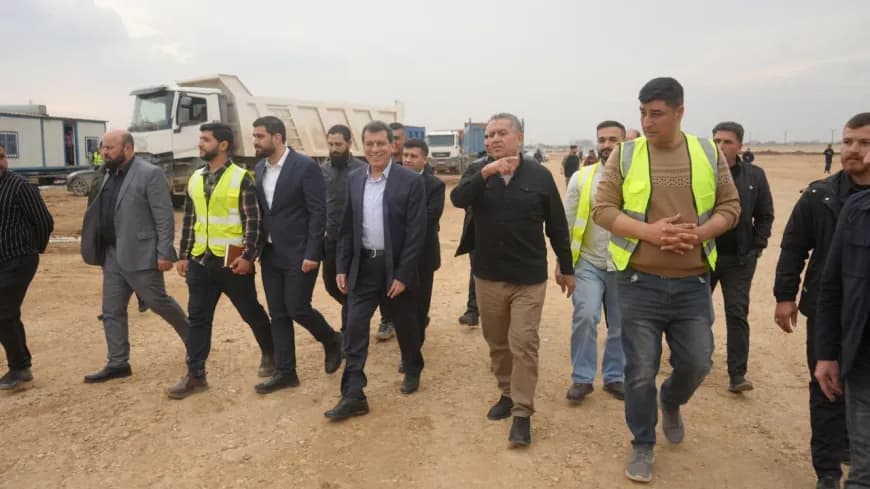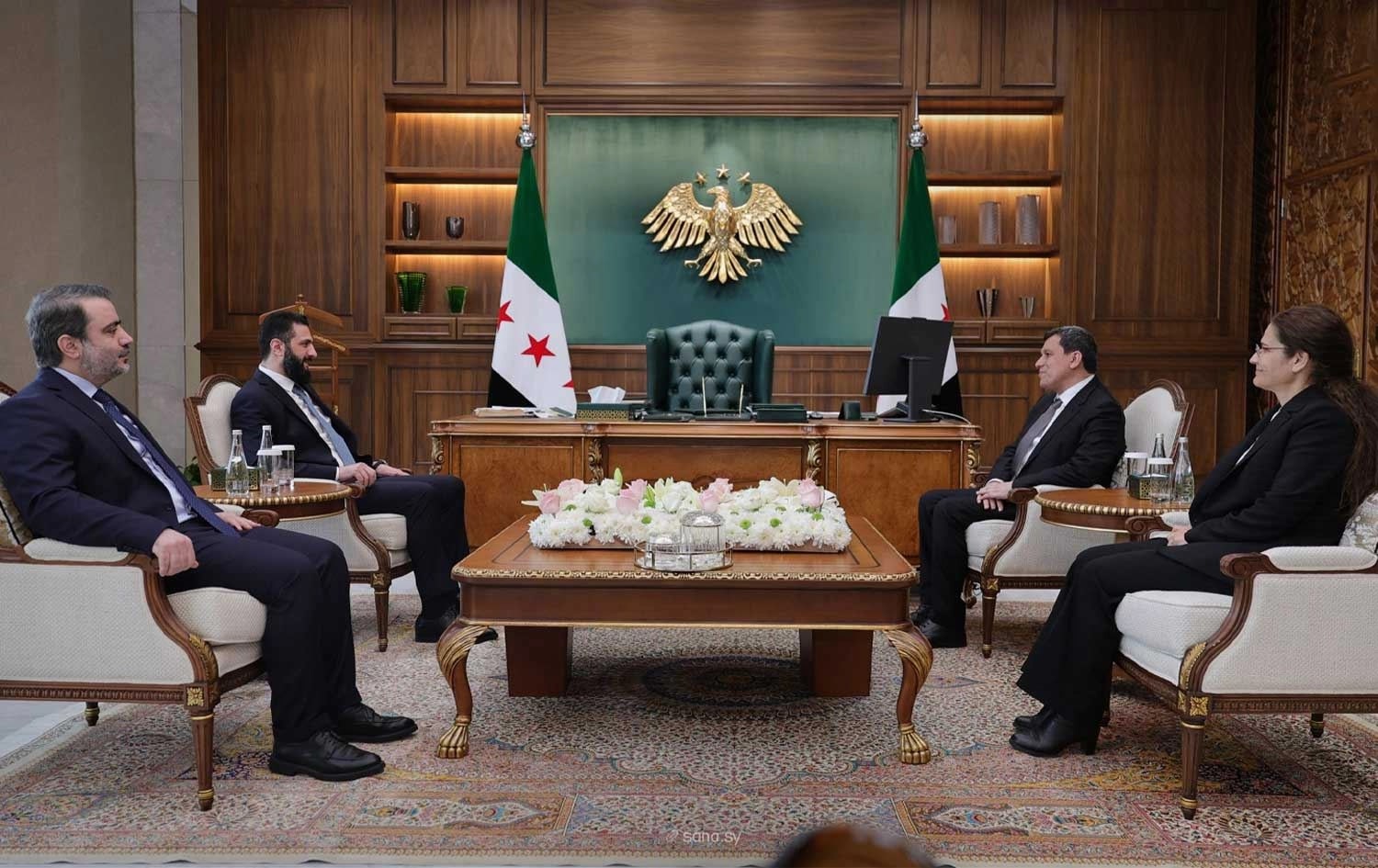

ERBIL, Kurdistan Region - Syrian interim President Ahmed al-Sharaa on Thursday received Mazloum Abdi, commander of the Kurdish-led Syrian Democratic Forces (SDF), and Elham Ahmad a leading figure from the administration of northeast Syria (Rojava) in Damascus, to discuss the completion of the integration process of Kurdish-led forces and institutions under the Syrian state, according to state media.
The Syrian Arab News Agency (SANA) reported that Sharaa held a meeting with Abdi and Ahmad, in the presence of Syrian Foreign Minister Asaad al-Shaibani and the presidential envoy responsible for implementing the January 29 agreement with the SDF, Ziad al-Ayesh, where “discussions centered on completing the integration process into state institutions.”
The January 29 agreement between Damascus and the SDF, brokered with significant US mediation, followed a sharp military escalation in mid-January in which Syrian government forces and affiliated armed groups seized territory in eastern Aleppo, Raqqa, Deir ez-Zor, and the Kurdish-majority Hasaka province.
The SDF, which functions as the de facto military force in Rojava and is a key on-the-ground partner of the US-led Global Coalition to Defeat ISIS, had maintained control of these areas since liberating them from ISIS in order to prevent the group’s resurgence.
The 14-point agreement establishes a permanent and comprehensive ceasefire and calls for the withdrawal of SDF forces from major urban centers such as the Kurdish-majority Hasaka and Qamishli cities to designated military bases.
In return, the Damascus government has agreed to a “partnership framework” that includes the appointment of local officials, including a governor for Hasaka nominated by the SDF, while the police chief is appointed by Damascus.
The deal also provides for the phased integration of the SDF into the Syrian army through the formation of a new military structure, including several SDF brigades and a separate “Kobani Brigade” integrated into an Aleppo-affiliated division.
At the same time, the Kurdish Internal Security Forces (Asayish) are to be integrated into the interior ministry, with joint patrols and a limited central security presence in Kurdish-majority areas to maintain stability.
On the administrative and economic side, the agreement mandates the transfer of key strategic assets, including the Semalka border crossing, Qamishli International Airport, and oil and gas fields in Deir ez-Zor and Hasaka, to state control.
It also requires the absorption of all civilian institutions previously operated by the Autonomous Administration of North and East Syria (DAANES) into the national bureaucracy, with Damascus recognizing the employment status of former autonomous administration staff.
The agreement further addresses the sensitive issue of ISIS detainees. Damascus has assumed full legal and security responsibility for the prisons and camps previously secured by Kurdish security forces, with the SDF providing logistical support during the transition of custody.
The latter transition is being overseen by Ayesh, who acts as the primary coordinator to ensure that the 14 points are implemented without a security vacuum that could lead to an insurgent resurgence.