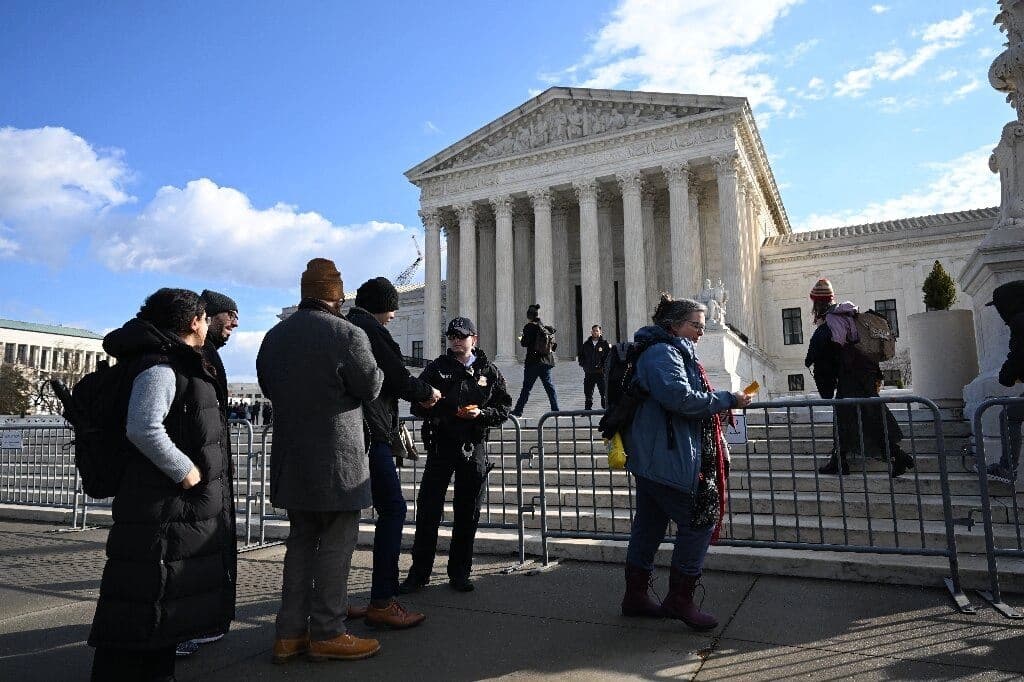

In a two-hour hearing, the nine justices of the top US court heard accusations that Twitter should be on the hook for "aiding and abetting" terrorism by failing to stop content created by extremist groups.
"There is an allegation of willful blindness here ... You knew that ISIS was using your platform," said Justice Sonia Sotomayor, using an acronym for Islamic State while addressing the lawyer for Twitter, the defendant in the case.
The case was brought by the family of a victim of a 2017 attack by the group, which is also known by the acronym IS, on an Istanbul nightclub.
The family allege that Twitter's failure to take down and stop recommending IS tweets constituted aiding an act of terror.
The hearing came a day after a similar case against YouTube was put to the same nine justices. That case involved a US victim of the 2015 Paris attacks, also claimed by the IS group.
Twitter, backed by a wide swathe of big tech players, insists that the mere fact of being a platform used by tens of millions users worldwide does not prove "knowing" assistance to a terrorist group.
At the heart of both cases, which should be decided by June 30, is the broad legal immunity conferred to tech platforms through a decades-old law that makes lawsuits on content matters virtually impossible.
Tech companies see the US law, known as Section 230, as a fundamental text of the internet that helped give birth to the social media revolution by saving websites from an avalanche of legal proceedings.
The Twitter case would in theory depend on the judges rewriting the basis of Section 230, an eventuality that seemed uncertain after the justices on Tuesday expressed some doubts over changing the law.
That unease continued into Wednesday as justices put a long series of hypothetical situations to lawyers in an effort to establish how liability in terrorism cases could apply to social media platforms.
In 1997, "CNN did an interview of Osama bin Laden, a very famous interview of him ... Could under your theory, CNN have been sued for aiding and abetting the September 11 attacks?" asked Justice Brett Kavanaugh.
In another question, Justice Clarence Thomas asked a lawyer for Twitter if a gun was lent to "a friend who was a mugger, a murderer and a burglar, but other than that he was a good guy ... could (that) be aiding and abetting?"
Some justices on Tuesday complained that changes to Section 230 would be more suitably handled by US lawmakers and fretted over the potential of destabilizing the economy if they unilaterally modified its provisions.
However, US Congress is deeply divided politically and efforts to retool Section 230's legal shield have failed to reach a vote.