


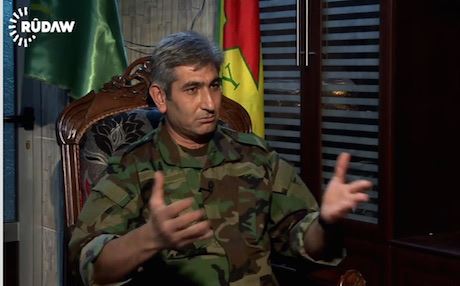
Redur Xelil, spokesman of the People’s Protection Units in Syrian Kurdistan (Rojava), says that the YPG is not a large military force, nor is it equipped with heavy weapons, but it is force fighting to defend Kurdish lands against a vicious and well armed enemy. In this interview with Rudaw, Xelil denies any relationship between his forces and the Damascus regime, and adds that the YPG is ready to defend all Kurdish lands, including Qamishlu. Here is an edited transcript of the interview:
Rudaw: How big a force is the YPG militarily?
Redur Xelil: I have to say that YPG is not a large military army. We do not have the kind of weapons or training that a modern army has, but we have principles and beliefs that are guiding us. This is why we could not just stand there and watch while our nation was being slaughtered in Shingal. And of course after that people began speculating about YPG as a disciplined military organization.
Rudaw: Then you have YPJ (Women’s Protection Units). How big is YPJ and what are its objectives?
Redur Xelil: Originally, we had female fighters within the YPG who were fighting side-by-side with our male fighters. But as the number of the female fighters increased, we realized that it would be more effective to have a branch in which our female fighters could reorganize themselves and fight the way they found most effective. Otherwise, there is really no difference between the YPG and YPJ. They are both fighting a vicious enemy shoulder-to-shoulder. I could say that now almost 35 percent of all our fighters are female. So, the YPJ is operating within the YPG.
Rudaw: For your forces, do you rely on volunteers or is it mandatory to take part in your ranks?
Redur Xelil: YPG is a voluntary military organization. It has professional fighting forces. It has proved itself effective in many places. What the autonomous administration in Rojava wants to do has nothing to do with the YPG. They may have their own army which is separate from ours and the way we recruit. We have had very limited military experience in Rojava historically. Maybe the YPG can contribute with its experiences and help the other forces that now are being trained. But of course the objective is to defend Rojava for both forces.
Rudaw: The Peshmerga have said they need more heavy weapons. Is that what the YPG needs too, or do you need even extra forces to come and help you?
Redur Xelil: I think the Peshmerga forces and the YPG have many things in common. We have enough fighters and forces and we are ready to defend our land, but the problem lies in shortage of sufficient and heavy weaponry. The Peshmerga forces of course do not have access to the same weaponry that the Iraqi Army has had in the past and even the YPG has difficulties in acquiring heavy weapons and also to finance them as we are a new organization in this regard. So the real problem is indeed weaponry. The Islamic State fighters have seized modern weapons in Mosul and elsewhere and they were funded heavily even before that and now they are using it against Kurds in both Rojava and South Kurdistan. We are still very much outgunned.
Rudaw: How did you acquire your weapons? Where did you get them?
Redur Xelil: This is a frequently asked question. But I really have to say the YPG does not possess any heavy weapons whatsoever. The weapons we have are very light weapons that could be bought on any market in the region if you have the money. And we should say that we have been helped economically by our Kurdish brethren in all parts of Kurdistan and even by our Kurdish patriots in exile in Europe.
Rudaw: How is your relation with the Arabs and the Christians in the region?
Redur Xelil: Generally, we have good relations with all other nations and religious groups here in the Kurdish region of Syria or Rojava. This is our political philosophy that all nations and faiths can and should live together. Having said that, I also have to say that we have had problems with some Arab tribes in the region who actually facilitate for the Islamic State fighters to launch attacks on us.
Rudaw: What is your relation with the Arab National Army led by Muhammad Fares?
Redur Xelil: We have no relations, since Muhammad Fares has sided with the regime (in Damascus). We have no relation with the regime and we have no relation with such figures either.
Rudaw: Do you have any relations with the regime of any kind, militarily or politically?
Redur Xelil: I want to stress that there are no relations, direct or indirect, with the regime, either political or military. Our issue with the regime did not begin with the Syrian people’s uprising three years ago; Kurdish issue is a political issue that has existed ever since the artificial creation of the Syrian government.
Rudaw: Have you ever asked the regime for military assistance in your battles?
Redur Xelil: No, not even once. We have had battles, sometime we have won, sometimes we have lost battles. This is the reality of wars. But we have never asked anyone to help us really -- not just the regime. But there is an extensive propaganda campaign against the YPG conducted especially by the Syrian opposition groups that have wrongfully accused us of collaborating with the regime. It’s nonsense.
Rudaw: YPG, which means People’s Protection Units; how come you chose this name instead of, for instance People’s Liberation Units? Is it because you don’t want to provoke regime reaction?
Redur Xelil: I don’t think the name is a problem at all because you can always change the name of an organization when you find it appropriate. We use “protection” because we are literally protecting and defending our land, without which there would be no freedom or anything else, really.
Rudaw: Does the YPG have a national agenda or strategy?
Redur Xelil: YPG is a military organization and at the moment our primary objective is to protect our areas, which is Rojava. We are part of Rojava, but it’s for the overall political leadership to have an agenda or strategy in regard to more sovereignty.
Rudaw: How close are the relations between the YPG and the Peshmerga?
Redur Xelil: With regard to the Peshmerga forces, they have come more than 800 km to fight with the YPG forces in Kobane. This shows how good the cooperation is between us and the Peshmerga forces.
Rudaw: How do you view that?
Redur Xelil: We have fought many battles together in Shingal, in Rabia and in Kobane. This is the spirit of the time, Kurds united. This should be appreciated very much by everybody, and I think it is.
Rudaw: Did you coordinate with the Peshmerga forces before arriving in Kobane?
Redur Xelil: There was good coordination prior to the arrival of the Peshmerga.
Rudaw: How do you view the arrival of the Syrian Free Army in Kobane?
Redur Xelil: There were a number of FSA forces there even before the recent events. They have been there in the past. We have tried to have good relations with the FSA since we face the same enemy. But if you refer to the FSA commander Abduljabar Agedi, he came to Kobane at his own request and we welcomed his arrival.
Rudaw: But why, after 36 days of resistance in Kobane, did he decide to come at this particular time?
Redur Xelil: I really don’t want to get into details, but we think that Turkey used its influence and asked the FSA to send troops to Kobane and that’s why Agedi came. If you ask me, I think Turkey thought and hoped we would decline FSA’s help, so it would give Turkey reason to say that the YPG only accepted Peshmerga help but not other Syrian support.
Rudaw: After the arrival of Peshmerga in Kobane, is the situation different now? Do you have any knowledge about it?
Redur Xelil: There have been some joint operations between the Peshmerga and the YPG and they have made use of some of the heavy weapons that the Peshmerga brought to Kobane. But no radical change has occurred till now.
Rudaw: FSA says that their forces are not part of the joint operation room, why?
Redur Xelil: I really couldn’t answer that. I think it’s the (Kurdish) coalition that should address this question.
Rudaw: How do you view the agreement in Dohuk earlier this month?
Redur Xelil: I think it was expected that all parties would reach an understanding for the good of Rojava. We have had other agreements in Erbil and we support it and will be abided by these agreements.
Rudaw: But according to the Dohuk agreement there should be a joint military force in Rojava. Will you approve of it?
Redur Xelil: The YPG will abide by any political agreement that is brokered. We are not an independent political movement, so of course we will do as the political leadership says.
Rudaw: There are Syrian Kurdish forces trained in Iraqi Kurdistan and they could very well come back and fight side by side with you. Would you accept such a scenario?
Redur Xelil: Anyone who would like to defend the Kurdish cause in Rojava can and has the right to join YPG ranks regardless of their political orientation. But to allow other Kurdish military units in Rojava is dangerous because of military rivalry and tensions that could lead to more destruction than good.
Rudaw: It seems as if ISIS has the upper hand in some areas in Rojava. Why?
Redur Xelil: That’s not completely true. The YPG is a protection unit which means it does not launch attacks but defends Kurdish areas. ISIS has more than an 800 km border with us and they have extremely heavy weaponry. That makes it a bit difficult to retake some of the areas, but overall I should say we have managed to stop ISIS aggression well.
Rudaw: Do you think ISIS will attack Qamishlu?
Redur Xelil: The Islamic State wants to target all areas in Rojava, but at the moment they have concentrated all their attacks on Kobane. Kobane has become a focal point for ISIS. They thought it was an easy target; it wasn’t and we see the resistance. But generally they want to attack everywhere in Rojava.
Rudaw: Do you think the YPG can draw lessons from Kobane and make sure that what happened there in terms of refugee crisis and other things would not happen in Qamishlu?
Redur Xelil: Kobane’s situation has been different than other areas in Rojava from the start. Kobane lies in the open in the desert. ISIS knew it would be difficult to defend Kobane the way we can defend Qamishlu or other cities in Rojava. But I can assure that the YPG is organized enough to tackle ISIS in case of an attack in Qamishlu.
Rudaw: What will happen if forces other than ISIS launch attacks on Qamishlu, like the regime or the Arab tribes? Can you hold them back?
Redur Xelil: Our objective is to defend Qamishlu at any price, and that’s what we have been doing and will be doing in case of any attacks.
Rudaw: Massoud Barzani has said he is prepared to come and defend Kobane as a Peshmerga. How do you interpret this?
Comments
Rudaw moderates all comments submitted on our website. We welcome comments which are relevant to the article and encourage further discussion about the issues that matter to you. We also welcome constructive criticism about Rudaw.
To be approved for publication, however, your comments must meet our community guidelines.
We will not tolerate the following: profanity, threats, personal attacks, vulgarity, abuse (such as sexism, racism, homophobia or xenophobia), or commercial or personal promotion.
Comments that do not meet our guidelines will be rejected. Comments are not edited – they are either approved or rejected.
Post a comment