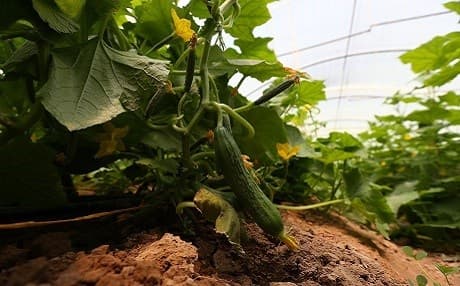

ERBIL, Rudaw – Farmers in the Kurdistan Region have devoted large amounts of space in their greenhouses to the cultivation of cucumbers, leading to a decline in cucumber prices in the market. The Ministry of Agriculture is planning to make up for this drop in price by exporting the product to the United Arab Emirates.
In recent years, farmers have favoured growing cucumbers in greenhouses where yield is 8 to 10 times higher compared with in open fields.
The downside is a corresponding drop in cucumber prices during the harvest season when the market is flooded with the vegetables. According to figures obtained from the Ministry of Agriculture and Water Resources, there are nearly 13,000 greenhouses in the Kurdistan Region, 85 percent of which have been used to grow cucumber this year.
“Tomatoes, cucumbers, broccoli, parsley, spinach, eggplants, and many other products can be grown in greenhouses. But most farmers grow cucumbers because the product ripens early and has a good harvest,” Mala Kamil Dawd, deputy head of the greenhouse development group in the Kurdistan Region, said.
This year, nearly 11,000 glasshouses have been used to grow cucumber, according to Dawd. And this has led to an increase in the cucumber product in the market, causing a decline of 75 percent in the price.
The overall cost to farmers to grow and harvest one ton of cucumbers is 300,000 to 350,000 Iraqi Dinars (IQD), Dawd said. But the same amount sells wholesale for between 50,000 and 125,000 IQD.
“Farmers will lose nearly 200,000 IQD for every ton of cucumber,” Dawd explained.
Cucumbers ripen 45 days after planting in glasshouses; 8 to 12 tons of cucumber can be harvested in one single glasshouse, depending on the quality of farming. This product is most profitable for farmers if they are sold well.
“There are four prices for cucumber depending on its quality: the price for a ton of delicate and first-rate cucumber grown in a glasshouse is 125,000 IQD, second-grade 75,000 IQD, third-grade 50,000, and the price for a ton of cucumber grown in open air is 300,000 IQD, which is mostly purchased by owners of pickle factories,” Syamand Jalil, owner of the Kurdistan office for fruit and vegetables in Erbil wholesale market, said.
Syamand said that cucumber prices have fallen in recent years, but this year’s drop in price has lasted longer due to the many glasshouses being used to grow the product. In addition, the harvest season of cucumber was in Ramadan, during which most restaurants were closed and there were only two meals a day. As a result, the demand for cucumber did not match the market.
“Due to the cheap price of cucumber, some farmers don’t bring the product to the fruit and vegetables wholesale market. They sell it on the field to herders for a very cheap price because sometimes the sale cannot even cover for the cost of transportation,” Syamand said.
Sherzad Osman is a farmer from Erbil. He has used 50 glasshouses to grow cucumber this year, harvesting nearly five tons daily.
“Cucumbers are so cheap that the money we make out of it is not even enough to cover the cost of harvesting the product and transporting it. But we have to harvest the fields once every three days anyway so the plants don’t die,” Osman said.
“In addition to the cost of cucumber seeds, planting, and its overall growth, my daily costs for dedicating manure, harvesting, and transportation of the product is 600,000 IQD, an amount I cannot make even if I harvest six tons of cucumber and sell at for the current price,” Osman added.
There are nearly 13,000 glasshouses in the Kurdistan Region, of which 8,000 are located in Sulaimani province. Most of them in Sulaimani have been used to grow cucumber, which is why declining cucumber prices have hit farmers especially hard in this province.
“Due to the financial crisis, many farmers in the province of Sulaimani have gone back to farming. Some of them have rented glasshouses. They have used most of these greenhouses to grow cucumber in order to quickly obtain the cash they spend on growing the product. Hence, farmers will lose a lot if this decline in price continues,” Dawd said.
In order to protect and ensure that local product is sold, the Ministry of Agriculture has put a 250.00 IQD tax on imported cucumbers as a first step. The agriculture ministry has also asked the Interior Ministry and other relevant departments to prevent the illegal importation of cucumbers from Iran especially at Munziria border point.
“We are working on promoting the marketing of cucumbers and other products which exceed local demands. For this reason, we have written a letter to the consulate of the United Arab Emirates so that we can export Kurdistan’s cucumbers to Dubai. We have also asked the Council of Ministers to allow us to prevent the importation of salty cucumbers to the Kurdistan Region during the harvesting season of the local product, so that this business grows in the Kurdistan Region and we don’t need imported products,” Hussein Hama Karim, director general of farming and forest at the Ministry of Agriculture and Water resources, told Rudaw.

In recent years, farmers have favoured growing cucumbers in greenhouses where yield is 8 to 10 times higher compared with in open fields.
The downside is a corresponding drop in cucumber prices during the harvest season when the market is flooded with the vegetables. According to figures obtained from the Ministry of Agriculture and Water Resources, there are nearly 13,000 greenhouses in the Kurdistan Region, 85 percent of which have been used to grow cucumber this year.
“Tomatoes, cucumbers, broccoli, parsley, spinach, eggplants, and many other products can be grown in greenhouses. But most farmers grow cucumbers because the product ripens early and has a good harvest,” Mala Kamil Dawd, deputy head of the greenhouse development group in the Kurdistan Region, said.
This year, nearly 11,000 glasshouses have been used to grow cucumber, according to Dawd. And this has led to an increase in the cucumber product in the market, causing a decline of 75 percent in the price.
The overall cost to farmers to grow and harvest one ton of cucumbers is 300,000 to 350,000 Iraqi Dinars (IQD), Dawd said. But the same amount sells wholesale for between 50,000 and 125,000 IQD.
“Farmers will lose nearly 200,000 IQD for every ton of cucumber,” Dawd explained.
Cucumbers ripen 45 days after planting in glasshouses; 8 to 12 tons of cucumber can be harvested in one single glasshouse, depending on the quality of farming. This product is most profitable for farmers if they are sold well.
“There are four prices for cucumber depending on its quality: the price for a ton of delicate and first-rate cucumber grown in a glasshouse is 125,000 IQD, second-grade 75,000 IQD, third-grade 50,000, and the price for a ton of cucumber grown in open air is 300,000 IQD, which is mostly purchased by owners of pickle factories,” Syamand Jalil, owner of the Kurdistan office for fruit and vegetables in Erbil wholesale market, said.
Syamand said that cucumber prices have fallen in recent years, but this year’s drop in price has lasted longer due to the many glasshouses being used to grow the product. In addition, the harvest season of cucumber was in Ramadan, during which most restaurants were closed and there were only two meals a day. As a result, the demand for cucumber did not match the market.
“Due to the cheap price of cucumber, some farmers don’t bring the product to the fruit and vegetables wholesale market. They sell it on the field to herders for a very cheap price because sometimes the sale cannot even cover for the cost of transportation,” Syamand said.
Sherzad Osman is a farmer from Erbil. He has used 50 glasshouses to grow cucumber this year, harvesting nearly five tons daily.
“Cucumbers are so cheap that the money we make out of it is not even enough to cover the cost of harvesting the product and transporting it. But we have to harvest the fields once every three days anyway so the plants don’t die,” Osman said.
“In addition to the cost of cucumber seeds, planting, and its overall growth, my daily costs for dedicating manure, harvesting, and transportation of the product is 600,000 IQD, an amount I cannot make even if I harvest six tons of cucumber and sell at for the current price,” Osman added.
There are nearly 13,000 glasshouses in the Kurdistan Region, of which 8,000 are located in Sulaimani province. Most of them in Sulaimani have been used to grow cucumber, which is why declining cucumber prices have hit farmers especially hard in this province.
“Due to the financial crisis, many farmers in the province of Sulaimani have gone back to farming. Some of them have rented glasshouses. They have used most of these greenhouses to grow cucumber in order to quickly obtain the cash they spend on growing the product. Hence, farmers will lose a lot if this decline in price continues,” Dawd said.
In order to protect and ensure that local product is sold, the Ministry of Agriculture has put a 250.00 IQD tax on imported cucumbers as a first step. The agriculture ministry has also asked the Interior Ministry and other relevant departments to prevent the illegal importation of cucumbers from Iran especially at Munziria border point.
“We are working on promoting the marketing of cucumbers and other products which exceed local demands. For this reason, we have written a letter to the consulate of the United Arab Emirates so that we can export Kurdistan’s cucumbers to Dubai. We have also asked the Council of Ministers to allow us to prevent the importation of salty cucumbers to the Kurdistan Region during the harvesting season of the local product, so that this business grows in the Kurdistan Region and we don’t need imported products,” Hussein Hama Karim, director general of farming and forest at the Ministry of Agriculture and Water resources, told Rudaw.

Comments
Rudaw moderates all comments submitted on our website. We welcome comments which are relevant to the article and encourage further discussion about the issues that matter to you. We also welcome constructive criticism about Rudaw.
To be approved for publication, however, your comments must meet our community guidelines.
We will not tolerate the following: profanity, threats, personal attacks, vulgarity, abuse (such as sexism, racism, homophobia or xenophobia), or commercial or personal promotion.
Comments that do not meet our guidelines will be rejected. Comments are not edited – they are either approved or rejected.
Post a comment