



SHINGAL, Kurdistan Region – Yezidis are remembering their loved ones killed by ISIS and those still missing as they end three days of ritual fasting.
Yezidis observe three days of fasting in early December. They refrain from eating during daylight, using the time to pray and connect with neighbours. After fasting, they celebrate with a feast.
“I congratulate Yazidis on this occasion,” a local Yezidi man told Rudaw at Sharfaddin shrine in Shingal. “We hope our rights are given and our captives held by the unbelievers are freed.”
Read more: Now is the time for high-level Erbil-Baghdad deal on Yezidi homeland
For Yezidis, celebration of their feasts and special days has been bittersweet since ISIS militants swept across northern Iraq in 2014 and committed genocide against the religious minority.
Though the group was declared militarily defeated in Iraq a year ago, the Yezidi community still has not found peace.
The majority of them who fled ISIS in 2014 have still not returned to their homes. Much of Shingal has not been rebuilt. Thousands of those killed by the militants are still buried in mass graves. And as ISIS has been pushed into a small corner of territory in eastern Syria, Yezidis are wondering about the fate of hundreds of their loved ones who were taken captive by the group.
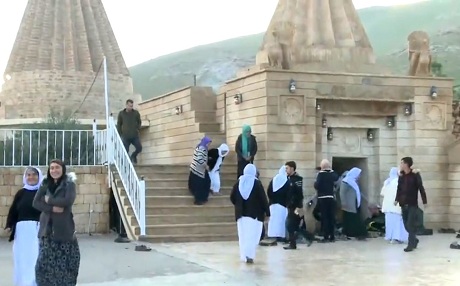
Yezidis pray at Sharfaddin shrine in Shingal after three days of fasting. Photo: Rudaw
More than 1,100 mostly women and girls are still missing, according to figures from the Kurdistan Regional Government (KRG).
At Sharfaddin shrine, people prayed for the women and children still held by ISIS.
Others visited the graveyard – where loved ones killed by ISIS are buried – to pay their respects early Friday morning.
Yezidis observe three days of fasting in early December. They refrain from eating during daylight, using the time to pray and connect with neighbours. After fasting, they celebrate with a feast.
“I congratulate Yazidis on this occasion,” a local Yezidi man told Rudaw at Sharfaddin shrine in Shingal. “We hope our rights are given and our captives held by the unbelievers are freed.”
Read more: Now is the time for high-level Erbil-Baghdad deal on Yezidi homeland
For Yezidis, celebration of their feasts and special days has been bittersweet since ISIS militants swept across northern Iraq in 2014 and committed genocide against the religious minority.
Though the group was declared militarily defeated in Iraq a year ago, the Yezidi community still has not found peace.
The majority of them who fled ISIS in 2014 have still not returned to their homes. Much of Shingal has not been rebuilt. Thousands of those killed by the militants are still buried in mass graves. And as ISIS has been pushed into a small corner of territory in eastern Syria, Yezidis are wondering about the fate of hundreds of their loved ones who were taken captive by the group.
Yezidis pray at Sharfaddin shrine in Shingal after three days of fasting. Photo: Rudaw
More than 1,100 mostly women and girls are still missing, according to figures from the Kurdistan Regional Government (KRG).
At Sharfaddin shrine, people prayed for the women and children still held by ISIS.
Others visited the graveyard – where loved ones killed by ISIS are buried – to pay their respects early Friday morning.
Comments
Rudaw moderates all comments submitted on our website. We welcome comments which are relevant to the article and encourage further discussion about the issues that matter to you. We also welcome constructive criticism about Rudaw.
To be approved for publication, however, your comments must meet our community guidelines.
We will not tolerate the following: profanity, threats, personal attacks, vulgarity, abuse (such as sexism, racism, homophobia or xenophobia), or commercial or personal promotion.
Comments that do not meet our guidelines will be rejected. Comments are not edited – they are either approved or rejected.
Post a comment