


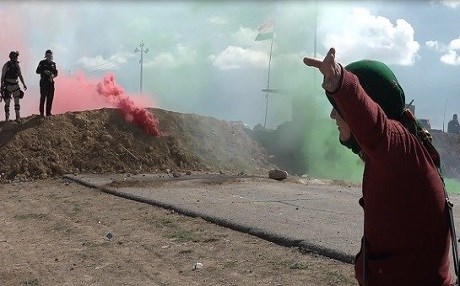
ERBIL, Kurdistan Region – A human rights watchdog has accused Kurdistan Regional Government (KRG) authorities of detaining unarmed protesters without just cause, a charge denied by the Erbil police chief.
At least 32 people were detained by security forces on March 4 at a protest in Erbil against recent clashes between Rojava Peshmerga and Shingal Protection Units (YBS) in the Shingal area. Most were released the same day but at least six are still being held.
“KRG authorities appear to be detaining protesters for no good reason,” Lama Fakih, deputy Middle East director at Human Rights Watch said in a report published on Thursday. “They are also using threats and retaliation to discourage future protests, undermining freedom of expression and assembly in the Kurdish region.”
Director General of Erbil Police, Abdulkhaliq Talaat, told Rudaw English on Thursday that “Everything that was done was done according to the law.”
Under the law, protesters must obtain advance permission from the Ministry of Interior, he said. “These people neither had such permission nor asked anyone.”
According to Human Rights Watch, who interviewed some of the protesters, “several dozen unarmed protesters attempted to gather near Sami Abdulrahman Park in western Erbil to peacefully protest” against the clashes in Shingal. The organizers had publicized their planned demonstration on Facebook and police were there when the protesters arrived.
Talaat confirmed that six of those arrested remain detained, all Turkish nationals. “Only those who caused trouble, unrest, and blocked the way were arrested and are in jail now.”
He added however that the police have no intention to prosecute those remaining in jail but could not provide an expected timeline for their release.
Responding to the concerns raised by Human Rights Watch, Talaat advised the NGO to familiarize itself with the law in the Kurdistan Region.
Human Rights Watch spoke with some of those who have been released and reported that they had been denied access to a lawyer and one said he had been told to leave Erbil.
Talaat said that the law is applied equally to everyone and that “legal procedures will be taken against those who violate the law.”
Deadly clashes between the Kurdistan Regional Government’s Rojava Peshmerga and the Kurdistan Workers Party (PKK)-backed Shingal Protection Units (YBS) erupted earlier this month in the town of Khanasoor in the Shingal area.
The Rojava Peshmerga claimed in a statement they were fired on first and that the YBS prevented them from carrying out a routine deployment of their forces to the Iraq-Syria border.
The YBS, in their own statement, said that they object to the presence of the Rojava Peshmerga, a brigade formed from Syrian refugees in the Kurdistan Region, calling them an “occupying force.” The YBS, formed by the PKK in the Shingal region to provide protection for Yezidi towns, deny they started the confrontation however, stating that the Rojava Peshmerga were the first to open fire.
This week, protesters demonstrating against the Rojava Peshmerga gathered near Khanasoor. Naze Naif Qavaland, a resident of Shingal and a member of the council of the Freedom Movement of the Ezidkhan Women (TAJE), was killed in the protest. Another 10 were injured.
The US State Department said it is concerned about the situation in the Shingal area. The US is having discussions with the parties involved, acting spokesperson for the department Mark Toner told reporters on Wednesday.
“We’re also having those discussions with those two groups because we recognize there’s tensions in the area. And again, we’ve said this many times, part of the success is once we’ve liberated an area from ISIS is how do we establish control, how do we establish local governance, how do we establish stability back in these regions? And that’s certainly something we’re focused on.”
Lise Grande, the UN’s humanitarian coordinator in Iraq, said her agency was also concerned about the “very disturbing reports” coming out of the Shingal region.
“The UN, in our stabilization work, has been trying to work in Sinjar now for a number of months. We’re very keen after the city was liberated from Daesh [ISIS] to get the water systems up and the electricity grid working and the sewage systems working and to help remove the rubble and to help make conditions livable in the city again,” she told reporters on Thursday.
“We haven’t been able to do that work because there was so much insecurity in the city. The recent clashes confirm that that’s still ongoing. It’s disturbing.”
At least 32 people were detained by security forces on March 4 at a protest in Erbil against recent clashes between Rojava Peshmerga and Shingal Protection Units (YBS) in the Shingal area. Most were released the same day but at least six are still being held.
“KRG authorities appear to be detaining protesters for no good reason,” Lama Fakih, deputy Middle East director at Human Rights Watch said in a report published on Thursday. “They are also using threats and retaliation to discourage future protests, undermining freedom of expression and assembly in the Kurdish region.”
Director General of Erbil Police, Abdulkhaliq Talaat, told Rudaw English on Thursday that “Everything that was done was done according to the law.”
Under the law, protesters must obtain advance permission from the Ministry of Interior, he said. “These people neither had such permission nor asked anyone.”
According to Human Rights Watch, who interviewed some of the protesters, “several dozen unarmed protesters attempted to gather near Sami Abdulrahman Park in western Erbil to peacefully protest” against the clashes in Shingal. The organizers had publicized their planned demonstration on Facebook and police were there when the protesters arrived.
Talaat confirmed that six of those arrested remain detained, all Turkish nationals. “Only those who caused trouble, unrest, and blocked the way were arrested and are in jail now.”
He added however that the police have no intention to prosecute those remaining in jail but could not provide an expected timeline for their release.
Responding to the concerns raised by Human Rights Watch, Talaat advised the NGO to familiarize itself with the law in the Kurdistan Region.
Human Rights Watch spoke with some of those who have been released and reported that they had been denied access to a lawyer and one said he had been told to leave Erbil.
Talaat said that the law is applied equally to everyone and that “legal procedures will be taken against those who violate the law.”
Deadly clashes between the Kurdistan Regional Government’s Rojava Peshmerga and the Kurdistan Workers Party (PKK)-backed Shingal Protection Units (YBS) erupted earlier this month in the town of Khanasoor in the Shingal area.
The Rojava Peshmerga claimed in a statement they were fired on first and that the YBS prevented them from carrying out a routine deployment of their forces to the Iraq-Syria border.
The YBS, in their own statement, said that they object to the presence of the Rojava Peshmerga, a brigade formed from Syrian refugees in the Kurdistan Region, calling them an “occupying force.” The YBS, formed by the PKK in the Shingal region to provide protection for Yezidi towns, deny they started the confrontation however, stating that the Rojava Peshmerga were the first to open fire.
This week, protesters demonstrating against the Rojava Peshmerga gathered near Khanasoor. Naze Naif Qavaland, a resident of Shingal and a member of the council of the Freedom Movement of the Ezidkhan Women (TAJE), was killed in the protest. Another 10 were injured.
The US State Department said it is concerned about the situation in the Shingal area. The US is having discussions with the parties involved, acting spokesperson for the department Mark Toner told reporters on Wednesday.
“We’re also having those discussions with those two groups because we recognize there’s tensions in the area. And again, we’ve said this many times, part of the success is once we’ve liberated an area from ISIS is how do we establish control, how do we establish local governance, how do we establish stability back in these regions? And that’s certainly something we’re focused on.”
Lise Grande, the UN’s humanitarian coordinator in Iraq, said her agency was also concerned about the “very disturbing reports” coming out of the Shingal region.
“The UN, in our stabilization work, has been trying to work in Sinjar now for a number of months. We’re very keen after the city was liberated from Daesh [ISIS] to get the water systems up and the electricity grid working and the sewage systems working and to help remove the rubble and to help make conditions livable in the city again,” she told reporters on Thursday.
“We haven’t been able to do that work because there was so much insecurity in the city. The recent clashes confirm that that’s still ongoing. It’s disturbing.”
Comments
Rudaw moderates all comments submitted on our website. We welcome comments which are relevant to the article and encourage further discussion about the issues that matter to you. We also welcome constructive criticism about Rudaw.
To be approved for publication, however, your comments must meet our community guidelines.
We will not tolerate the following: profanity, threats, personal attacks, vulgarity, abuse (such as sexism, racism, homophobia or xenophobia), or commercial or personal promotion.
Comments that do not meet our guidelines will be rejected. Comments are not edited – they are either approved or rejected.
Post a comment