


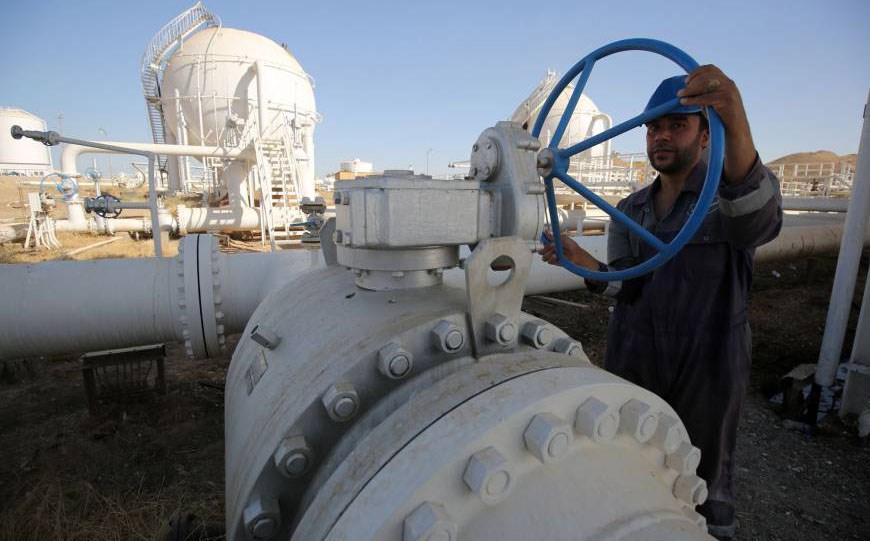
ERBIL, Kurdistan Region – As Baghdad seeks to exert federal control over disputed areas, including taking control of oil fields in Kirkuk and Nineveh provinces, it is forging ties with Saudi Arabia, welcoming the Kingdom’s oil minister in a high profile visit. The Kurdistan Regional Government (KRG), meanwhile, is increasing Russian investment in its oil sector.
“The best example of the importance of cooperation between our two countries is the improvement and stability trend seen in the oil market,” said Saudi Oil Minister Khalid Al-Falih in the opening speech of the Baghdad International Exhibition on Saturday, according to Dubai's Gulf News.
Falih is the first Saudi official to make a public speech in the Iraqi capital since before the Baathists' 1990 invasion of Kuwait.
Saudi Arabia and Iraq are the two largest OPEC producers. The 10-day long exhibition is hosted by Iraq's Ministry of Trade and State Company for Iraqi and Commercial Services “as a representation for the serious desire of Iraq to raise the level of economic relations with other countries.”
Falih called for increased economic cooperation between the two countries at all levels, saying Saudi Arabia is implementing measures to facilitate the flow of goods and services between them, according to the Dubai newspaper.
Prime Minister Haider al-Abadi began a regional tour on Saturday with a high-level ministerial delegation. His first stop is Saudi Arabia.
The oil-rich province of Kirkuk and other disputed or Kurdistani areas claimed by both Baghdad and Erbil came under the control of the federal government this week amid fighting resulting in casualties on both sides.
Even before retaking Kirkuk, Baghdad was preparing to manage its oil. Oil Minister Jabar al-Luaibi asked the state-owned North Oil Company to prepare for the restoration and reopening of an old pipeline from Kirkuk that came under the control of ISIS militants in 2014, the ministry stated on October 10.
This week’s conflict between the Kurdish and Iraqi forces in the disputed areas came after months of sour relations between the two governments as the KRG prepared for and held a referendum on independence, including the disputed areas in the vote. The KRG persisted in holding the plebiscite despite opposition from Baghdad and internationally.
Kurds are now feeling abandoned by their allies as the world refused to recognize the vote and did nothing to stop Iraqi forces marching into lands once controlled by the Peshmerga.
KRG’s Minister of Natural Resources Ashti Hawrami spoke at an industry conference in Italy on Thursday.
“I plead with you not to forget Kurdistan,” Reuters quoted Hawrami as saying at X Eurasian Economic Forum.
At the forum, the KRG confirmed yet another deal with Rosneft. The Russian conglomerate announced on Thursday an agreement between it and the KRG that would see Rosneft take a majority stake in the Kurdistan Region's oil pipeline.
“Rosneft’s share in the project may amount to 60 percent,” read a Rosneft statement. “The other project participant with 40 percent share will be KAR Group, who is the current pipeline operator.”
Reuters reported a source familiar with the deal as saying investment in the projected was expected to total about $1.8 million. That's in addition to Rosneft announcing its investment in five exploration blocks totaling $400 million this week.
The Kurdistan Region since 2013 has been exporting oil to world markets through a pipeline that terminates at the Mediterranean port of Ceyhan in Turkey. Ankara, which has rejected Kurdistan’s independence referendum, has threatened that it could close down the pipeline.
Rosneft has said they are confident the referendum will not affect their business ventures. Russia previously stated it was waiting to see if the referendum would be recognized, but it supported the "territorial integrity of regional states."
“The best example of the importance of cooperation between our two countries is the improvement and stability trend seen in the oil market,” said Saudi Oil Minister Khalid Al-Falih in the opening speech of the Baghdad International Exhibition on Saturday, according to Dubai's Gulf News.
Falih is the first Saudi official to make a public speech in the Iraqi capital since before the Baathists' 1990 invasion of Kuwait.
Saudi Arabia and Iraq are the two largest OPEC producers. The 10-day long exhibition is hosted by Iraq's Ministry of Trade and State Company for Iraqi and Commercial Services “as a representation for the serious desire of Iraq to raise the level of economic relations with other countries.”
Falih called for increased economic cooperation between the two countries at all levels, saying Saudi Arabia is implementing measures to facilitate the flow of goods and services between them, according to the Dubai newspaper.
Prime Minister Haider al-Abadi began a regional tour on Saturday with a high-level ministerial delegation. His first stop is Saudi Arabia.
The oil-rich province of Kirkuk and other disputed or Kurdistani areas claimed by both Baghdad and Erbil came under the control of the federal government this week amid fighting resulting in casualties on both sides.
Even before retaking Kirkuk, Baghdad was preparing to manage its oil. Oil Minister Jabar al-Luaibi asked the state-owned North Oil Company to prepare for the restoration and reopening of an old pipeline from Kirkuk that came under the control of ISIS militants in 2014, the ministry stated on October 10.
This week’s conflict between the Kurdish and Iraqi forces in the disputed areas came after months of sour relations between the two governments as the KRG prepared for and held a referendum on independence, including the disputed areas in the vote. The KRG persisted in holding the plebiscite despite opposition from Baghdad and internationally.
Kurds are now feeling abandoned by their allies as the world refused to recognize the vote and did nothing to stop Iraqi forces marching into lands once controlled by the Peshmerga.
KRG’s Minister of Natural Resources Ashti Hawrami spoke at an industry conference in Italy on Thursday.
“I plead with you not to forget Kurdistan,” Reuters quoted Hawrami as saying at X Eurasian Economic Forum.
At the forum, the KRG confirmed yet another deal with Rosneft. The Russian conglomerate announced on Thursday an agreement between it and the KRG that would see Rosneft take a majority stake in the Kurdistan Region's oil pipeline.
“Rosneft’s share in the project may amount to 60 percent,” read a Rosneft statement. “The other project participant with 40 percent share will be KAR Group, who is the current pipeline operator.”
Reuters reported a source familiar with the deal as saying investment in the projected was expected to total about $1.8 million. That's in addition to Rosneft announcing its investment in five exploration blocks totaling $400 million this week.
The Kurdistan Region since 2013 has been exporting oil to world markets through a pipeline that terminates at the Mediterranean port of Ceyhan in Turkey. Ankara, which has rejected Kurdistan’s independence referendum, has threatened that it could close down the pipeline.
Rosneft has said they are confident the referendum will not affect their business ventures. Russia previously stated it was waiting to see if the referendum would be recognized, but it supported the "territorial integrity of regional states."
Comments
Rudaw moderates all comments submitted on our website. We welcome comments which are relevant to the article and encourage further discussion about the issues that matter to you. We also welcome constructive criticism about Rudaw.
To be approved for publication, however, your comments must meet our community guidelines.
We will not tolerate the following: profanity, threats, personal attacks, vulgarity, abuse (such as sexism, racism, homophobia or xenophobia), or commercial or personal promotion.
Comments that do not meet our guidelines will be rejected. Comments are not edited – they are either approved or rejected.
Post a comment