


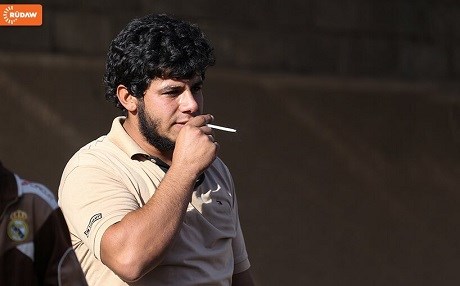
SULAIMANI, Kurdistan Region – Laws and guidelines regulating smoking are slow to be approved and not enforced in the Kurdistan Region where smoking rates are higher than global averages.
The health ministry submitted smoking guidelines to the Council of Ministers in 2014 and is waiting for relevant ministries to enforce them.
“In the recommendations we submitted to the Council, we had mentioned an increase in taxation, Kurdish labels on the packets illustrating smoking side effects in a way to deglamorize smoking,” said Dr. Khalis Qadir, spokesperson for the general directorate of the Ministry of Health.
The Council of Ministers gave them preliminary approval in 2017 and referred them to a committee for further study.
Qadir also said the current work of the health ministry is monitoring public places and issuing instructions. It is the ministry of planning that does the checking and issuing of importation licenses.
In 2007, Kurdistan’s parliament banned smoking in public places and set fines for people breaking the law. But Qadir said they are unaware of anyone punished under this law.
“Confronting smoking in any country needs a broad national agenda. Authorities especially politicians should understand and design a project to counter smoking in every way, including increasing taxes, founding research centers and centers to help people quit smoking,” Dr Abdulfatah Hawrami, lecturer at the medical school at Sulaimani university, told Rudaw.
Smoking and international efforts to curb it are being highlighted on May 31, World No Tobacco Day. In the Kurdistan Region, there is a shortage of data of smoking trends.
According to information obtained by Rudaw, 1.25 billion cigarettes are sold monthly in the Kurdistan Region and 22.4 million cigarettes are smoked daily. Annually, more than 500 billion Iraqi dinars are traded in the cigarette business, which makes up 7 percent of overall Kurdistan imports. Half of the cigarettes imported into the Kurdistan Region are consumed here.
“In other countries, this business is assigned to some companies which should get the product from known corporations and pay taxes to the government. Whereas here, anyone can do the business as long as they pay some symbolic commission at customs,” a businessman had told Rudaw in an earlier investigation into the business.
“There is little tax here, with more profit and a weak watchdog system,” he added.
He also said commission taxes for a box of cigarettes entering Kurdistan is just 30,000 Iraqi dinars. In comparison, one box of cigarettes entering Iraq from Kurdistan costs a commission tax of 90,000 Iraqi dinars.
According to a survey Rudaw obtained from the Ministry of Health in the Kurdistan Region, the rate of smoking is higher in Kurdistan and Iraq than it is in the entire world.
The health ministry’s Dr. Qadir said 21 percent of adults are smokers internationally.
This rate is higher in Kurdistan and Iraq where 23.4 percent of adults are smokers, according to a survey conducted in coordination with the US State Department, Baghdad University, Najaf University, and the health ministries of Iraq and Kurdistan.
The same survey has shown that the highest number of smokers is in Duhok and the lowest is in Sulaimani, Qadir said.
The global database known as Tobacco Atlas, which tracks smoking trends, says Iraqis are a main victim of smoking. Their data reveals that in Iraq 1.9 percent of deaths among men and 1.5 percent among women are caused by smoking. Weekly, 200 people (121 men and 79 women) in Iraq die because of smoking.
The agency also says the number of smokers is higher in Iraq than it is in countries which are similar to Iraq in their income.
The health ministry submitted smoking guidelines to the Council of Ministers in 2014 and is waiting for relevant ministries to enforce them.
“In the recommendations we submitted to the Council, we had mentioned an increase in taxation, Kurdish labels on the packets illustrating smoking side effects in a way to deglamorize smoking,” said Dr. Khalis Qadir, spokesperson for the general directorate of the Ministry of Health.
The Council of Ministers gave them preliminary approval in 2017 and referred them to a committee for further study.
Qadir also said the current work of the health ministry is monitoring public places and issuing instructions. It is the ministry of planning that does the checking and issuing of importation licenses.
In 2007, Kurdistan’s parliament banned smoking in public places and set fines for people breaking the law. But Qadir said they are unaware of anyone punished under this law.
“Confronting smoking in any country needs a broad national agenda. Authorities especially politicians should understand and design a project to counter smoking in every way, including increasing taxes, founding research centers and centers to help people quit smoking,” Dr Abdulfatah Hawrami, lecturer at the medical school at Sulaimani university, told Rudaw.
Smoking and international efforts to curb it are being highlighted on May 31, World No Tobacco Day. In the Kurdistan Region, there is a shortage of data of smoking trends.
According to information obtained by Rudaw, 1.25 billion cigarettes are sold monthly in the Kurdistan Region and 22.4 million cigarettes are smoked daily. Annually, more than 500 billion Iraqi dinars are traded in the cigarette business, which makes up 7 percent of overall Kurdistan imports. Half of the cigarettes imported into the Kurdistan Region are consumed here.
“In other countries, this business is assigned to some companies which should get the product from known corporations and pay taxes to the government. Whereas here, anyone can do the business as long as they pay some symbolic commission at customs,” a businessman had told Rudaw in an earlier investigation into the business.
“There is little tax here, with more profit and a weak watchdog system,” he added.
He also said commission taxes for a box of cigarettes entering Kurdistan is just 30,000 Iraqi dinars. In comparison, one box of cigarettes entering Iraq from Kurdistan costs a commission tax of 90,000 Iraqi dinars.
According to a survey Rudaw obtained from the Ministry of Health in the Kurdistan Region, the rate of smoking is higher in Kurdistan and Iraq than it is in the entire world.
The health ministry’s Dr. Qadir said 21 percent of adults are smokers internationally.
This rate is higher in Kurdistan and Iraq where 23.4 percent of adults are smokers, according to a survey conducted in coordination with the US State Department, Baghdad University, Najaf University, and the health ministries of Iraq and Kurdistan.
The same survey has shown that the highest number of smokers is in Duhok and the lowest is in Sulaimani, Qadir said.
The global database known as Tobacco Atlas, which tracks smoking trends, says Iraqis are a main victim of smoking. Their data reveals that in Iraq 1.9 percent of deaths among men and 1.5 percent among women are caused by smoking. Weekly, 200 people (121 men and 79 women) in Iraq die because of smoking.
The agency also says the number of smokers is higher in Iraq than it is in countries which are similar to Iraq in their income.
Comments
Rudaw moderates all comments submitted on our website. We welcome comments which are relevant to the article and encourage further discussion about the issues that matter to you. We also welcome constructive criticism about Rudaw.
To be approved for publication, however, your comments must meet our community guidelines.
We will not tolerate the following: profanity, threats, personal attacks, vulgarity, abuse (such as sexism, racism, homophobia or xenophobia), or commercial or personal promotion.
Comments that do not meet our guidelines will be rejected. Comments are not edited – they are either approved or rejected.
Post a comment